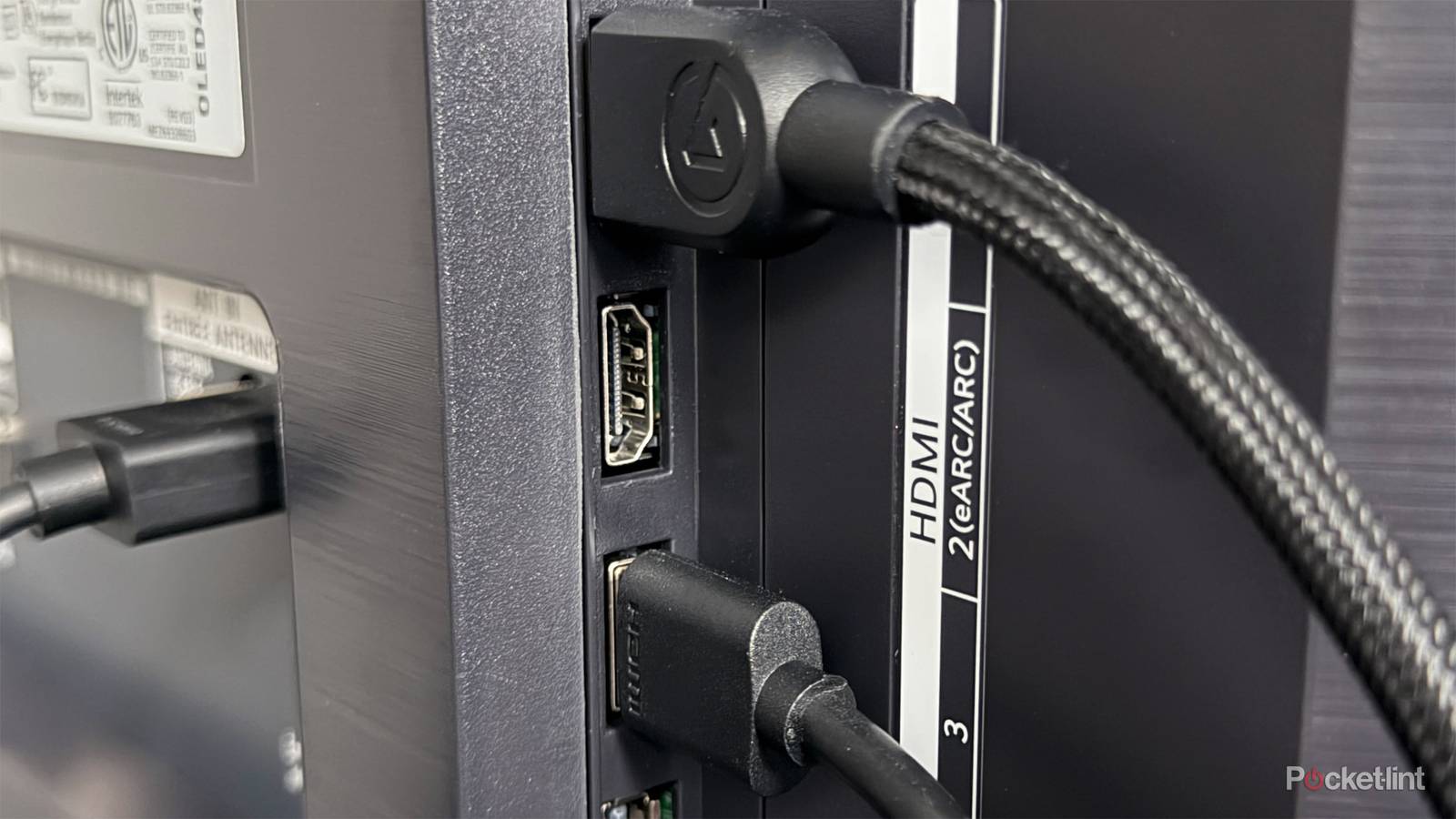
When I first read about the new HDMI 2.2 specification, I was pretty excited. Unveiled at CES 2025 and officially released later that year, HDMI 2.2 offers a lot of promise. For starters, it can deliver up to twice the bandwidth of HDMI 2.1, reaching up to 96 Gbps, while supporting significantly higher resolutions and refresh rates, including 4K at 480Hz, 8K at 240Hz, 12K at 120Hz, and even 16K at 60Hz.
That extra bandwidth is undoubtedly impressive, especially since it surpasses DisplayPort 2.1’s maximum bandwidth of 80 Gbps. But one of the biggest questions surrounding HDMI 2.2 has always been when it would actually arrive on real-world devices, so people could finally test it for themselves. Now, it looks like we may finally have an answer.
Speaking at Computex 2026 earlier this month, the HDMI Organization said it expects the first HDMI 2.2-equipped devices to arrive in 2027, with the first HDMI 2.2 cables arriving later this year (via FlatPanelsHD).
“We’re hearing chip manufacturers will start to sample their FRL2 chips this year,” said Rob Tobias, CEO and president of the HDMI Licensing Administrator. “And so we should start to see some 96 or up to 96 gigabit HDMI 2.2 products next year.”
HDMI 2.2 is undoubtedly powerful, but it’s overkill for now
It’s still a few years away from being practical

Right now, it’s unclear exactly which devices will be first to launch with HDMI 2.2.
However, considering the first HDMI 2.1 device was an LG OLED TV back in 2019, there’s a good chance a TV could once again be among the first products to adopt the new standard. I also wouldn’t be surprised if CES 2027 gives us our first real look at a wave of HDMI 2.2 devices before they begin rolling out later in the year.
As exciting as HDMI 2.2’s capabilities are, though, I think its biggest challenge in the near term will be practicality.
There’s no question that HDMI 2.2 is a major leap forward in terms of bandwidth and features. Along with support for higher resolutions and refresh rates, it also introduces new technologies such as Latency Indication Protocol (LIP), which is designed to help reduce audio and video latency.
But for the next few years, I still see HDMI 2.1 remaining the standard most people should look for, largely because it’s already more than enough for how most people use their TVs.
HDMI 2.1 supports up to 48 Gbps of bandwidth, 4K at 120Hz, and 8K at 60Hz. Considering 4K is the resolution most streaming services and consoles like the PS5 and Xbox Series X target, that’s plenty of headroom, and it still supports features like Auto Low Latency Mode (ALLM) and Variable Refresh Rate (VRR), which gamers rely on. Not to mention that many TV manufacturers don’t seem particularly interested in pushing 8K TVs anymore, either.
I still see HDMI 2.1 remaining the standard most people should look for, largely because it’s already more than enough for how most people use their TVs.

The biggest beneficiaries of HDMI 2.2 will likely be PC gamers who connect their rigs to TVs and want higher refresh rates at 4K. The jump from 120Hz to 480Hz at 4K is pretty significant. However, with the ongoing memory shortage driving up the cost of PC components, including the graphics cards capable of delivering high frame rates at 4K, I don’t think PC gamers will be rushing to take advantage of those capabilities anytime soon.
The same applies to consoles. The next PlayStation, presumably the PS6, and Microsoft’s next Xbox, currently codenamed Project Helix, likely remain several years away, in part due to the global memory shortage. Those would be prime candidates for HDMI 2.2 support, but if they’re not launching anytime soon, an HDMI 2.2 TV isn’t really necessary either.
Ultimately, while HDMI 2.2 is a substantial upgrade over HDMI 2.1, I’m in no rush to upgrade to a new TV just because it includes HDMI 2.2. Right now, it simply isn’t practical for most people. Don’t get me wrong, that will eventually change, just as HDMI 2.1 became more relevant a few years after its debut. But for the foreseeable future, HDMI 2.2 feels like overkill. In the meantime, HDMI 2.1 continues to deliver an excellent experience with the devices I have connected to my LG TV, including my PC and PS5.

- Display Size
-
42, 48, 55, 65, 77, or 83 inches
- Operating System
-
webOS
- Display Type
-
OLED