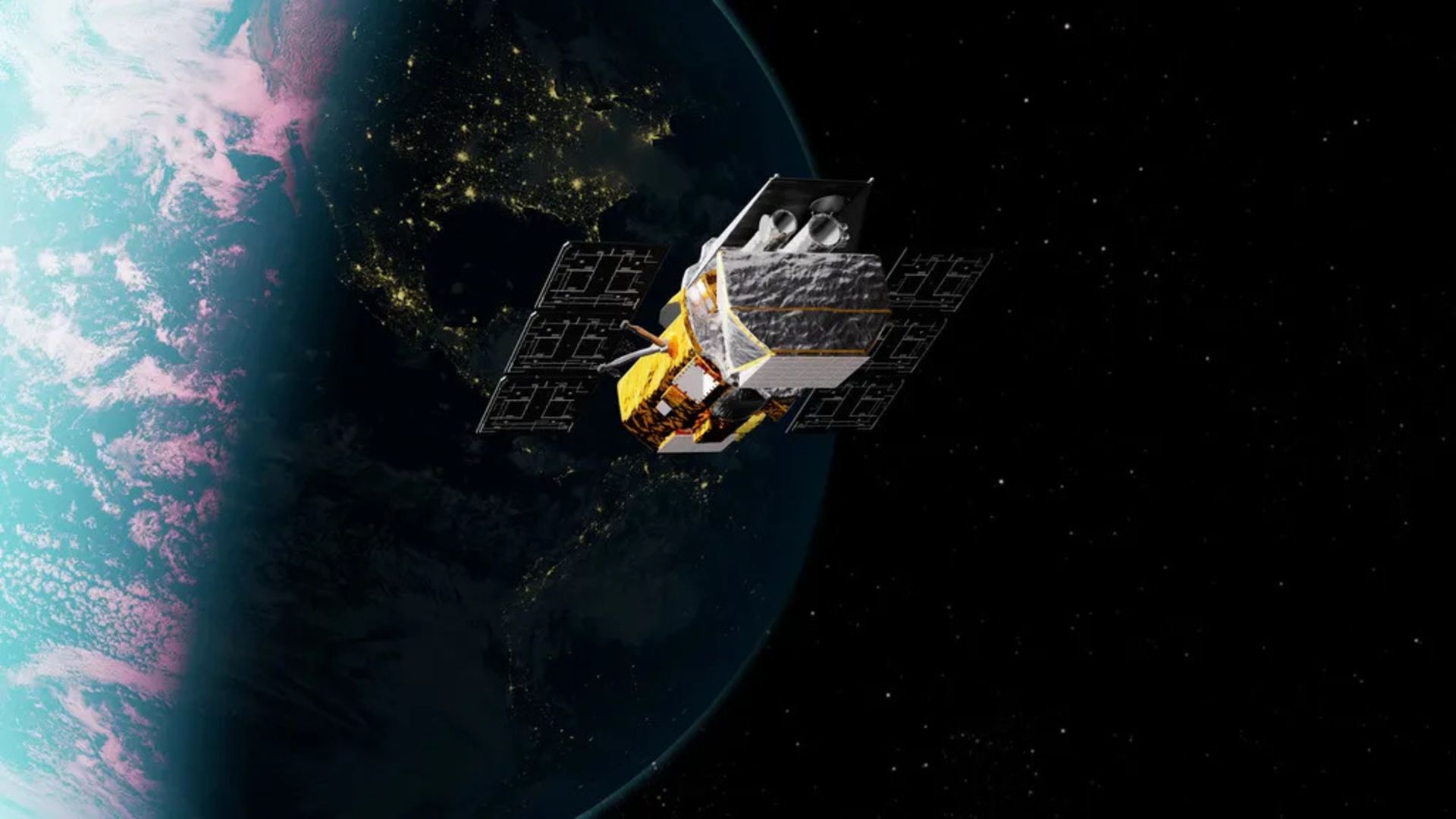
A bold telescope-rescue mission is set to launch later this month, and you can learn all about it today (June 17).
That mission will be conducted by Link, a robotic servicing spacecraft built and operated by the Arizona-based company Katalyst Space Technologies. Link will meet up with NASA’s Neil Gehrels Swift Observatory in the final frontier, raising the telescope’s orbit to give it more time to study the heavens.
NASA and Katalyst representatives will discuss the plan today, during a press conference that starts at 11 a.m. EDT (1500 GMT). You can listen live via NASA. Space.com will stream the feed as well, if the space agency makes it available.


Participants will be:
- Shawn Domagal-Goldman, division director, Astrophysics, NASA Headquarters in Washington
- Brad Cenko, principal investigator, Swift, NASA’s Goddard Space Flight Center in Greenbelt, Maryland
- Kieran Wilson, principal investigator, LINK, Katalyst Space
- Robert Lamontagne, vice president, strategic partnerships, Katalyst Space
- Wes Collier, vice president, launch systems, Northrop Grumman
Swift launched to low Earth orbit in 2004 to hunt for gamma-ray bursts, the most powerful explosions in the universe. The telescope is still perfectly capable of doing this important job, but Earth’s atmosphere is dragging it down toward a fiery death.
Swift doesn’t have a propulsion system to fight this downward pull, so it needs some help — which is where Katalyst comes in. Last fall, NASA announced it had tapped the company to raise Swift’s orbit.
It’s an unprecedented ask: No private spacecraft has ever linked up with a robotic U.S. government satellite. And time is of the essence; some models predicted the observatory could come back to Earth as soon as this summer.
Katalyst has acted fast, getting Link ready for a launch later this month from the Marshall Islands in the Pacific. (NASA has not yet announced a target date). Link will fly aboard a Northrop Grumman Pegasus XL rocket, an air-launched vehicle that will be carried aloft by a plane.