
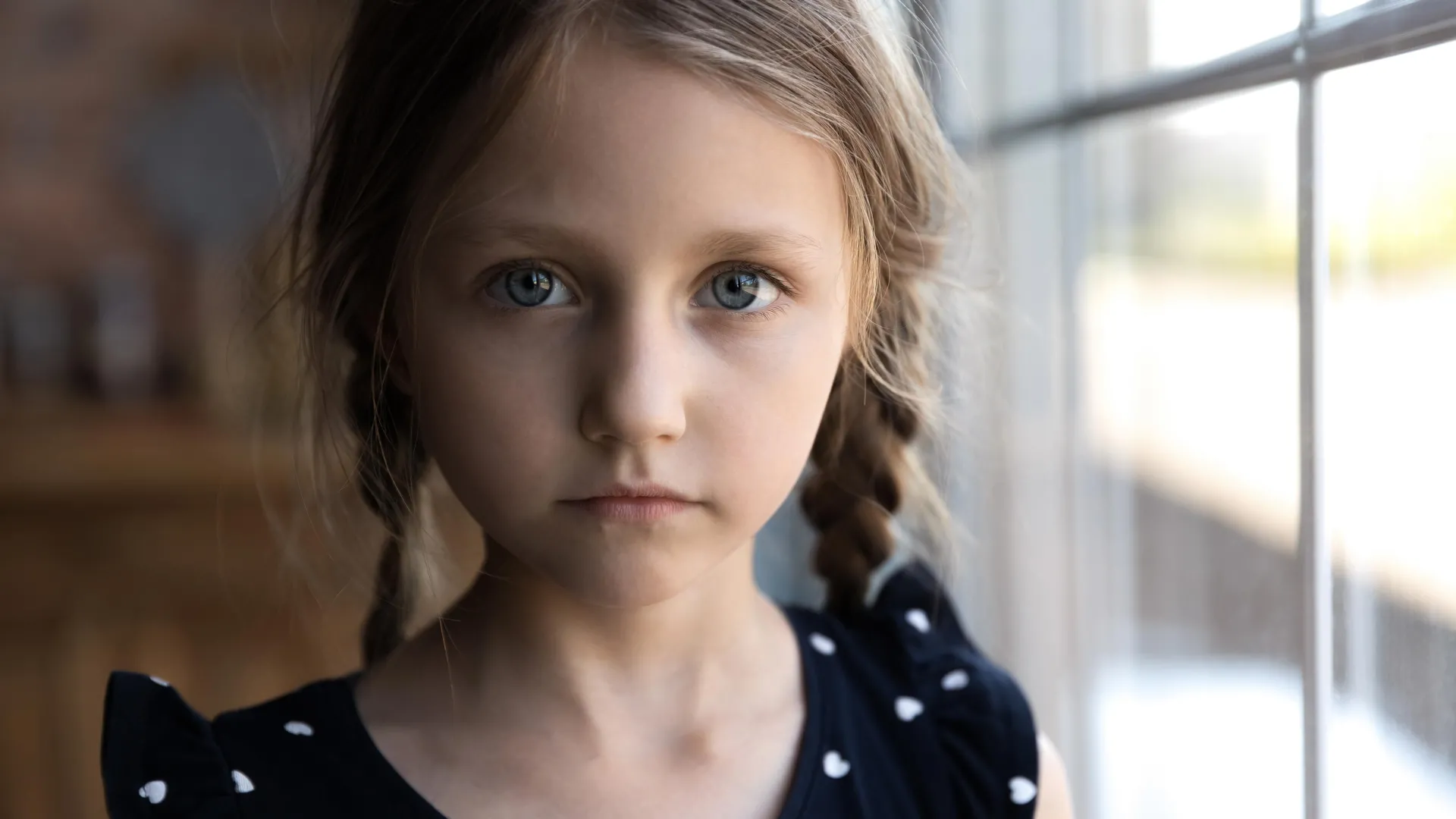
A smile. A frown. The facial expressions that capture a child’s attention may reveal important clues about their mental health.
New research from Binghamton University, State University of New York, suggests that depression can influence how children respond to emotional faces, including happy and sad expressions. The study also found that these attention patterns differ depending on whether a child has a family history of depression.
Researchers at Binghamton University’s Mood Disorders Institute focus on understanding how depression develops during childhood and adolescence. They investigate how factors such as family history and emotional experiences contribute to future depression risk. By identifying these patterns early, scientists hope to improve efforts to recognize and prevent depression before it becomes more severe.
“Most of the vulnerabilities that we focus on are still developing during this time period,” said Brandon Gibb, director of the Mood Disorders Institute and SUNY distinguished professor of psychology. “You can catch things as they’re developing, rather than only studying them once they’re already there and pretty stable.”
How Depression and Attention Influence Each Other
Earlier research has linked depression to greater attention toward sad facial expressions. However, those effects have generally been small, and researchers have not known whether these attention patterns contribute to depression or result from it.
The new study is the first to examine how depressive symptoms and attention biases may influence one another over time in children.
“The real novel piece is that we looked at these transactional relations,” said Kelly Gair, a PhD student at Binghamton and lead author of the paper. “Between attentional biases and depressive symptoms, we looked at the way that they were mutually predicting one another across the time points, which is especially novel and hasn’t been done before.”
To investigate these relationships, Gair, Gibb, and collaborator Leslie A. Brick from the University of New Mexico followed 242 children and their mothers for two years. Participants returned every six months for assessments.
During each visit, children viewed pairs of faces on a screen. One face displayed a neutral expression, while the other showed an emotional expression (happy, sad, or angry). Eye tracking technology measured which faces attracted the children’s attention and how long they focused on them.
Children in the study looked at faces conveying different emotions onscreen, and eye-tracking technology recorded where their attention veered. Photo credit: NimStim Set of Facial Expressions (Tottenham et al., 2009).
Family History Shapes Attention to Emotional Faces
The findings showed that increasing depressive symptoms affected children’s attention differently depending on their family background.
Among children whose mothers had a history of major depressive disorder, growing depressive symptoms were associated with increased attention to sad faces.
“For those who are already at risk, the more these children experience depression themselves, the more they lose their ability to pull their attention away from the sad things around them,” Gibb said.
Gair noted that depression can have a powerful influence on what people notice in their environment.
“We know that when you’re depressed, it changes what you pay attention to,” Gair said. “Our results suggest that these changes may be more long-lasting and may differ depending on family history. One thought is that for children of mothers with depression, who are exposed to more facial displays of sadness from interactions with their mom, these types of facial expressions become even more salient when they experience depression themselves, so their attention becomes increasingly stuck on sad expressions.”
Different Patterns for Lower-Risk Children
The pattern was different among children whose mothers had no history of depression.
When these children experienced increases in depressive symptoms, they tended to spend less time paying attention to happy faces.
“In our lower-risk children, what seems to be happening is that experiences of depression are eroding a protective factor, which is how much they pay attention to happy faces,” Gibb said.
Researchers are now continuing to follow these children as they move into adolescence. The goal is to determine whether these attention patterns contribute to a higher likelihood of developing clinical depression later in life.
The study, “Transactional Relations Between Attentional Biases for Affective Stimuli and Depressive Symptoms in Offspring of Mothers With and Without Major Depressive Disorder,” was published in the Journal of Psychopathology and Clinical Science.