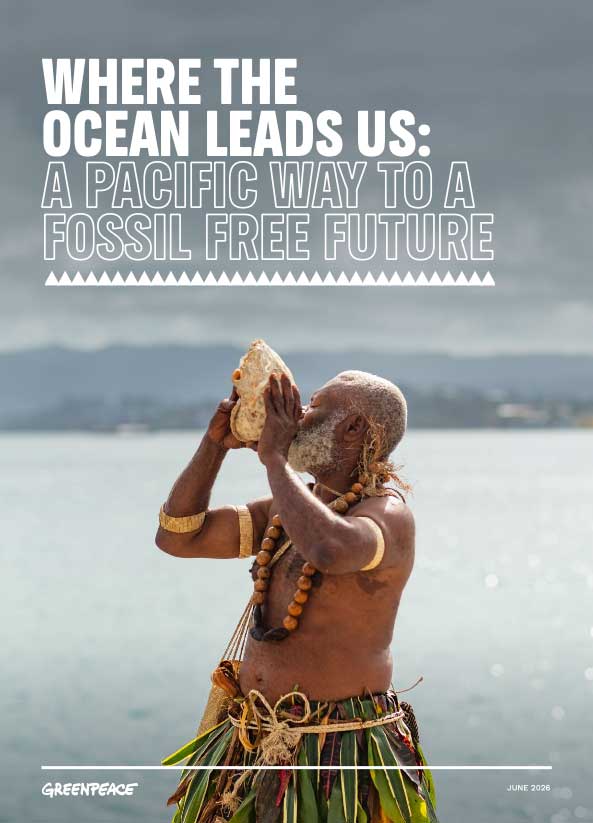

As Pacific peoples we are descendants of the greatest navigators the world has ever known. Today we are navigating the greatest global challenge of our time: climate change and the end of the fossil fuel age.
To learn more, read our report Where the Ocean Leads Us, and explore our photo exhibition The Wayfinders’ Roadmap.
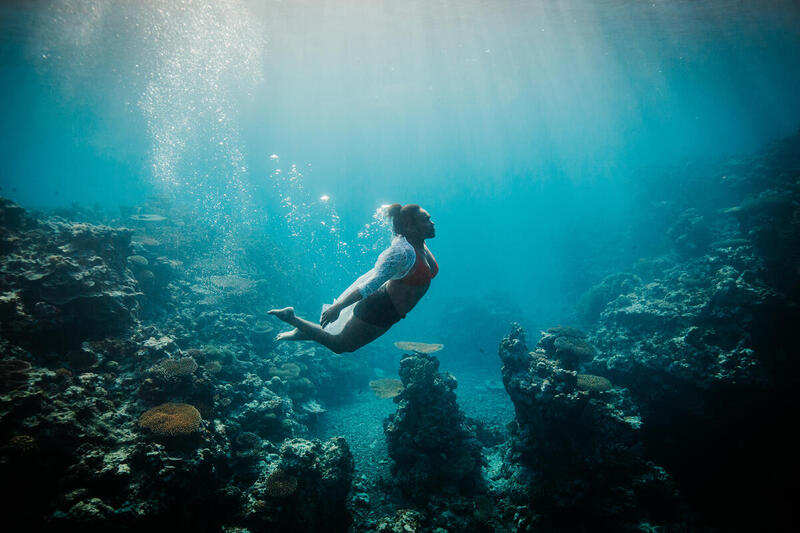
PHOTO EXHIBITION
PART 1: THE LARGE OCEAN REALITY

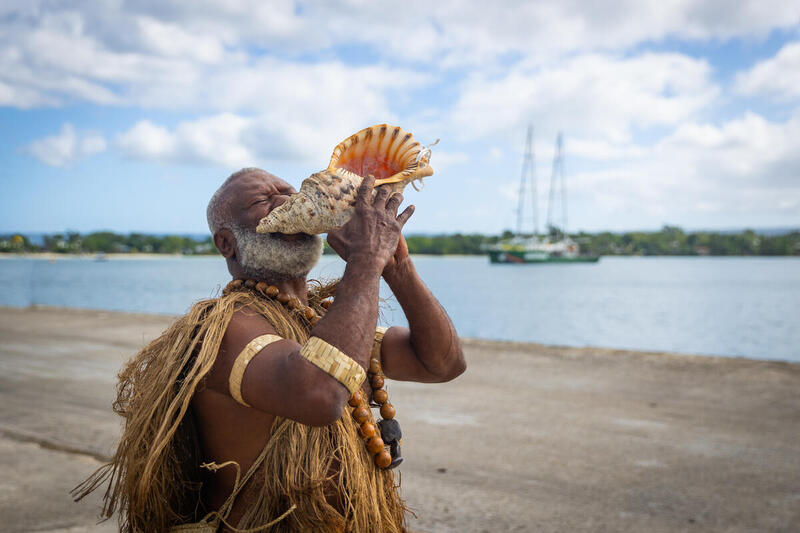
For thousands of years, the echo of the conch shell has summoned our people across the Moana to face great tides together. Today, it calls us to navigate the greatest journey of our time: the end of the fossil fuel age.
© Greenpeace / Island Roots
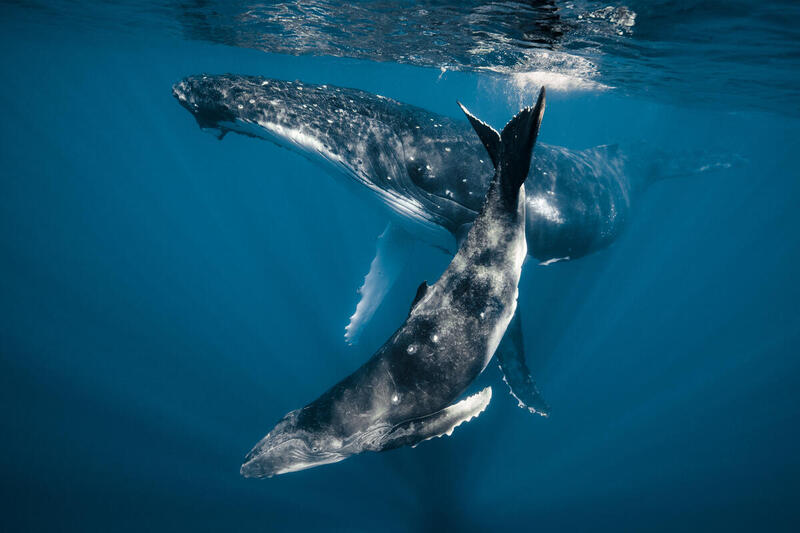
We are not small island states. We are the stewards of the greatest ocean on Earth. The Moana is our mother, our history, and our pathway—connecting us rather than dividing us.
“We are the ocean. We should not be defined by the smallness of our islands, but by the greatness of our oceans.”
— Epeli Hauʻofa, legendary Tongan-Fijian scholar and writer
© Jasmine Carey
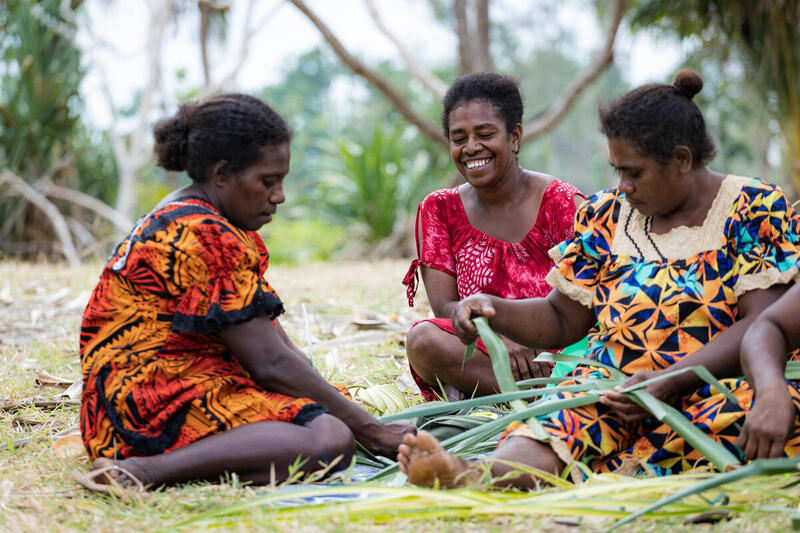
Our land and culture are sacred (Fonua / Whenua / Fenua / Vanua). In every thread woven by our elders, our history is preserved, holding ancestral knowledge that has kept us resilient for generations.
© Greenpeace / Island Roots
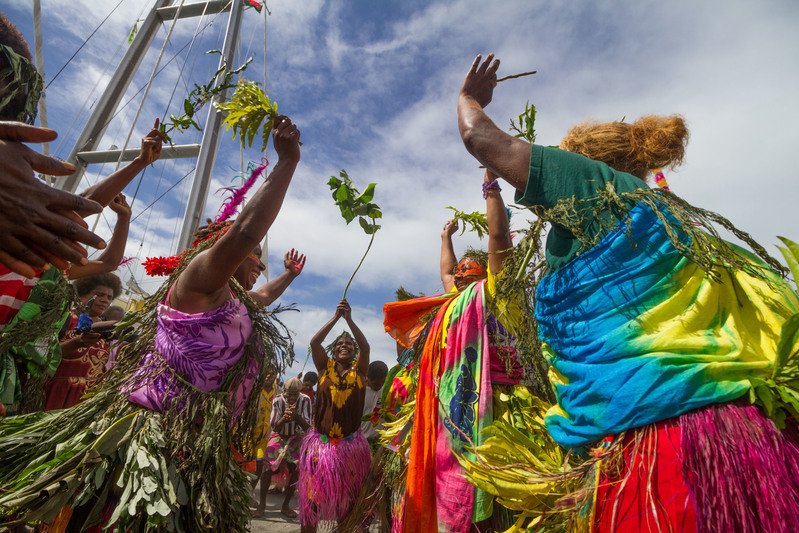
Our songs, dances, and smiles are not performances for the world—they are expressions of our sovereignty and our refusal to be erased.
© Steven Lyon / Greenpeace
PART 2: THE DEVOURING SEA & THE POISONED MOTHER

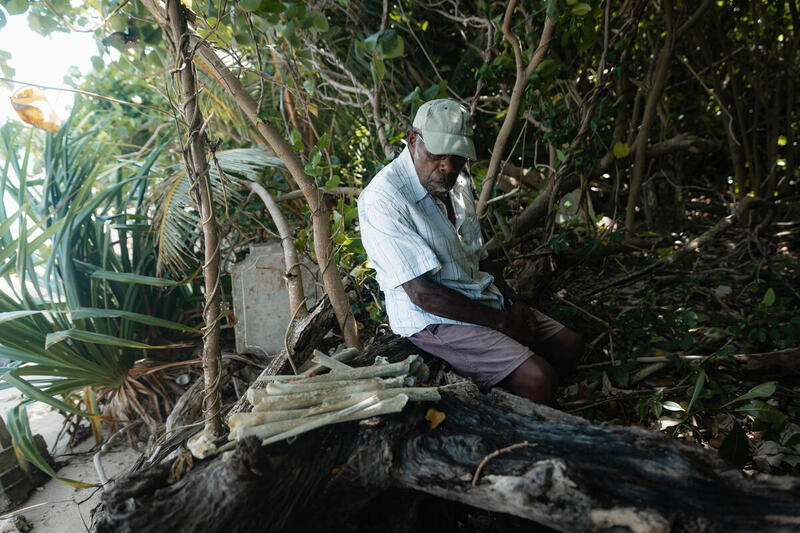
When big carbon-polluting corporations burn fossil fuels, our graveyards wash into the sea. This is not just environmental damage; it is a violation of our history. We are holding them accountable.
“The sea keeps us alive, but at the same time, it slowly devours us. It devours our memories and our culture bit by bit. And that scares me.”
— Grace Maile, youth climate activist from Tuvalu
© Niki Kuautonga / Greenpeace
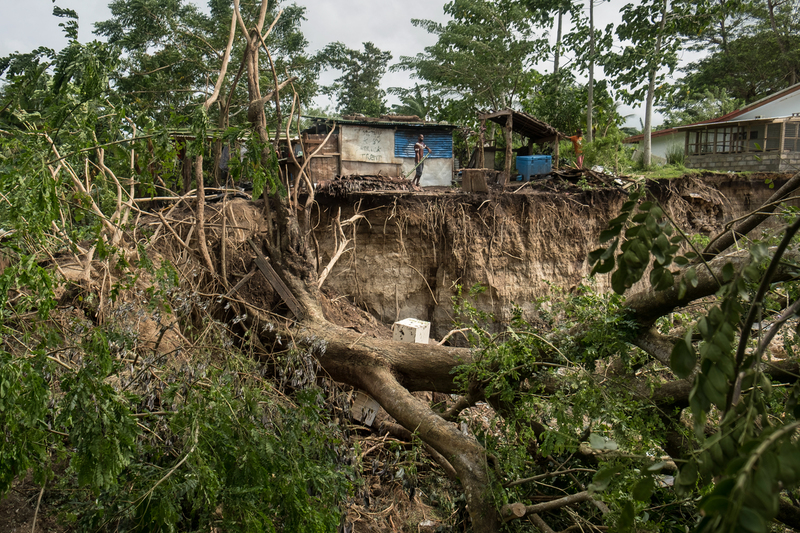
In the Pacific, our relationship with the land is one of deep reciprocity and sacred roots. But as global carbon emissions rise, the climate crisis manifests as unprecedented violence. This is the aftermath of a severe cyclone and the devastating landslide it triggered—tearing ancient trees from the earth and sliding our hillsides into the sea. This is The Story of the Ancestors. Climate change isn’t a slow, distant threat; it is a violent force that shatters our landscape overnight, uprooting our heritage and eroding the very ground our families depend on.
© Pedro Armestre / Greenpeace
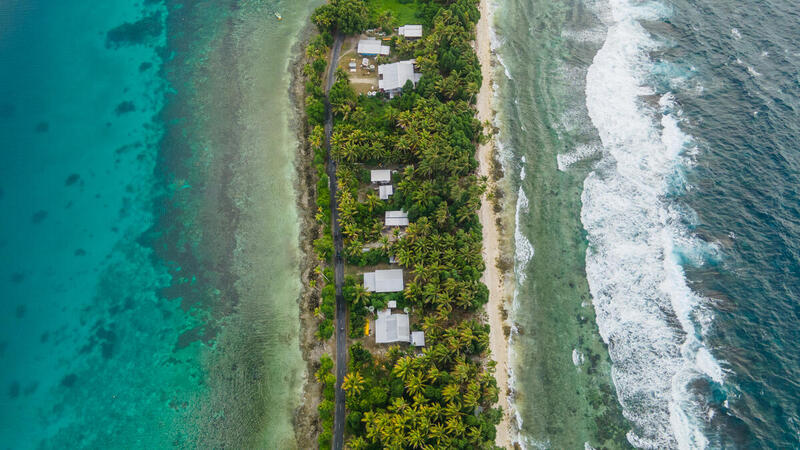
On an atoll nation, there is no higher ground to retreat to. This narrow strip of land is the literal blueprint of our vulnerability. Driven by global carbon emissions, the ocean is turning volatile, pushing its waves further into our sanctuaries and threatening to submerge generations of family homes. We live on a knife’s edge. We are fighting a daily battle to keep our narrow slips of paradise from being swallowed by the sea.
“If you save Tuvalu, you save the world… For a small island developing state like Tuvalu, climate change is an existential threat. It is a matter of life and death.”
— Enele Sopoaga, Former Prime Minister of Tuvalu
© Greenpeace / Bianca Vitale
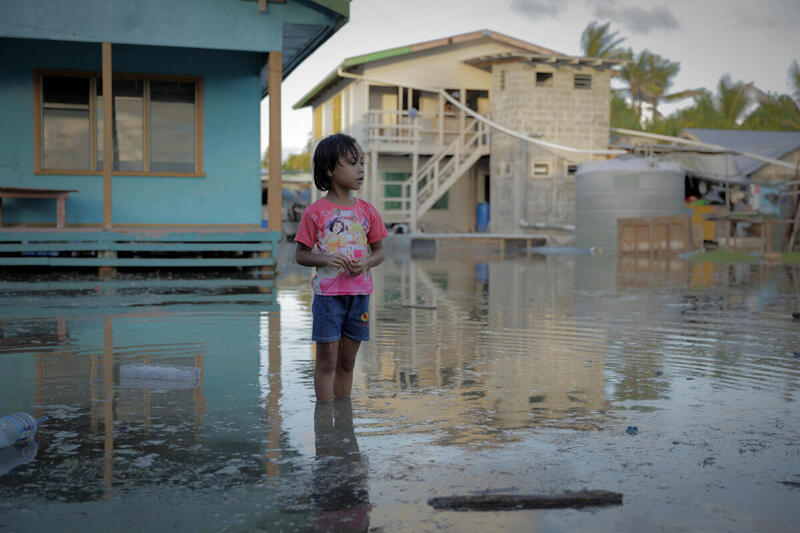
High tides and saltwater intrusion are no longer rare disasters. They are the weekly reality for our children, flooding their schools and poisoning their clean drinking water.
© Greenpeace / De’allande Pedro
PART 3: CHOKED BY OIL

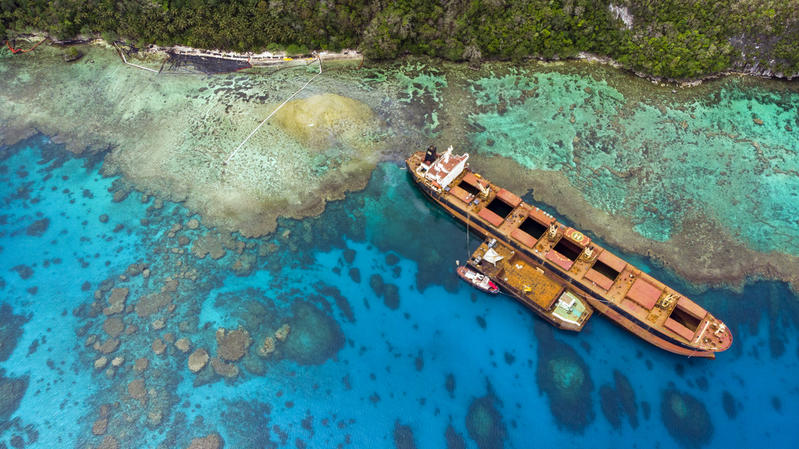
Plastic is only half the threat; the other half is the raw oil that feeds it. When the fossil fuel industry spills oil into our ocean, it injects a direct poison into The Story of the Pure Water. This slick is a chemical chokehold on our reefs, our fishing grounds, and our health. We are fighting to end the oil and gas age entirely, ensuring our ocean remains vibrant, sovereign, and alive.
© Greenpeace
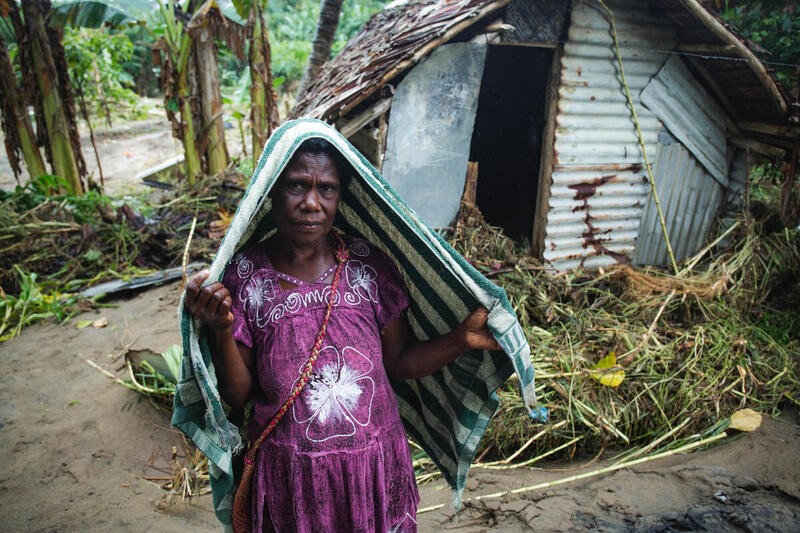
Rising global temperatures primarily from fossil fuel and petrochemical industries fuel extreme mega-cyclones that destroy generations of what we call home in hours. This is Loss & Damage (L&D) in real-time.
“The ocean is not what divides us, it is what connects us… When we degrade the ocean, we degrade ourselves. Pollution and exploitation of our waters are direct threats to our survival and our cultural identity.”
— Aulani Wilhelm, Native Hawaiian Marine Conservationist and Indigenous Leader
© Niki Kuautonga / Greenpeace
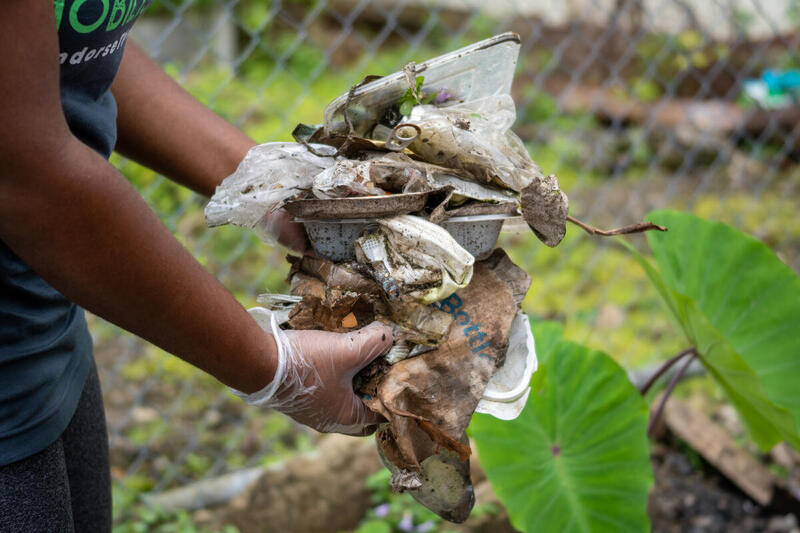
Plastic is made from oil. The fossil fuel industry’s greed doesn’t just warm our air—it chokes our coral reefs and poisons our fish. We are fighting for a global plastics treaty to keep our waters pure.
© Eremasi Rova / Greenpeace
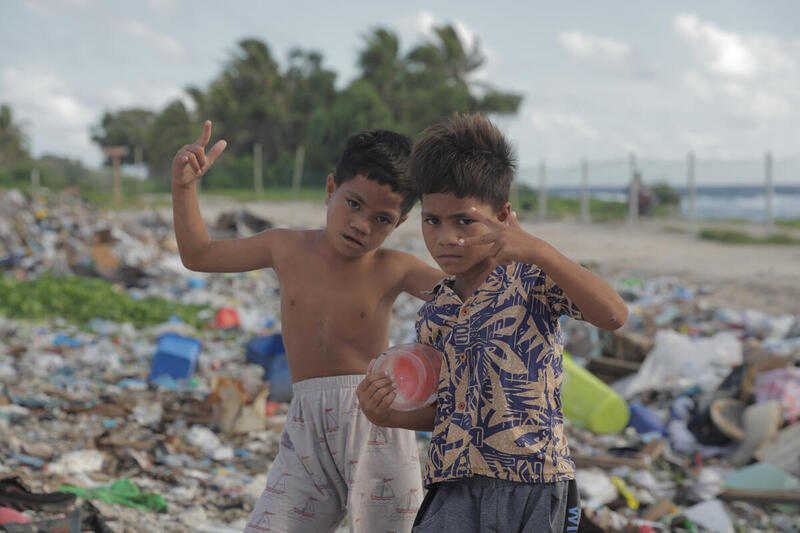
Our youth refuse to let their future be buried under the waste of the global fossil fuel economy. We stand tall.
© Greenpeace / De’allande Pedro
PART 4: THE MANDATE FOR SURVIVAL

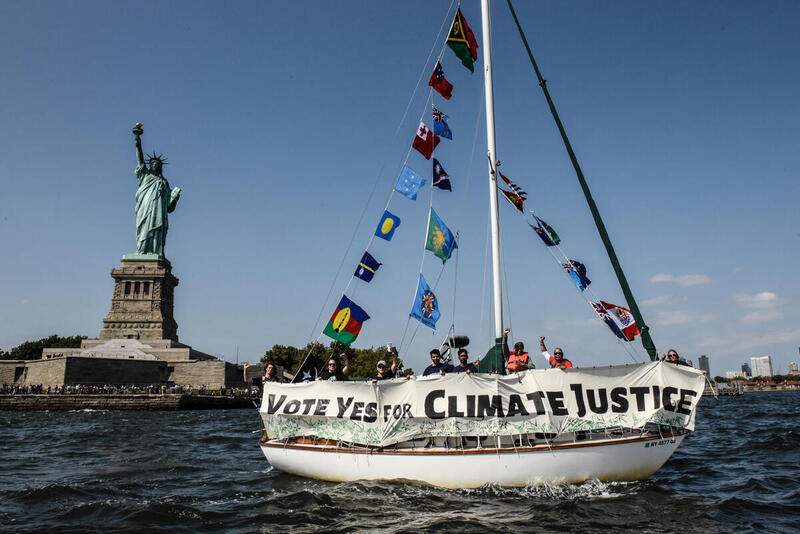
We are no longer pleading for our lives; we are rewriting the rules of global accountability. This campaign is our legal mandate for survival. We demand that the International Court of Justice cements 1.5°C as an unyielding boundary to stay alive, forcing a swift, total, and just transition away from the fossil fuels choking our planet. This is not a request for charity—it is an absolute demand for justice under international law.
“We want to see the law working for us, not against us, or ignoring us. We want to show that our rights, our culture, and our very existence are protected under international law.”
— Cynthia Houniuhi, Solomon Islands Activist, Pacific Islands Students Fighting Climate Change (PISFCC)
© Stephanie Keith / Greenpeace
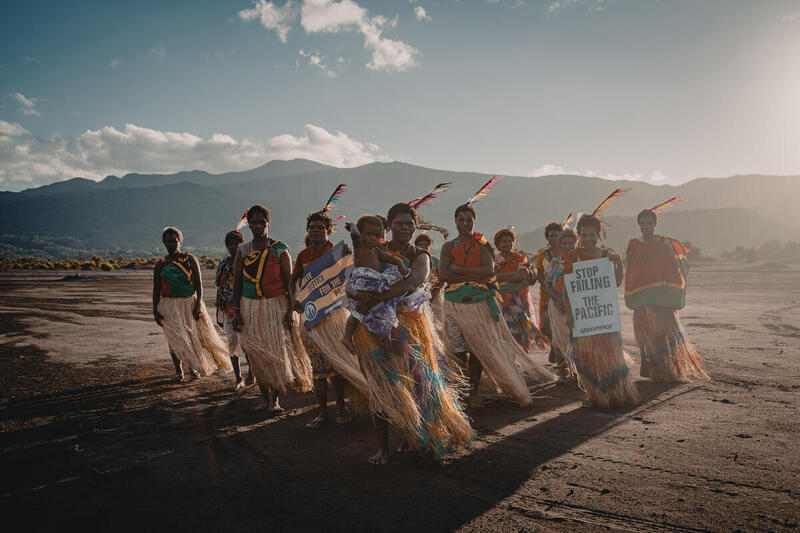
The Frontline walks firm. Our resistance is intergenerational, carried forward by the fierce leadership of our women. We stand on the soil of our birth, holding our future in our arms, and reminding the world that we refuse to be a casualty of global inaction. This is the heart of our struggle: a collective, living wall of culture, dignity, and political defiance.
© Greenpeace
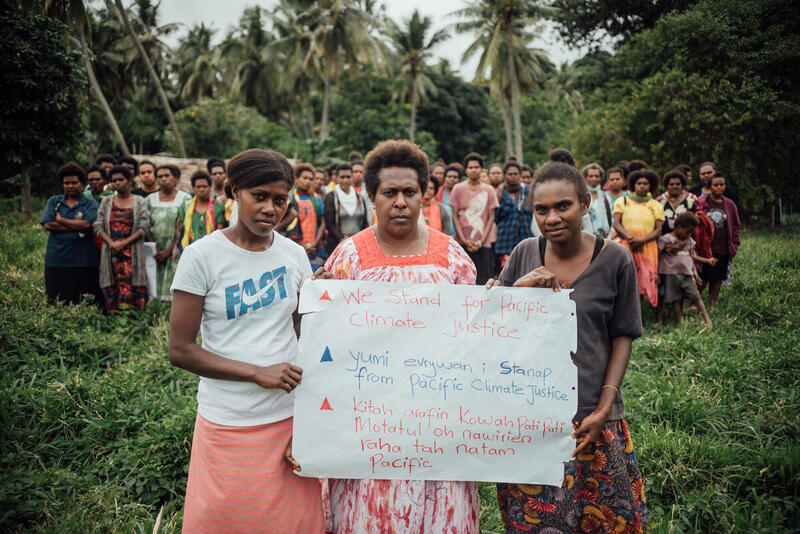
Across every dialect, every archipelago, and every ocean trench, our message to global leaders is identical: Justice delayed is justice denied. This is the language of survival, echoing from our ancestors to our youth. We are not asking for permission to exist, nor are we negotiating our borders. We are standing as a unified wall of voices to dismantle the global fossil fuel economy and reclaim our sovereignty.
“We are drawing the line here… No greedy whale of a company sharking through political seas. No backwater bullying of businesses with broken morals. No blindfolded bureaucracies gonna push this mother ocean over the edge. No one’s drowning, baby. No one’s moving.”
— Kathy Jetñil-Kijiner, Marshallese Poet and Climate Envoy
© Steven Lilo / Greenpeace
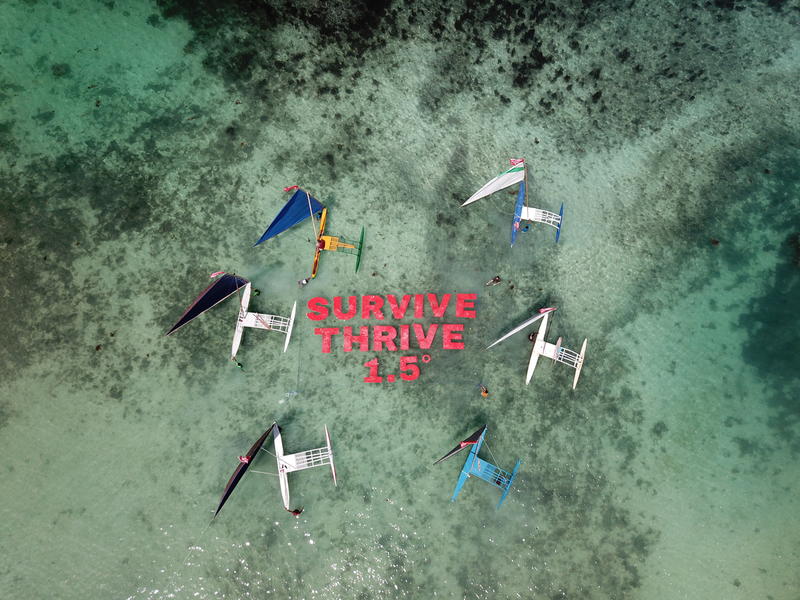
For too long, the world has written the Pacific’s future as a slow, tragic elegy—treating our disappearance as inevitable. We completely refuse that narrative. Limiting global warming to 1.5°C is not an ambitious target for us; it is our baseline for survival. But survival is not our destination. We demand the resources, the climate finance, and the systemic global accountability required to secure our future. We are not a tragedy in waiting. We are an enduring, sovereign people building a future where our islands, our children, and our culture permanently prosper and thrive.
© Martin Romain / Greenpeace
PART 5: THE VOYAGE AHEAD – JOIN OUR VAKA

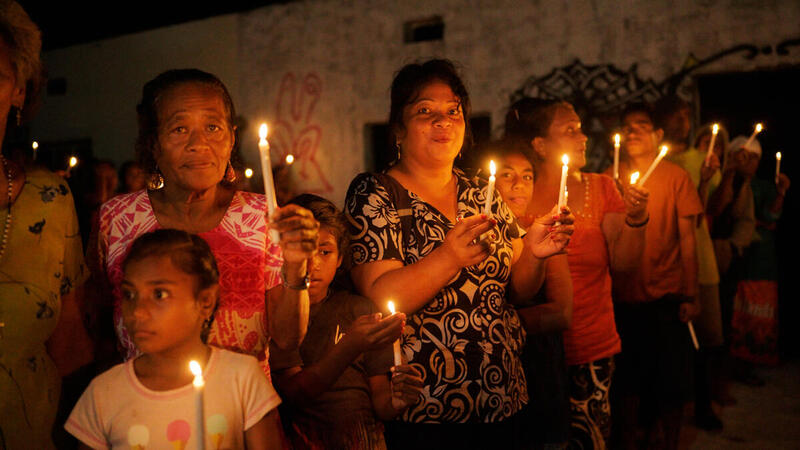
They tell us we need “gas” as a transition fuel to survive. We say no. Gas is just another fossil fuel burning our home. We carry the flame of a new dawn—powered by the sun, the wind, and the waves.
© Greenpeace / The Roving Rovas
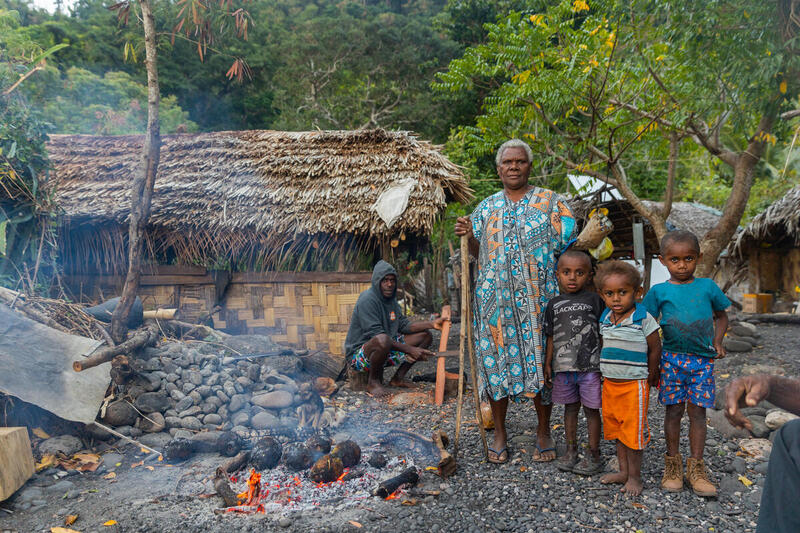
We are still here. Through cyclones, rising tides, and the toxic legacies of the fossil fuel age, our communities remain deeply rooted in our ancestral lands. This is what climate justice looks like: the sacred right to cook our food, raise our children, and pass down our traditions in peace. We are not disappearing, and we are not giving up. We have fought to rewrite global laws so that this village, and thousands like it across our blue continent, will continue to thrive for generations to come.
“We want to survive. We don’t want to migrate. We want to live on our islands, because that is where our culture is, that is where our identity is, that is where our roots are.”
— Hon. Anote Tong, Former President of Kiribati
© Greenpeace / Island Roots
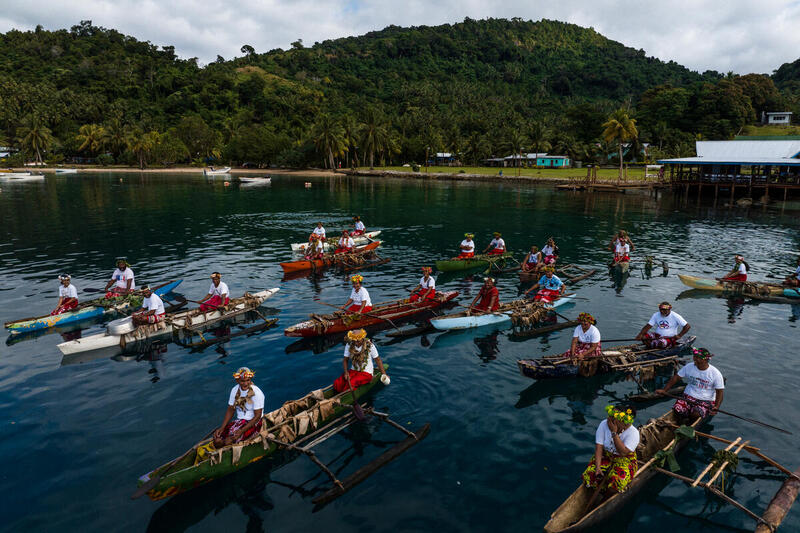
True sovereignty is not found in the halls of foreign courts; it is lived every single day on the water. As we conclude this journey, we look to the horizon with collective purpose. Our ancestors crossed the vastness of this blue continent using nothing but the stars, the currents, and an unshakeable trust in one another. Today, we paddle forward in that exact same spirit. We have drawn the legal boundaries, we have confronted the polluters, and now we carry our culture confidently into the tomorrow we fought to protect. The voyage continues.
© Greenpeace / Andrew Quilty
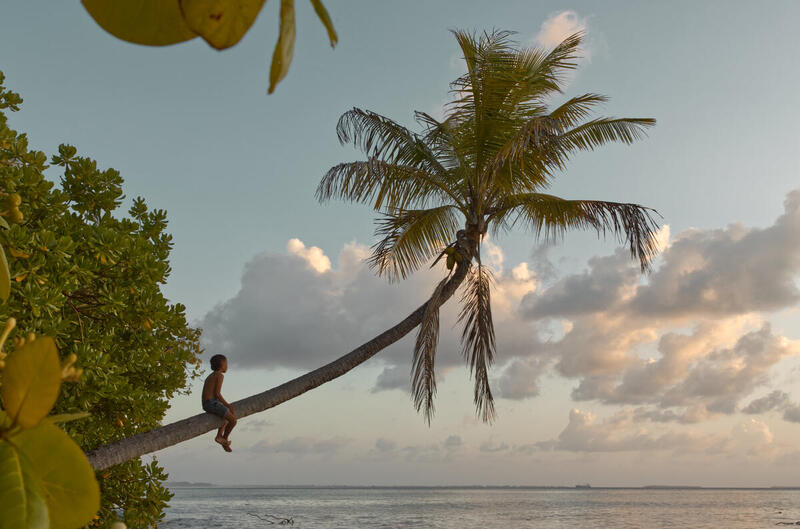
The world sees vulnerability; we see an unyielding stronghold of culture, identity, and life. We did not choose this fight, but we have chosen how it will end. From the courts of international law to the very tops of our coconut trees, our presence on this land is absolute and non-negotiable. Our ancestors navigated this blue continent for millennia, and we are ensuring our children inherit the right to do the same. We are not a tragedy to be mourned. We are the guardians of the Pacific, and our story will never be erased.
© Greenpeace / De’allande Pedro