The goal of every streaming service is to keep you watching for as long as possible. While you are logging minutes, platforms are cashing in on ad sales while explaining to its shareholders and potential buyers that view time keeps going up. In essence, it doesn’t quite matter what you’re watching as long as you keep going. Streaming services will keep tabs on what is popular and what isn’t, but the goal is eyeballs for as long as possible.
As a result, there is a new trend moving around streaming services designed to further keep people continuously watching anything on the platforms. It’s pointless and distracting, and feels derivative of better features of DVDs and Blu-rays of the past. Don’t get fooled by streamers.

Quiz
4K Streaming vs. DVD
Trivia Challenge
Think higher resolution always means better picture? — think again, and test your knowledge of the tech behind your screen.
StreamingDVDsCompressionResolutionVideo Tech
What video compression format is most commonly used by major 4K streaming services like Netflix and Disney+?
Correct! H.265, also known as HEVC, is the dominant codec for 4K streaming because it compresses video more efficiently than older formats. However, even HEVC has to make significant sacrifices in quality to fit 4K content into manageable bitrates for internet delivery.
Not quite. The answer is H.265 (HEVC). While H.264 is still widely used for HD streaming, 4K content requires the superior compression efficiency of H.265 to keep file sizes practical — though that compression still comes at a visual cost.
What is the maximum bitrate of a standard DVD’s video stream?
Correct! A standard DVD tops out at around 9.8 Mbps for its video stream. While that sounds modest compared to 4K resolutions, the key is that this bitrate is delivering 480p content — meaning far less data is being squeezed, and compression artefacts are far less visible.
Not quite. A standard DVD’s maximum video bitrate is approximately 9.8 Mbps. That figure might seem low, but because it’s only encoding 480p resolution, the compression is far less aggressive and the picture can look surprisingly clean and film-like.
Approximately what bitrate does Netflix typically use to stream 4K HDR content?
Correct! Netflix streams 4K HDR at roughly 15–25 Mbps, which sounds decent but is actually quite compressed for content at that resolution. A 4K Blu-ray disc, by comparison, can deliver bitrates of 80–100 Mbps, which is why physical media still wins on raw picture quality.
Not quite. Netflix typically streams 4K HDR at around 15–25 Mbps. This is dramatically lower than a 4K Blu-ray disc’s potential 80–100 Mbps, meaning the streaming version must discard a significant amount of visual information to fit through your internet connection.
What visual artefact is most commonly caused by heavy video compression in 4K streaming?
Correct! Banding — where smooth colour gradients appear as stepped blocks — and blocking artefacts are the telltale signs of aggressive compression. You’ll often notice banding in dark skies or shadowy scenes in 4K streams, something far less common on physical media.
Not quite. The answer is banding and blocking artefacts. These appear when a codec discards too much colour and detail data to save space. Smooth gradients like dark skies can show visible ‘steps’ of colour, and fast motion can break into blocky patches — both common in heavily compressed 4K streams.
What is the native resolution of a standard DVD?
Correct! DVDs store video at 720×480 pixels for NTSC regions (like the US) or 720×576 for PAL regions (like Europe). Despite this relatively low resolution, the efficient use of bitrate and lack of heavy compression can make DVDs appear remarkably sharp and film-like on a modest screen.
Not quite. The answer is 720×480 for NTSC or 720×576 for PAL. These resolutions are a fraction of 4K’s 3840×2160, yet a well-mastered DVD can still look impressive because the compression is far less severe relative to the amount of picture detail being encoded.
In what year was the DVD format officially launched for consumers in the United States?
Correct! DVDs launched in the US in 1997, following an earlier debut in Japan in late 1996. The format was a massive leap over VHS, offering cleaner picture, chapter selection, and surround sound — and it dominated home video for over a decade before streaming began to take hold.
Not quite. The DVD launched in the United States in 1997. It had debuted in Japan a year earlier in 1996, and its combination of better picture, digital audio, and durability over VHS quickly made it the dominant home video format well into the 2000s.
What does ‘HDR’ stand for in the context of modern 4K streaming and display technology?
Correct! HDR stands for High Dynamic Range, and it refers to a wider range of brightness levels and colours that a display can show. When properly implemented, HDR can make a bigger perceptual difference than the jump to 4K resolution alone — but poor streaming compression can undermine its impact.
Not quite. HDR stands for High Dynamic Range. It allows displays to show brighter highlights and deeper shadows simultaneously, with a wider colour gamut. Ironically, the heavy compression used in 4K streaming can introduce artefacts that make HDR content look worse than well-mastered SDR video on disc.
What is the term for the process where a video codec selectively discards information deemed less visible to the human eye in order to reduce file size?
Correct! Lossy compression is the technique at the heart of all major streaming video codecs. By discarding data the human eye supposedly won’t notice — fine textures, subtle colour differences — codecs dramatically reduce file sizes. But at low bitrates, those shortcuts become very noticeable indeed.
Not quite. The answer is lossy compression. Unlike lossless encoding, which preserves every bit of data, lossy compression permanently discards information to shrink file sizes. At the low bitrates used by streaming services, this can strip away fine detail, crush shadow gradients, and introduce the artefacts that make 4K streams look worse than a DVD.
Your Score
/ 8
Thanks for playing!
Streaming services are embracing podcasts
Conversations designed for listening are available to watch
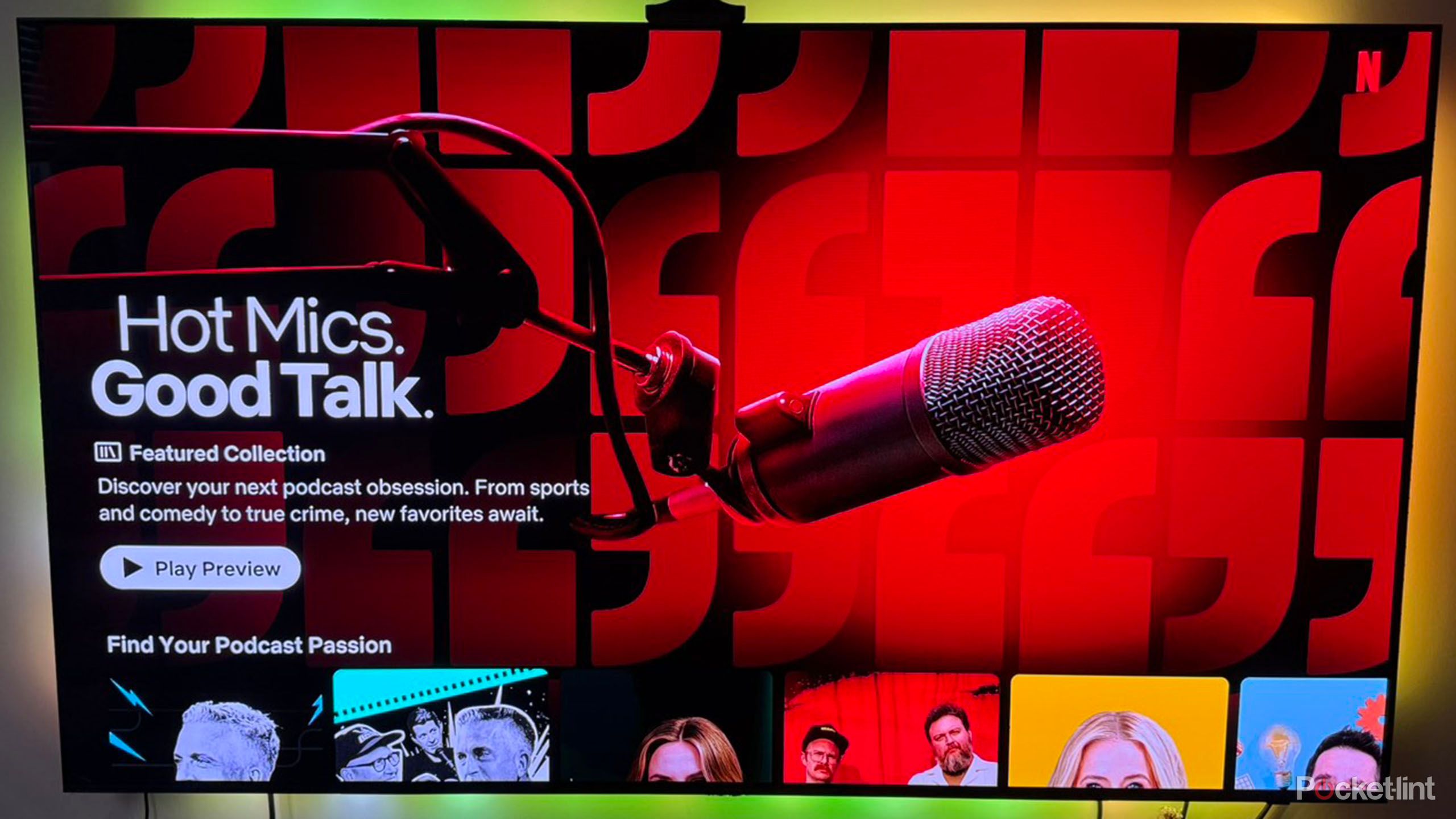
Streaming services are all in on podcasts, and it’s hard to imagine there are a lot of subscribers eager for the content. And while I don’t love using the word “content” to describe TV shows and movies, I do think it’s a fitting term for podcasts. After all, most of them are just taped conversations with nothing particularly compelling. Most podcasts are filler.
Which makes sense why Netflix, Disney+, and others are adding them to their catalog. It’s an easy way to fill up space and add another line of sales copy to their pitches to consumers. Podcasts have already pivoted to video, despite, again, them mostly just being conversations between two or more people. For some reason, video podcasts are wildly popular. Netflix took note and bought up a bunch of them, and others platforms are joining.
What’s perhaps most astounding is that platforms are also making their own so-called podcasts. Of course, these aren’t really podcasts, but because the moniker is so enticing to some consumers, they’ve slapped them on these products. In actuality, they are simply promotional interviews. And they’re pointless.
These conversations are cheap and easy to make

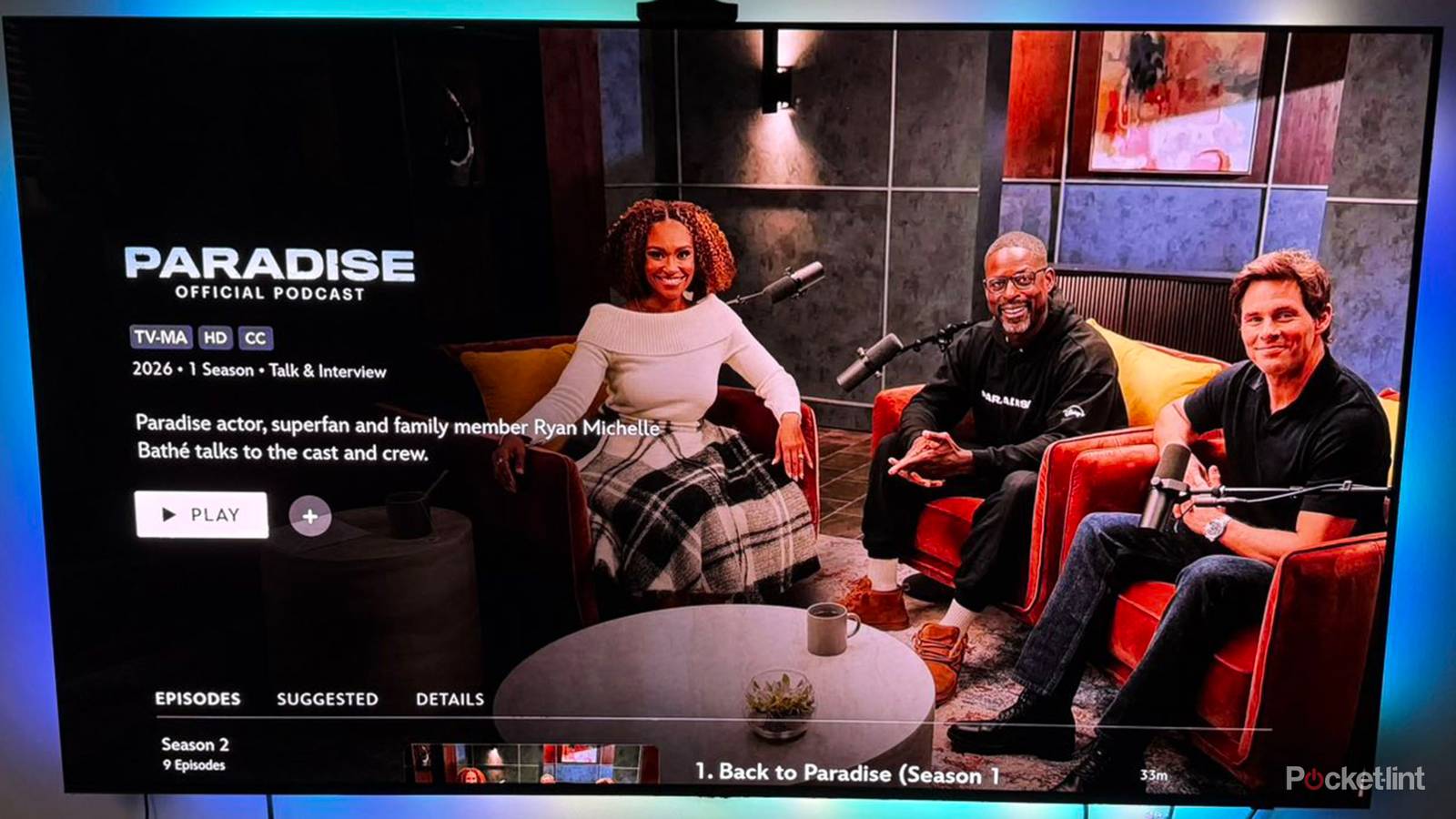
The Beauty, Daredevil: Born Again, The Pitt, Paradise, Bridgeton and many more shows have added what they are calling companion podcasts to their lineup. You’re likely to have seen ads for them before or after you watch one of the titles that has one. They feature the cast and crew of shows talking about the show. It isn’t just one conversation; each episode of the show gets a companion podcast so that after you watch what you’re watching, you can watch people talk about what you just watched.
They are catering to dedicated fans and do provide behind-the-scenes information and commentary, but the real goal is to keep you watching and drum up excitement. Streamers want you completely immersed in their content, and if there’s a particular show or world you enjoy, it wants to inundate you with as much content as possible until you get sick of it.
It helps them that these podcasts are incredibly easy for the platforms to make. While the cast is there to make the movie or show, they are then gathered to talk about it as well once they’re done filming. It’s not as if they’re trying to get everyone back together months after the season wraps up to do some promotional shoots or an interview circuit. What’s more, the narrative is controlled. There are no surprising questions asked by journalists and nothing that can’t be edited or changed after taping is done.
These productions are cheap, safe, and viewed as ancillary, promotional material to keep shows in the discourse.
What TV podcasts get wrong
Unnecessary conversations with little insight

The problems with these podcasts are myriad, and it’s worth being quite skeptical. The first thing is, a lot of these shows aren’t particularly arcane or complex. It’s not as if they’re revealing a lot of insight that you may have missed from actually watching the show. You aren’t going to get anything notable either; these are scripted and produced conversations that are designed to keep rabid fans satisfied and casual fans curious.
However, Netflix and others want you to think you’re missing something. Either there was something important that happened in the show you didn’t quite catch or perhaps there is a special insight during the conversation that will be relevant to what happens next. Trust me, there is nothing exclusive coming out of these conversations.
These companion podcasts aren’t really podcasts either. They’re only calling them podcasts because, well, it sounds more compelling to most people than interviews. But that’s what they are: interviews. Sometimes they are done in a roundtable setting, and sometimes they’re done on Zoom. Sometimes there is a host and sometimes there is not. They can be 15 minutes or up to 45 minutes for some reason.
Even the word interview can be a stretch because there isn’t exactly a targeted line of questioning. They are promotional interviews that serve to increase the visibility of the show in the easiest way possible while giving the appearance of intimacy and exclusivity.
Streaming services are stealing a beloved DVD feature
Physical media offered timeless insight

These aren’t podcasts. They’re lazy promotional material. But I also see them as a half-hearted attempt to capture a popular feature from a bygone era: the DVD commentary.
Such a feature was so prized and enjoyed by consumers back in the day because it felt intimate and insightful. Instead of people sitting around talking about what they filmed, you watched the movie alongside the stars or creators. As you watched, they did too, and they just talked. Whatever came to mind, whether it was relevant or not, was what was recorded.
A lot of things made the commentary stand out. Firstly, there was a sense of nostalgia. These creators weren’t chatting about the story right after they shot it. They were experiencing it as a viewer and were brought back into the filming. THey are giving perspective as someone who made the movie or show but also as someone watching it. Sometimes it was months, years, or even decades after the title was made.
Still, the best part of the DVD commentary was that it felt raw. There are countless examples of actors just saying whatever they wanted clearly without any studio head or publicist directing them. Ben Affleck famously had some funny things to say about Armageddon in its commentary. The audio commentary by Roger Moore on old James Bond movies is quite hilarious and unfiltered as well. In some commentaries, you have actors coming and going, dropping in to join the conversation as if they were late meeting someone for coffee.
This carefree nature meant it was more personal. It was less a strategic push by a streaming platform and more just a thing that was done and not given too much thought.
What’s particularly ironic and disheartening is that the DVD was killed by Netflix and other streaming services. Netflix literally canceled its DVD subscription service years ago after streaming bypassed physical media rentals about a decade ago. If they are going to start taking ideas from the past, at least they could make them more sincere and entertaining.