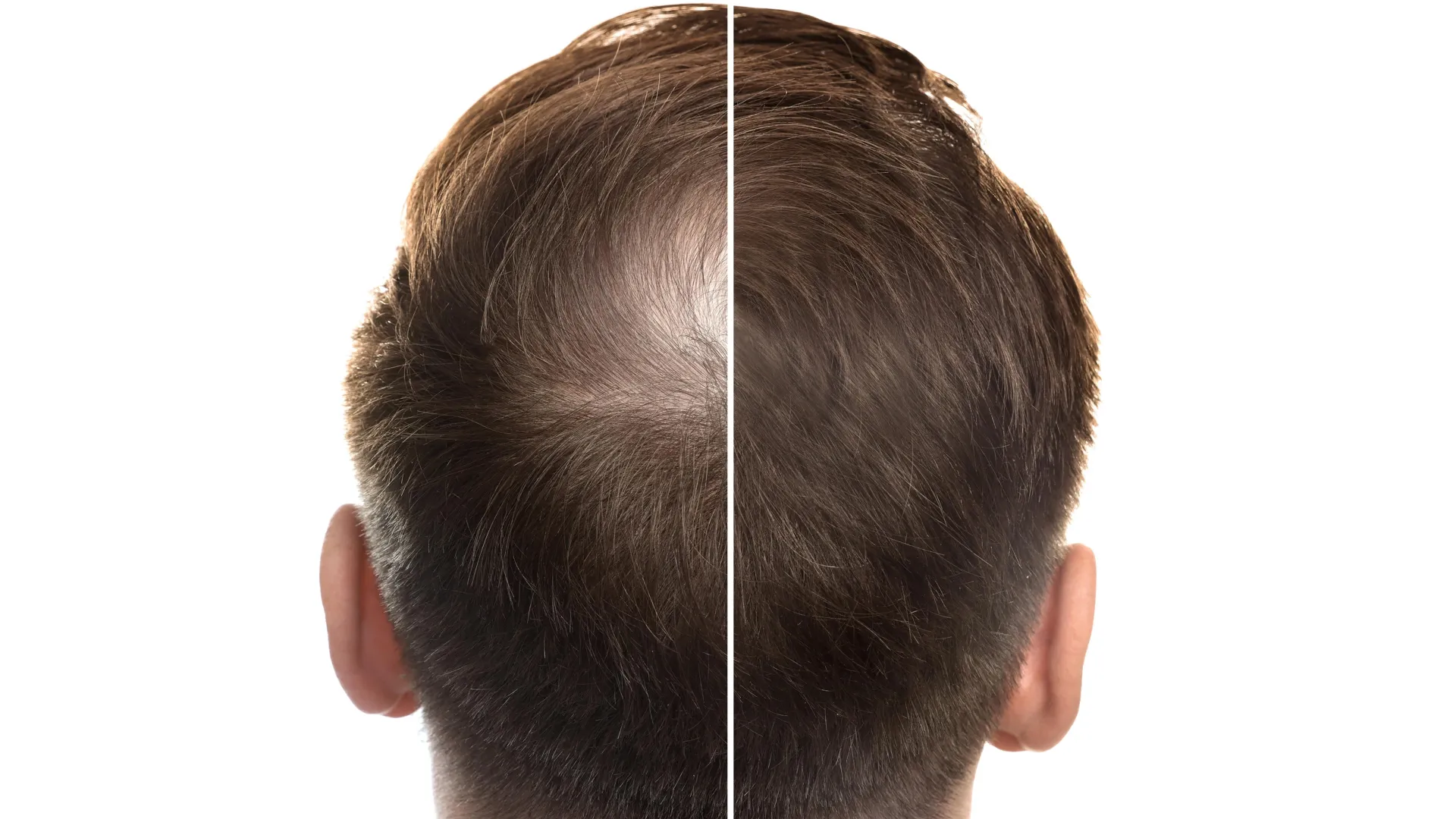
Androgenetic alopecia (AGA) is the most common type of hair loss, affecting millions of men and women around the world. It is often known as male or female pattern hair loss, and it usually develops gradually as hair follicles shrink over time. As follicles become smaller, they produce thinner, shorter hairs until growth may slow dramatically or stop.
Current treatments, including finasteride and minoxidil, can help some people, but they are not ideal for everyone. Finasteride works by targeting hormones involved in follicle shrinkage, while minoxidil is commonly used on the scalp to encourage growth. However, some patients worry about unwanted effects, including sexual side effects linked to finasteride or scalp irritation associated with minoxidil. Because of this, many people continue to look for options that feel safer, more natural, or more comprehensive.
Ancient Root Meets Modern Hair Science
A new scientific review suggests that Polygonum multiflorum, a root long used in traditional Chinese medicine, may deserve serious attention as a potential therapy for androgenetic alopecia. The herb has been used for more than 1,000 years and has traditionally been associated with “blacken hair and nourish essence.”
What makes the review especially interesting is that the plant does not appear to act through only one biological route. Instead, researchers report that Polygonum multiflorum may influence several processes involved in hair loss and regrowth at the same time.
In androgenetic alopecia, a hormone called dihydrotestosterone plays a major role. It can gradually shrink hair follicles, making it harder for them to keep producing strong, healthy hair. According to the review, Polygonum multiflorum may help reduce the impact of this hormone, protecting follicles from one of the major drivers of pattern hair loss.
A Multi Path Approach to Hair Regrowth
The review also describes several other possible benefits. Polygonum multiflorum may help prevent follicle cells from dying too early, which is important because healthy follicles depend on active, living cells to maintain the hair growth cycle. It may also turn on key biological signals involved in regeneration, including Wnt and Shh pathways.
These pathways are important because they help control how cells grow, communicate, and repair tissue. In hair follicles, they are closely linked to the shift from resting phases into active growth. When these signals are stronger, follicles may be more likely to reenter a growth state.
The herb may also improve blood flow to the scalp. Better circulation can help bring oxygen and nutrients to follicles, supporting the environment needed for healthier hair growth. This is one reason researchers see Polygonum multiflorum as potentially broader than conventional treatments that focus on a single target.
“Our analysis bridges ancient wisdom and modern science,” said Han bixian, the first author of a review on the topic recently published in the Journal of Holistic Integrative Pharmacy. “What surprised us was how consistently historical texts — from the Tang Dynasty onward — described effects that align perfectly with today’s understanding of hair biology. Modern studies now confirm that this isn’t folklore; it’s pharmacology.”
From Traditional Records to Laboratory Evidence
The review brings together several kinds of evidence, including laboratory research, clinical reports, and historical herbal records. Those older records are not being treated as proof by themselves. Instead, researchers are comparing traditional claims with modern biological findings to see where they overlap.
That overlap appears to be one of the main reasons for renewed interest in Polygonum multiflorum. The review suggests that the herb may do more than slow hair loss. By acting on growth factors and signaling pathways, it may help create conditions that support regeneration.
This is an important distinction. Many hair loss treatments are designed mainly to preserve existing hair or slow further thinning. A treatment that actively supports regrowth through multiple mechanisms could offer a different kind of approach, especially for people who have not responded well to existing options.
Safety Depends on Proper Preparation
The review also emphasizes that preparation matters. In traditional Chinese medicine, Polygonum multiflorum is typically processed before use. This step is considered important because processing can affect both safety and biological activity.
“When properly processed — a key step in traditional preparation — the herb shows a favorable safety profile, making it more acceptable to patients wary of side effects like sexual dysfunction or scalp irritation linked to current medications,” This article highlights.
That point is especially relevant because natural products are not automatically risk free. Herbs can contain powerful compounds, and their effects may vary depending on preparation, dose, and product quality. The review presents processed Polygonum multiflorum as a more acceptable option for some patients, but it does not suggest that people should self treat without guidance.
More Clinical Testing Is Still Needed
Although the findings are promising, the researchers stress that stronger clinical evidence is still needed. Much of the current support comes from laboratory studies, historical records, and limited clinical observations. Large, carefully designed human trials would be necessary to confirm how well Polygonum multiflorum works for androgenetic alopecia and how safe it is across different groups of patients.
Still, the review points to a larger idea with growing scientific importance. Traditional remedies may contain biologically active compounds that can inspire new treatments when they are studied with modern methods. In the case of Polygonum multiflorum, centuries of use are now being examined through the lens of hormone biology, cell survival, growth signaling, and scalp circulation.
For people dealing with hair loss, the research offers a hopeful but cautious message. A root used for more than a millennium may not replace today’s treatments yet, but it could help guide the next generation of hair regrowth therapies.