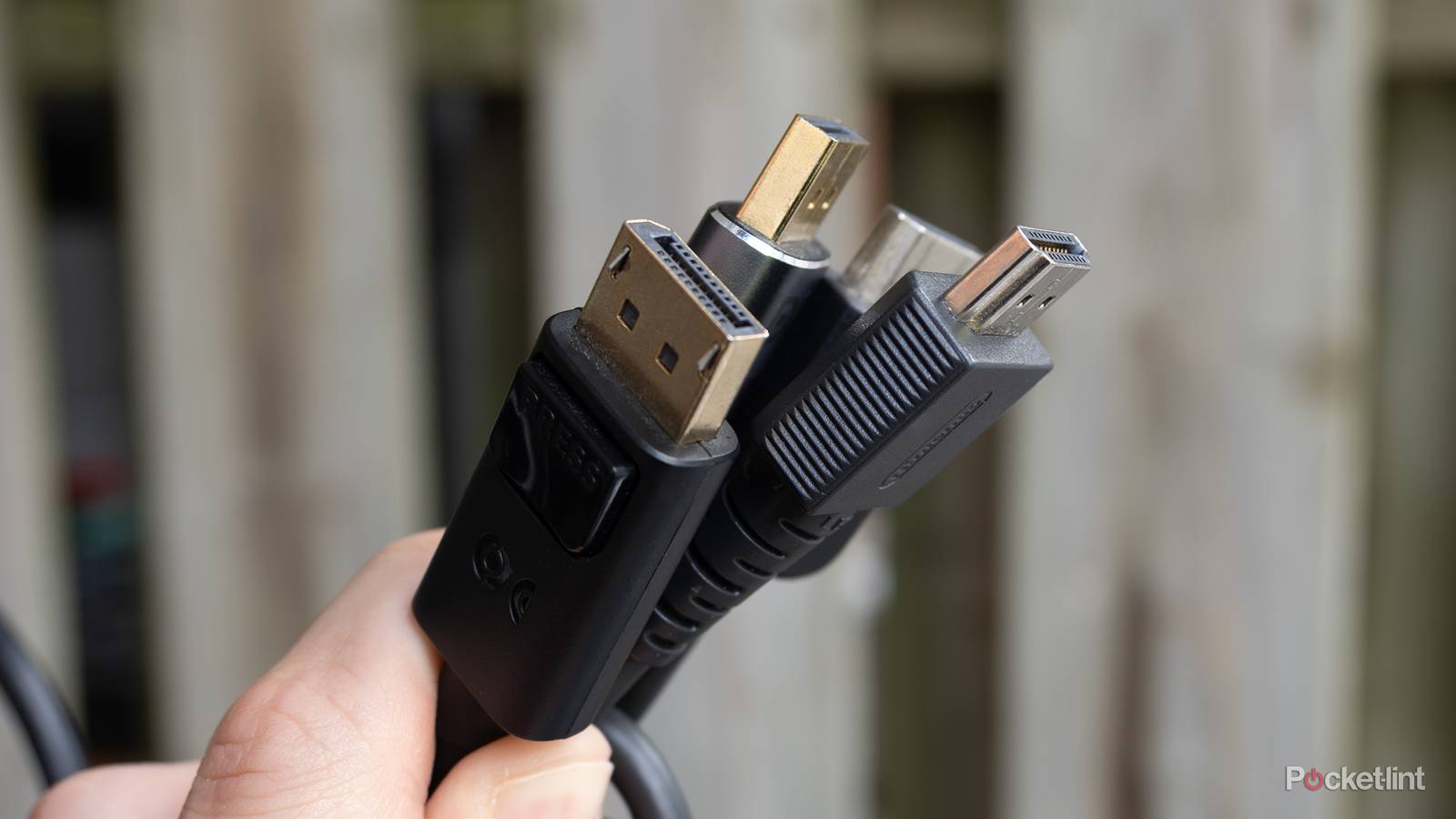
HDMI cables are in just about any home with modern technology. Your game consoles use them, your Blu-ray players use them, your smart TV uses them, your streaming boxes use them, and your audio receiver might even use them. I have more cables than I know what to do with, thanks to being an early adopter of the format decades ago. For whatever reason, I can’t seem to get rid of them, so I find new ways to use them, and that’s actually detrimental in some areas.
I moved my Xbox Series S from my living room to a spare bedroom once I got a TV set up in there. In that process, I managed to lose track of the HDMI cable that was plugged into it, so I had to rely on something that was sitting around in a box. The Xbox Series S performs best with an HDMI 2.1 cable, as that’s what gives it access to 120 FPS gameplay, although that console doesn’t particularly come close to that type of performance with any regularity.
There lies the big issue. HDMI cables look the same, and it’s upon closer inspection that you can actually find the difference. An HDMI 2.1 cable is typically marked with wording like Ultra High-Speed. These cables have been the standard for several years now, but HDMI 2.0 cables have also had a long run as the de facto HDMI cable launched with everything. It’s easy to get them confused, and if you use an HDMI 2.0 cable with your Xbox or PlayStation, it’ll work, but you’ll be leaving a ton of performance on the table.

- 4K Capability
-
Yes
- Brand
-
PlayStation
- Storage
-
2TB
- Screen Resolution
-
VRR and 8K
It’s time for companies to stop making HDMI 2.0 cables
The best time was yesterday, and the second-best time is today
In 2026, 2025, and really, 2024, there was no reason for HDMI 2.0 cables to be sold. The thing with HDMI cables is that they are fully backwards and forward compatible. If you want to use an HDMI 2.1 cable with your Xbox 360, there’s nothing wrong with that. It wouldn’t suddenly see more performance, but it would work. On the other hand, while using an older HDMI 1.4 cable from your Xbox 360 will work with your Xbox Series X or S, it’ll hold you back in a big way. You wouldn’t be able to get 120 FPS support from a cable that old; you can’t get 4K 120 FPS from your HDMI 2.0 cable, either. The only cable that allows this is an HDMI 2.1 cable. I honestly can’t think of why they are still making 2.0 cables. It only creates confusion that doesn’t have to exist otherwise.
If you look on Amazon for an Amazon Basics-branded HDMI 2.1 cable, you’ll find that it only costs about $6. That’s pocket change as far as technology goes, and you’ll find that buying an older HDMI 2.0 cable doesn’t make any sense at that price. A 10-foot HDMI 2.0 cable costs about the same price, albeit much longer compared to six feet, but the point is still that we’re talking about a few dollars at most for a cable that is guaranteed to give all of your devices the best performance available today, versus one that can potentially hamstring your devices.
HDMI 2.1 has been out for long enough that I just don’t understand the thought process for why the older line of HDMI cables hasn’t been stopped. It seems weird that you can go out and buy an HDMI 2.0 cable today when a 2.1 cable is pretty much the same price and will give you better performance across the board. At the very least, getting rid of the 2.0 cable would mean there’s less chance of being confused at a store when somebody sees both of these cables looking back at them. It would make more sense if one cable were far cheaper than the other, but that’s not reality.
The fact that all HDMI cables look pretty much the same is already confusing enough for the average person — a trap that USB-C cables are rapidly falling into — so manufacturers should take some of that burden off by only selling the newest cable. That would go a long way to simplifying the buying process, and people won’t have as many questions.

Quiz
HDMI 2.0 and its history
Trivia challenge
Think you know everything about the standard that supercharged your home cinema? Put your knowledge to the test.
HistoryStandardsVideoHardwareBandwidth
In what year was HDMI 2.0 officially released?
Correct! HDMI 2.0 was released in September 2013 by the HDMI Forum. It arrived just in time to support the growing demand for 4K content and displays entering the consumer market.
Not quite. HDMI 2.0 launched in September 2013. This timing was deliberate, as manufacturers needed a standard capable of handling 4K resolution at smoother frame rates than its predecessor could manage.
What is the maximum bandwidth offered by HDMI 2.0?
That’s right! HDMI 2.0 delivers a maximum bandwidth of 18 Gbps, a significant jump from HDMI 1.4’s 10.2 Gbps. This extra headroom was essential for supporting 4K at 60 frames per second.
Not quite. HDMI 2.0 supports up to 18 Gbps of bandwidth. For comparison, its predecessor HDMI 1.4 was capped at 10.2 Gbps, which wasn’t enough for smooth 4K playback at 60fps.
What is the maximum frame rate HDMI 2.0 supports at 4K resolution?
Correct! HDMI 2.0 can handle 4K resolution at up to 60fps. This was a major improvement over HDMI 1.4, which could only push 4K at 30fps — a limitation that made motion look choppy on large screens.
Not quite. The answer is 60fps. HDMI 1.4 had already introduced 4K support but was limited to 30fps, and HDMI 2.0 doubled that frame rate, making a huge difference for sports and gaming content.
Which organisation took over governance of the HDMI specification from HDMI Licensing LLC, leading up to the release of HDMI 2.0?
Spot on! The HDMI Forum was established in 2011 and took over development of the HDMI specification, releasing HDMI 2.0 as its first major standard in 2013. It brought a broader group of industry members into the process.
Not quite. The HDMI Forum was the body responsible. Founded in 2011, it replaced the original HDMI Licensing LLC structure for specification development, opening membership to a wider range of consumer electronics companies.
How many simultaneous audio streams does HDMI 2.0 support?
Correct! HDMI 2.0 supports up to 4 simultaneous audio streams, an upgrade over earlier versions. This made it better suited to multi-room audio setups and more complex home theatre configurations.
Not quite. HDMI 2.0 can carry up to 4 simultaneous audio streams. This was one of several audio improvements in the specification, alongside support for up to 32 audio channels in total across those streams.
What sub-revision of HDMI 2.0 introduced support for HDR (High Dynamic Range) video?
Well done! HDMI 2.0a, released in April 2015, was the revision that added static HDR metadata support. This allowed TVs and displays to receive HDR content from sources like Ultra HD Blu-ray players and streaming devices.
The correct answer is HDMI 2.0a. Released in 2015, this update added static HDR support to the standard. A later revision, HDMI 2.0b from 2016, then extended that with support for the HLG (Hybrid Log-Gamma) HDR format.
HDMI 2.0 uses the same physical connector type as which earlier version of HDMI?
Correct! One of the great conveniences of HDMI 2.0 is that it uses the same physical connectors introduced with the original HDMI 1.0 specification. That means existing cables and ports are physically compatible, though older cables may not support the full bandwidth.
Not quite — the answer is all previous HDMI versions. HDMI has always maintained physical connector compatibility going back to version 1.0. The key caveat is that older cables may not have the bandwidth capacity to carry HDMI 2.0 signals reliably.
Which colour space format did HDMI 2.0 add support for, enabling more vivid colours on compatible displays?
Excellent! HDMI 2.0 introduced support for the Rec. 2020 colour space, which covers a far wider gamut than the Rec. 709 standard used for HD content. This laid the groundwork for truly vibrant, lifelike images on 4K HDR televisions.
Not quite. The answer is Rec. 2020, also known as BT.2020. This wide colour gamut standard was a key feature of HDMI 2.0, enabling displays to reproduce colours much closer to what the human eye can perceive compared to older HD standards.
Your Score
/ 8
Thanks for playing!
I love the format, but it’s confusing
It shouldn’t be complicated
If you’re trying to sell somebody something, I don’t think there’s a lot of value in overcomplicating it. The problem with HDMI is the fact that your old cables will work with new devices, and for many people, it’s tough to tell the difference. If you have a 4K 60Hz TV, an HDMI 2.0 cable will be perfectly fine with your PS5 or Series X. The issue would only show up once you upgrade your TV and find that your cable isn’t good enough anymore. Fortunately, your game console has a settings page that tells you what it can and can’t do depending on the cable you have plugged in and what your TV is.
Even if we leave performance aside like that, an HDMI 2.1 cable is your gateway to the best audio and visuals that you can get, thanks to the 48 Gbps bandwidth compared to the 18 Gbps offered by HDMI 2.0. If you care about those things, you should upgrade to the latest cable. The good news is that many devices you buy, your Xbox and PS5 included, come with an HDMI 2.1 cable, as that’s what is needed to unlock the most performance. Unless you’re like me and have a bunch of cables thrown in a closet somewhere, you should be all set as long as you remember what cable goes where.
Don’t get me wrong, I love the HDMI format. I know that it just sounds like I’m doing a lot of complaining, and that’s because I am. It’s frustrating to see a format like HDMI, something that has wide compatibility across numerous devices, still holding itself back. There’s no reason to buy an HDMI 2.0 cable today, so it just shouldn’t exist. This needless confusion is only detrimental to the ecosystem, and while I love the compatibility, it’s only going to get more confusing once HDMI 2.2 cables hit the mainstream. It feels like we have barely scratched the surface of what HDMI 2.1 can provide, and there’s already another format about to be introduced to the public. Game consoles are the main thing that utilize HDMI 2.1, and while you don’t see a ton of games hitting 120 FPS, you do see more and more of them offering variable refresh rates, something only available with 2.1. That’s what I’d like to see more of, and I wonder how many people don’t even know it’s a thing because they’re still using a 2.0 cable and are none the wiser.