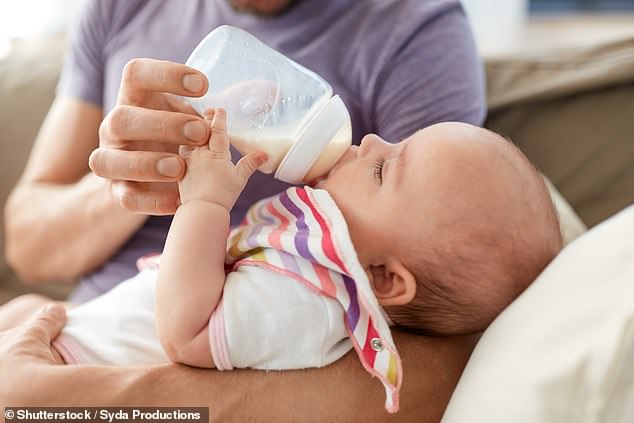
More than 60 babies in the UK became ill after drinking contaminated infant formula with experts warning ‘hundreds more’ may have been affected.
The UK Health Security Agency (UKHSA) said parents had reported multiple cases of babies becoming sick earlier this year after consuming batches of formula contaminated with the cereulide toxin, which can cause vomiting and stomach pain.
In rare cases, it can cause liver or kidney failure.
But child health experts said many more infants could have suffered ‘avoidable sickness’ than have been recorded, after it emerged contaminated products were on sale for up to eight months before the first recall notice was issued in January.
They are warning babies remain at risk of harm from contamination in future without stricter rules on formula safety.
Currently, formula brands ‘mark their own homework’ instead of having their products tested for safety independently, they said.
Nearly half of babies aged six to eight weeks in England rely on infant formula, NHS figures show, with more babies consuming formula as they get older.
Multiple batches of infant formula products made by Danone and Nestle, including Aptamil, Cow & Gate and SMA brands, were recalled in the UK in January and February after a worldwide contamination alert. The issue was later traced back to an added ingredient made by a third-party Chinese supplier.

Nearly half of babies aged six to eight weeks in England rely on infant formula, NHS figures show
The UKHSA initially said it had received reports of 36 unwell children who had consumed affected batches of formula. But in a new update, it said a total of 61 cases had been reported of children who showed ‘symptoms consistent with cereulide toxin poisoning’.
It was revealed some contaminated batches had been on sale since May 2025, months before the alarm was raised.
The formula industry said there was no confirmed link between children consuming the products and the cases of sickness.
Dr Vicky Sibson, director of independent child health charity First Steps Nutrition Trust, said: ‘Considering products were on shelves for months before parents were warned about the problem, then potentially hundreds of babies suffered avoidable sickness after consuming contaminated formula.
‘There is no independent safety testing of infant formula in the UK, so we are relying on the industry to tell us when there is a problem.’
She said UK authorities should monitor and investigate cases of sickness in babies reported to GPs and hospitals in order to spot when illnesses may be triggered by formula contamination.
Dr Simon Cameron, a specialist in microbiology at Queens University Belfast, said tighter rules were needed to ensure the ‘safety and security’ of babies who relied on formula.
‘Infants are in a uniquely vulnerable position when it comes to food safety and security. This is not, however, reflected in how the industry is regulated, with companies left to mark their own homework,’ he said. ‘Incidents like this cereulide contamination make a convincing argument for specific regulations and testing regimes to be introduced.’
In a report released today, First Steps Nutrition Trust said contamination events were becoming more likely as manufacturers rely on supply chains which are ‘vulnerable to disruption’. Just three manufacturers produce 90 per cent of all formula milk consumed in the UK.
Commenting on the report, Tim Lang, emeritus professor of food policy at the School of Health & Medical Sciences, City St George’s, University of London, said ‘inherent risks’ in the UK’s food system needed to be addressed by Government to protect babies and children.
He added: ‘The world of food is now volatile. A range of shocks are coming, ranging from climate heating, ransomware, weaponisation, logistic failures and scares caused by mis- and dis-information.’
A Nestle spokesperson said: ‘Quality and safety is non-negotiable and that is why we acted quickly and decisively with the precautionary recall on 5 January. We are very sorry to hear about any cases where babies have been poorly; our teams work closely with any families who report these types of concerns to us.’
Natasha Bye, chief executive of formula industry body the British Specialist Nutrition Association, said: ‘Infant formula is one of the most tightly regulated food categories, so families can feel reassured that the products they purchase for their children are safe.
‘Our members’ supply chain and manufacturing processes are both highly specialised and complex, meeting the strictest safety and quality standards.
‘Earlier this year, new regulatory standards for cereulide were introduced globally, reflecting ever improving safety standards. BSNA members are committed to providing quality products that parents can feel confident in to support the healthy development of their babies.’
A spokesperson for Danone North Europe said: ‘The health of babies is our priority, and the trust of parents is incredibly important to us. All of our products are manufactured in factories that are independently certified and pass the strictest quality controls, with over 1,000 checkpoints along the production process. We have recently evolved our procedures to include a triple check protocol [for cereulide] for all products containing ARA oil, with all tests carried out in an independently accredited laboratory.
‘We are committed to openly communicating this journey with parents to ensure they have confidence in every step of our supply chain.’
The UKHSA was contacted for comment.