Conny Waters – AncientPages.com – Jalisco is a region in western Mexico with a long and rich history. Nomadic groups first arrived there around 15,000 years ago. The name Jalisco comes from the Náhuatl words xali, meaning sand, and ixco, meaning surface, so it means “sandy surface.”
Archaeologists have found petroglyphs and cave paintings in places like Cabo Corrientes, San Gabriel, Jesús María, La Huerta, Puerto Vallarta, Mixtlán, Villa Purificación, Casimiro Castillo, Zapotlán el Grande, and Pihuamo. These discoveries show that people lived in the area long ago.
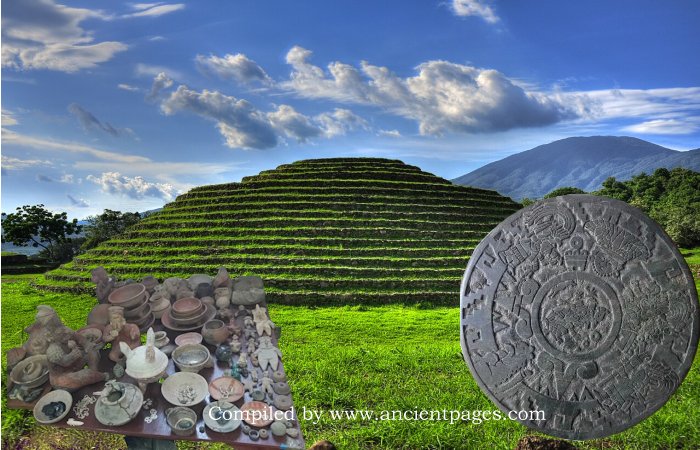
Background: Guachimontones archaeological site, built and inhabited by the Teuchitlán culture from 300 BCE to 450 CE. Credit: Esteban Tucci – CC BY-SA 3.0 Front: Artifacts recovered by INAH. Credit: INAH. Image compilation by AncientPages.com
About 7,000 years ago, people in the region began farming, leading to the first permanent villages in western Mexico. By 3,500 years ago, they were making pottery for everyday use and special ceremonies. The earliest pottery styles, called El Opeño and Capacha, are named after places near Zamora, Michoacán, and Colima. These changes show that people were starting to focus on different jobs and to create unique, settled communities by 1000 BCE.
Groups like the Tecuexes and Cuyuteco settled in Jalisco and added to its cultural variety. Their social systems, trade, and spiritual traditions greatly influenced the region’s growth. Before the Spanish arrived in 1522, many different native groups lived in Jalisco, and no single empire ruled the area.
Credit: INAH.
One example of their achievements is the Teuchitlán culture, which flourished from about 300 BCE to 450 CE. They built special circular pyramids called guachimontones in the Tequila Valleys. The largest group of these structures is at Los Guachimontones. Each one has a round base, a ring-shaped platform, a central altar, and several rectangular platforms around the edge. Some have up to sixteen platforms, and the oldest date back to between 300 and 100 BCE.
Rare Ancient Artifacts Include Olmec Style Figurines
Preserving Jalisco’s ancient heritage requires identifying the locations of rare and valuable artifacts from the region.
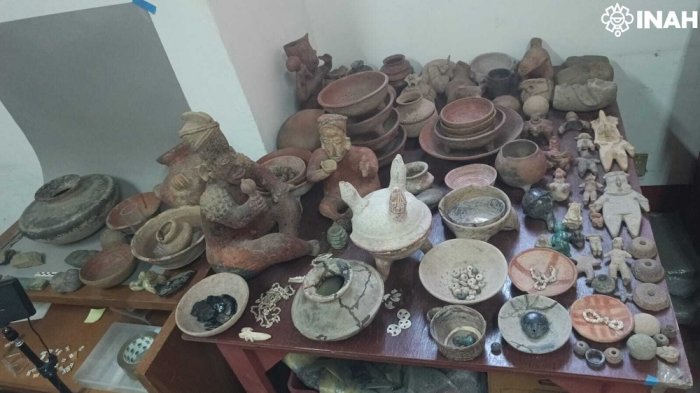
The National Institute of Anthropology and History (INAH) in Jalisco has received 334 archaeological items previously held by a private collector. This addition brings the total to 7,207 authentic pieces from 13 collections that have been recovered and reintegrated into the state since 2022.
Credit: INAH.
The Secretary of Culture of the Mexican Government, Claudia Curiel de Icaza, emphasized that “the recovery of these archaeological artifacts demonstrates that heritage protection is also built with citizen participation.
When someone approaches the National Institute of Anthropology and History (INAH) to hand over, register, or safeguard a collection, they contribute to bringing Mexico’s memory back into the public sphere, so it can be researched, preserved, and shared with more people. Within the framework of the ‘My Heritage Is Not for Sale’ campaign, this act reaffirms that archaeological artifacts are part of our shared history and belong to the nation.”
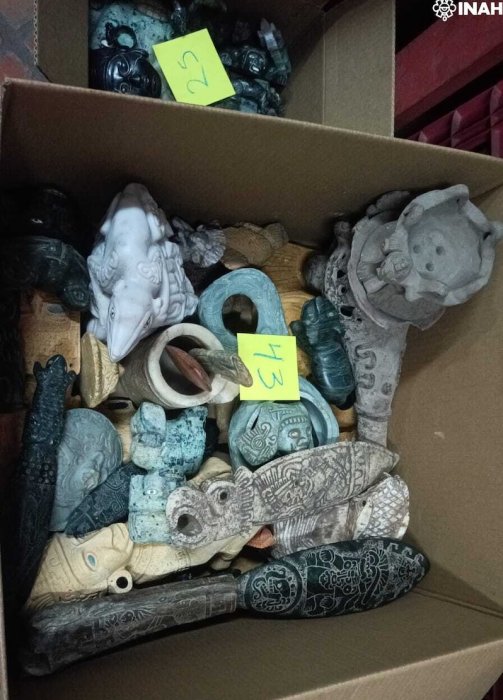
Most of the pieces represent cultures and styles that developed in present-day Jalisco, including figurines from the Shaft Tomb tradition (450 BC-450 AD), Chapala (900-1200 AD), and the Classic period (200-1000 AD), according to Javier Alanis Vilchis, head of the Cultural Assets Registry at the INAH State Center.
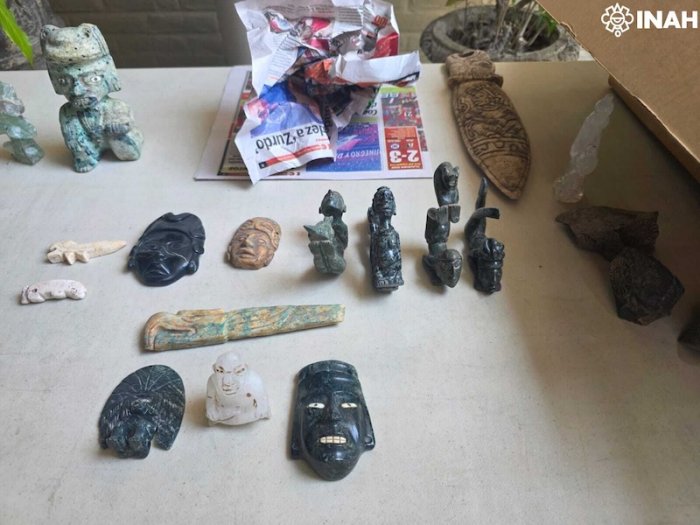
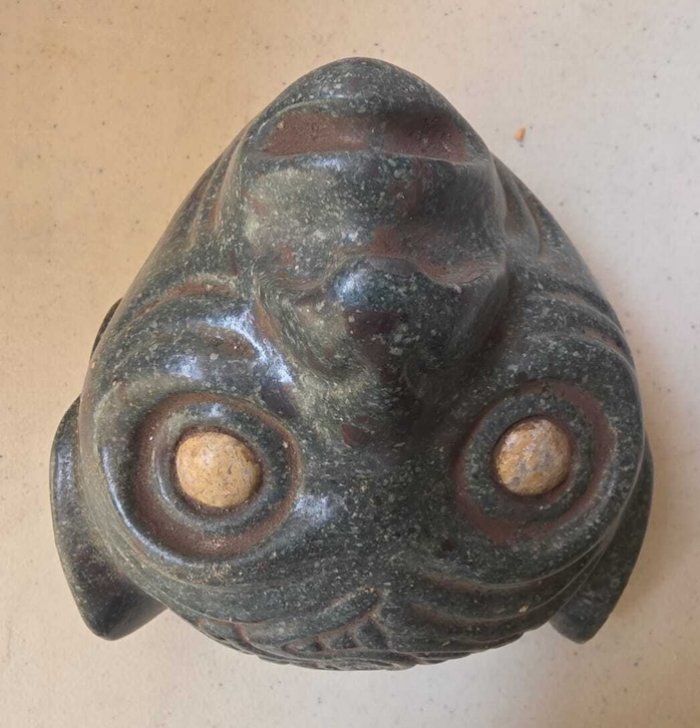
The recovered artifacts include two Olmec-style stone figurines from 1500-400 BC, which are rare in this region. The collection also features ceramic containers, pots, bowls, lids, incense burners, shell beads and pendants, copper bells and rings, stone axes, and obsidian pieces.
Credit: INAH
Alanis Vilchis is leading the authenticity assessment of the pieces, with support from Martha Lorenza López Mestas Camberos, a researcher at the INAH Jalisco Center, and specialists from the Western School of Conservation and Restoration. These specialists will restore the pieces if needed.
Credit: INAH
To date, the archaeologist has identified six complete pieces that may require restoration. He noted that most of the collection is well preserved, as the private residence provided suitable infrastructure, including display cases, storage areas, and appropriate lighting.
The origins of the collection are unknown, as it was not previously registered with the INAH (National Institute of Anthropology and History). The former owner, a resident of Zapopan, Jalisco, recently passed away. Their family notified Alicia García Vázquez, head of the INAH Center in Jalisco, and transferred the collection on April 30, 2026.
The authenticated pieces are being formally registered in the INAH’s Single Registry System and will remain in the custody of the institute’s state office. The most notable pieces are expected to be exhibited at the new Western Archaeology Museum, which will be located in the former Zapopan City Hall, currently under renovation, for public viewing.
Credit: INAH
“There is interest in keeping the collections within the state, because most of the pieces we have here are from styles typical of Jalisco, such as the Shaft Tombs style, which also includes the states of Colima and Nayarit,” said the archaeologist.
He also highlighted the importance of INAH’s community outreach, noting that these restitutions not only return cultural assets to the nation but also allow for their exhibition in museums, making them accessible to a wider audience.
In Jalisco, the public has responded positively to the delivery and registration of collections. He reiterated the importance of individuals who possess cultural assets notifying INAH, so they can be formally recognized as custodians.
See also: More Archaeology News
“Many times, the pieces in collections are not the result of looting; people find them and keep them. It is important for them to know they can safeguard these items and will not face any issues as long as they are registered. The INAH (National Institute of Anthropology and History) will not confiscate the pieces, contrary to what many believe,” she clarified.
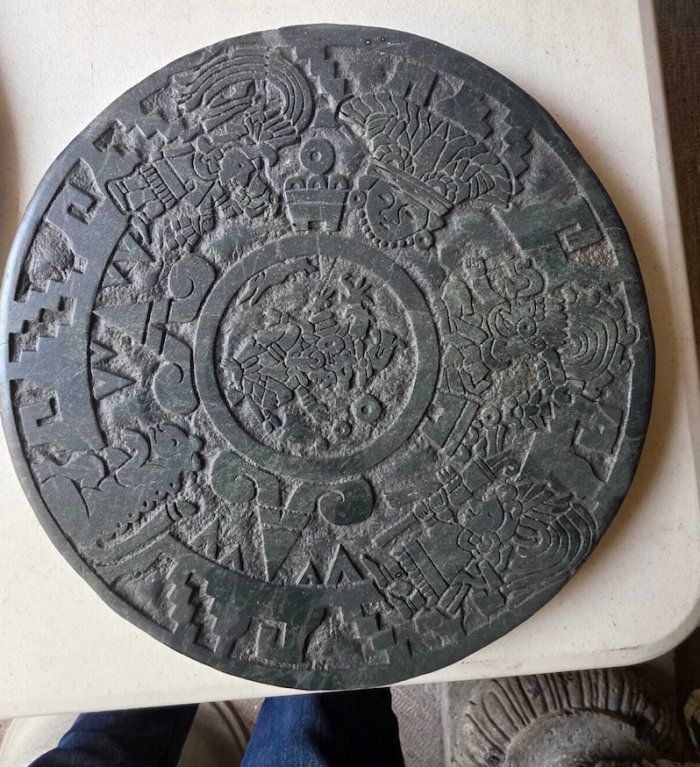
Finally, Alanis Vilchis announced that the delivered lot included 264 replica pieces, which will be used for educational purposes. Plans include creating interactive areas in the Regional Museum of Guadalajara and the Museum of Western Archaeology, allowing children to simulate archaeological excavations and enabling people with visual disabilities to explore heritage assets through touch without risk of damage.
Source: INAH
Written by Conny Waters – AncientPages.com Staff Writer