Suspects in a manhunt could be traced ‘within minutes’ under radical police plans to use artificial intelligence to analyse CCTV footage.
The head of a new police AI hub due to open within days has said the technology could transform detective work, speeding up the capture of dangerous criminals from days to potentially minutes.
Alex Murray, who is the head of the new £115 million PoliceAI Centre, believes bots could also be used to answer 101 calls from the public, analyse criminal case files to suggest possible leads and reduce bureaucracy to allow officers to get back on the streets.
Currently, officers have to trawl through terabytes of CCTV to track suspects on the run after a major incident such as a terrorist attack or murder.
But work is underway on AI programmes that could analyse CCTV across a large area, focusing in on distinctive characteristics regarding the suspect’s appearance and clothing, or their vehicle.
In future, if forces have a clear image of the suspect at the scene or a photo from a prior offence, they could also potentially deploy retrospective facial recognition to rapidly search through CCTV to track them down.
Mr Murray said: ‘We can offer the opportunity for UK police to ingest that CCTV and with a few prompts, search with a level of accuracy for example, for a black Golf or a man with a red hat.
‘That will not only make policing more efficient, you don’t have to spend hours trawling loads of footage, but it will also enable us to hopefully solve more crime and serve more victims.

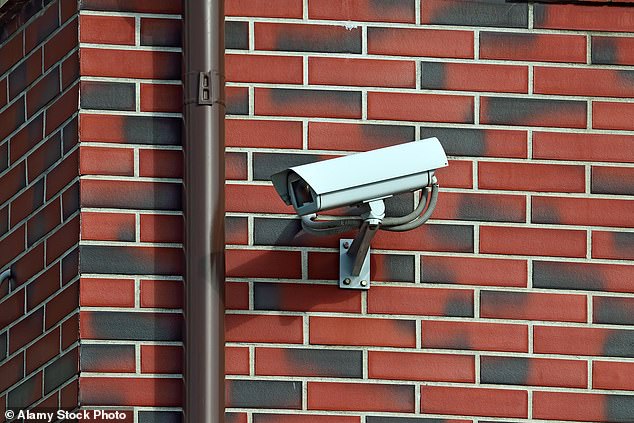
Work is underway on AI systems capable of analysing CCTV footage across large areas, identifying suspects based on distinctive features such as their appearance, clothing, or vehicle
‘Often, it’s the forensic evidence we need, like blood on shoes. The way to get that is to get the person in custody quick. And we think this will be a mechanism to achieve that.’
He stressed that humans would still be central in sifting through the data, identifying false positives and negatives and directing the manhunt, which could be reduced to a matter of minutes.
‘This technology lends itself to the more serious crimes where you have lots of CCTV and you need to solve it quickly because of the danger for the public,’ he said.
He admitted the technology could prove controversial but said: ‘We are talking about doing a retrospective investigation following a serious crime.’
The new centre will spearhead AI development for forces. Mr Murray believes AI chatbots and virtual assistants could handle 101 calls and assist 999 call–handlers by transcribing calls, identifying potential crimes, filling in forms and assigning officers.
AI programmes will be able to assist in child sexual abuse imagery identification and classification so officers don’t have to trawl through disturbing material.
It is estimated that the technology could do more than 6 million hours of work a year, the equivalent of freeing up 3,000 officers.
Mr Murray insisted the technology would never replace the work of police officers and would only ‘supplement decision making’.