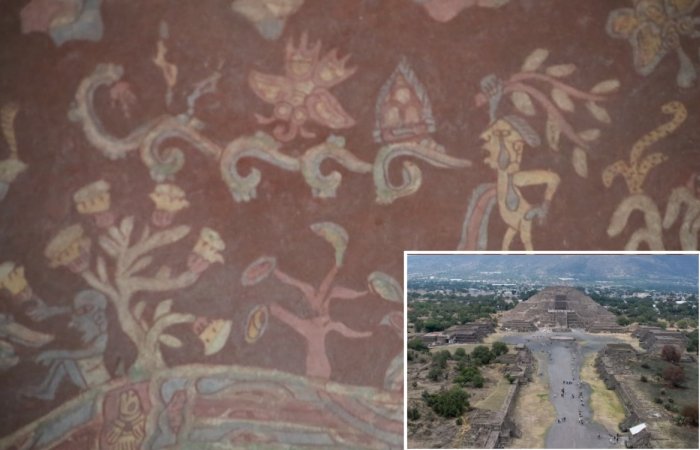
Conny Waters – AncientPages.com – The Tepantitla mural is a renowned 1,500-year-old fresco discovered in a residential compound at Teotihuacan, Mexico. It depicts a complex mythological landscape and everyday communal rituals, though interpretations of its mythical scenes remain widely debated.
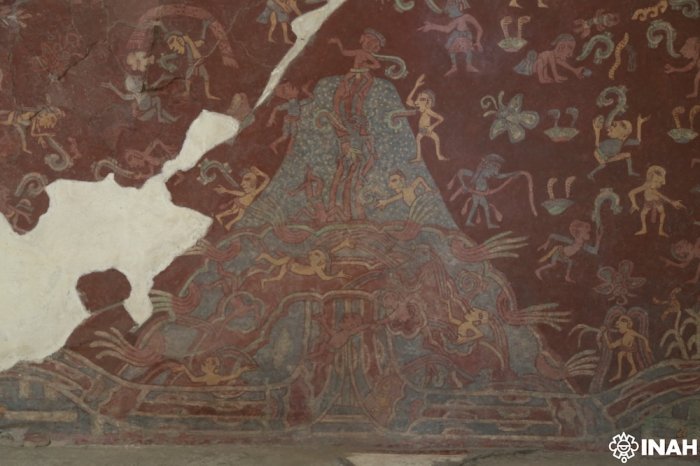
Based on iconological, iconographic, and documentary analysis, the Tepantitla mural is proposed to represent the Etzalcualiztli festival. Credit: Rafael Morales Orozco. Credit: INAH
The Tepantitla mural, located in the Teotihuacan Archaeological Zone, has been the subject of extensive research. Archaeologist Alfonso Caso (1896-1970) offers the most widely accepted interpretation, stating that the scenes depict Tlalocan, or “Tlaloc’s paradise.” Several Aztec codices describe Tlalocan as a paradise ruled by the rain god Tlaloc and his consort Chalchiuhtlicue. People who died by drowning, lightning, or illnesses linked to the rain god were believed to go there.
Archaeologist Jaime Delgado Rubio of the National Coordination of Archaeology at the National Institute of Anthropology and History (INAH) offers a new interpretation. He explains that although the mural is linked to the rain deity, its story takes place on earth and shows an agricultural celebration to give thanks for abundance.
Delgado Rubio supports his hypothesis through iconological, iconographic, and documentary analysis. He references a story from Fray Bernardino de Sahagún describing the festival Etzalcualiztli, which means “when etzalli is eaten” in Nahuatl—a dish of corn and beans—that closely resembles scenes depicted in the mural.
He explains that the narrative describes celebrations of abundance held from June to August to thank Tlaloc for the blessings received. In pre-Hispanic cosmogony, Tlaloc represented the masculine aspect of the Earth and was the patron of rain.
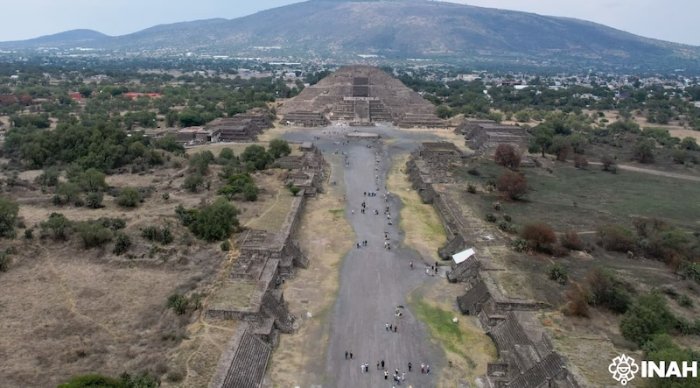
The mural is one of the most representative decorative elements of Teotihuacan culture. Credit: Fabián González, Credit: INAH
The mural, situated in a residential complex, measures 100 square meters and preserves about 30 percent of its original paint, with red as the dominant color. It features three main scenes depicting individuals of various ethnicities engaged in specific activities.
The first image depicts festival preparations, including the ascent of the mountain, the collection of tule reeds, the sanctification of the waters, and rituals associated with offerings.
The second image shows people assembling bleachers for spectators of the stick-ball game, believed to be the community’s official activity. The archaeologist presumes that individuals in elaborate garments and headdresses are elite players.
The third scene focuses on healers, who were visited by families and community members seeking treatment for various ailments.
Notably, all the images feature individuals in distinctive clothing. Delgado Rubio believes these were foreigners invited to pay tribute to Tláloc and the ruling elite, to whom they were likely subject.
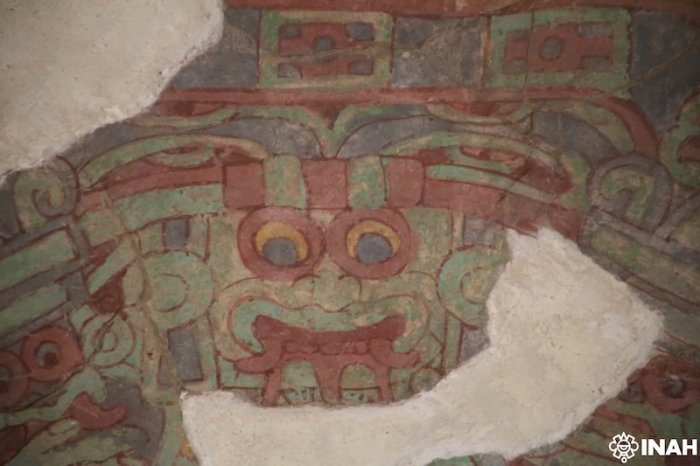
Depiction of God Tlaloc on the mural. Credit: Rafael Morales Orozco. Credit: INAH
He explained that archaeological evidence shows people moved to the City of the Gods from what are now Oaxaca, Veracruz, Puebla, and the Mayan region. There are also signs of Purépecha and Nahuatl communities. This mix of cultures appears in the painting. He also sees the story as showing a political and economic plan to collect tribute, control the people, and bring citizens from nearby towns under its rule.
See also: More Archaeology News
The archaeologist noted that the mural differs from others of its time. It depicts a deity with a curious expression, as if watching the celebration, while other artworks typically portray the deity looking very serious.
Delgado Rubio’s theory builds on previous studies, particularly those by emeritus researcher Jorge Angulo. However, he acknowledges that his theory remains open to debate.
Source: INAH
Written by Conny Waters – AncientPages.com Staff Writer