Transcript:
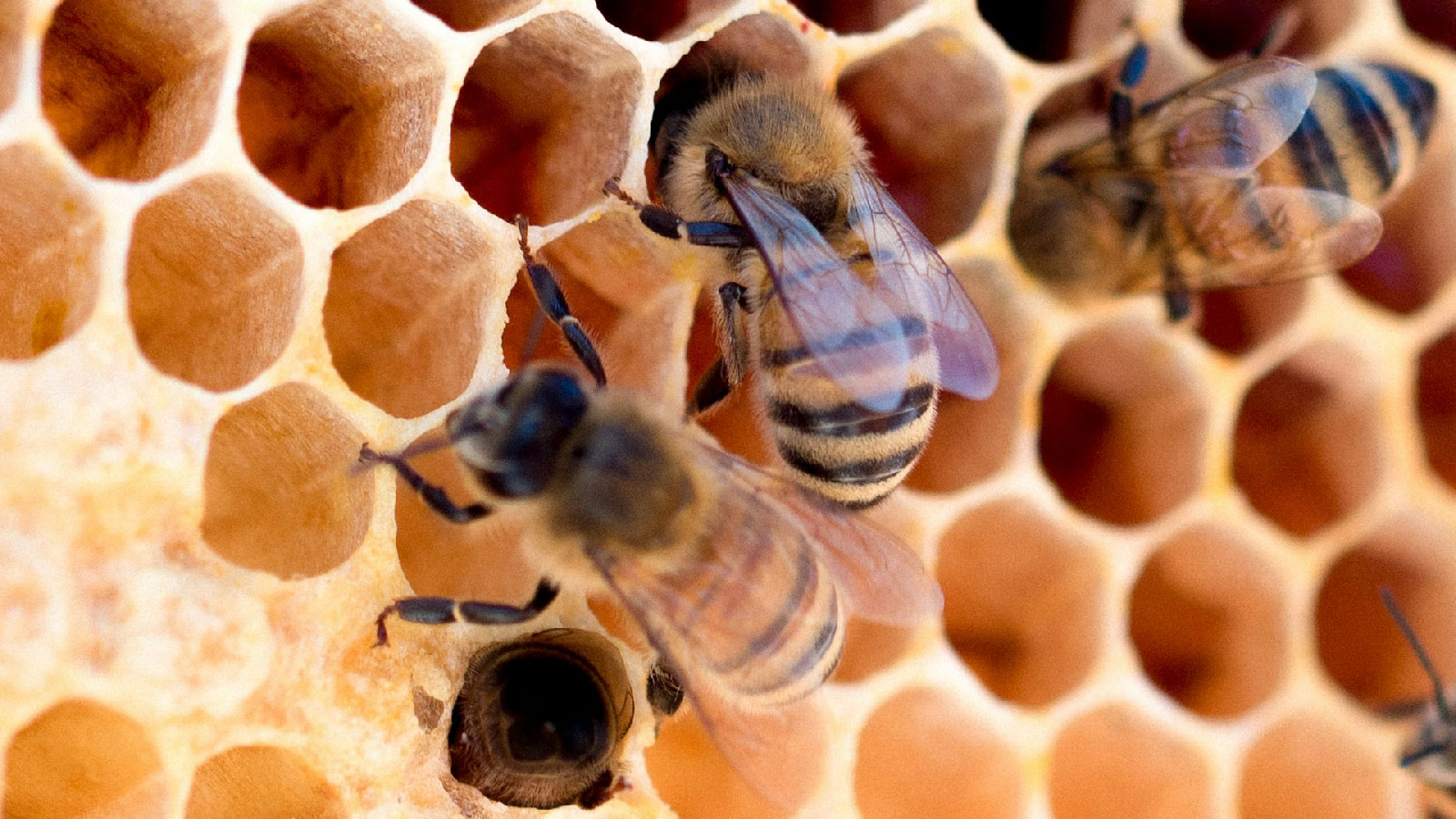
On many farms, honeybees buzz about, pollinating berry bushes, nut trees, and melon vines.
Without these tiny insect farmworkers, many of these crops would never reach grocery shelves.
But Jun Chen, a researcher at Texas A&M Kingsville, warns that as the climate warms, honeybees could face trouble.
The young bees in honeybee broods fare best when their hives stay between roughly 92 and 96 degrees.
Chen: “Above or below this range, it will be dangerous for the brood.”
On hot days, honeybees have a few methods to cool the hive, like spritzing water through the colony and fanning their wings to ventilate the air.
But if it gets too hot, those strategies might not be enough.
Chen: “Extreme heat waves may challenge the natural cooling systems of the honeybee colonies.”
In a recent study of hives in Arizona, Chen found that higher temperatures were linked to adult bee population drops, and big temperature swings were linked to both brood and adult bee declines.
She says farmers can help bees stay cool by keeping hives in the shade, misting them, and providing water nearby.
But as the climate warms, it may become harder to keep these pollinators safe.
Reporting credit: Ethan Freedman / ChavoBart Digital Media