My policy with cloud services is that if I can get away with a free version, I’ll almost always choose that, even when my budget allows for more. I might lose out on the nicest possible experience — but I know that if I’m not careful, subscriptions can lead to death by a thousand cuts. So many companies are eager to reap steady income that I could easily lose hundreds of dollars, money that I need to pay for such radical concepts as housing or transportation.
The most recent exception to my philosophy is YouTube. After resisting for years, I finally cracked and started paying for YouTube Premium, specifically Premium Lite. It’s been worth it — although I resent the pressure tactics involved, and would definitely argue against paying for the full Premium package. Google might not have much reason to celebrate my conversion.
Why I made the switch to Premium Lite
A story about friction

YouTube is my primary video service. Whereas other people might sit down to watch Daredevil or Parks & Recreation at the end of the day, I’m more likely to be watching tech, science, or gaming videos. If not that, it might be late night comedy clips, or perhaps therapy and fitness material. I will sometimes make time for a full-length movie or show, but even 30 minutes can feel too long sometimes, given that I might otherwise be with my family, lifting weights, or out on a ride.
I’m actually heavily reliant on YouTube for going to sleep. I’ve got a playlist I update daily, usually fronted by the latest EUC videos, both because of my personal interest and it being oddly peaceful. Later on, things like ambient music and field recordings help me fall back asleep when I inevitably wake up in the middle of the night.
Over the years, Google has made the free version of YouTube increasingly obnoxious. Outside of kids’ content, most videos are now preceded by an ad or two, and in some scenarios the ads can be longer than the thing you’re trying to watch. Many of you probably know the annoyance of getting served a full-length music video or an infomercial. As if that weren’t bad enough, even a 15-minute video might have a second ad break halfway through.
I found this bearable for a while, but it started to genuinely interfere with the rest of my life. Sometimes, for example, I like to start the day with a little classical music while I get breakfast ready, then switch to something more substantial when I sit down. This is practical if I can count on the music starting right away, but if I have to wait to skip an ad block (assuming it’s an option at all), I might as well let the ads finish so that by the time I’m sitting down, they’re out of the way. It’s depriving me of a more pleasant morning.
That’s a minor inconvenience — the real killer was its effect on my sleep. There was a time when I would encounter an ad or two upfront, but otherwise have a sufficient stretch in which to drift off. At some point, the frequency of ads increased to the level that there was a high chance of them jolting me awake just as I was starting to fall asleep. It’s happened at least once. That’s not even counting the risk of being startled overnight, which was always a possibility, if mercifully rare.
With Premium Lite, the usability of YouTube improves so dramtically that the free version feels like an insult. You might occasionally deal with a pre-roll ad, but very rarely, and the rest of the experience is clean. You can reasonably assume that when you tap on a video, it will start playing right away — which doesn’t just benefit sleep or putting on some Debussy. It means that if I need help with a DIY task, YouTube becomes a viable on-the-fly assistant. If I want to show my wife, son, or friends something, they don’t have to stand there tapping their foot while an actor tries to hawk a phone case. cheddar cheese, or datacenter power solutions (seriously).
The incidental benefits
Who needs radio or podcast apps?

There are other upgrades that can radically change how you use the service, perhaps the most important to me being background play. While there are exceptions, a surprising number of videos can be played as audio-only versions when you lock your phone. At a minimum, this means I can lock and still hear some of my sleep playlist, keeping light exposure to a minimum when all I care about is the audio. During waking hours, I’ve found myself listening to therapy videos like a podcast, which makes them easier to consume. Something I discovered by accident, in fact, is that Premium audio can continue when you’re connected to CarPlay. I just haven’t had an excuse to play anything specific yet.
Even picture-in-picture mode improves YouTube’s usability. It’s a little awkward if you don’t have a tablet or a book-style foldable — I wouldn’t want to watch an entire video this way — but on my iPhone 16 Pro, it at least gives me the freedom to switch to another app and back without interruptions. That’s handy not just for live events, but for circumventing YouTube’s tendency to forget where you left off. Listen here, Google. It’s irritating that your service will bookmark your place in some videos, but randomly forget it in others, forcing you to scrub back and forth until you find the right spot.
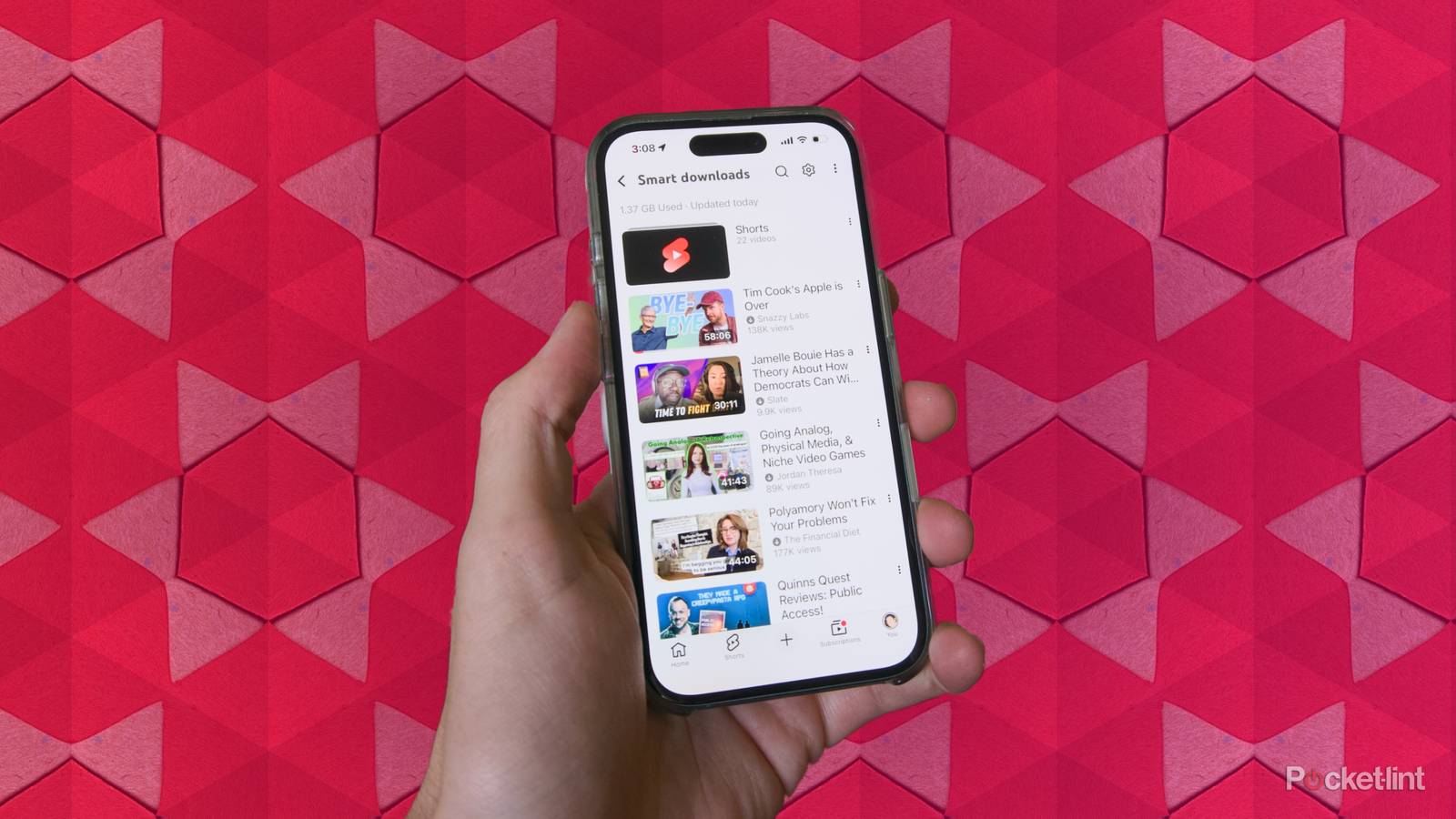
The one thing I haven’t made any use of yet is offline caching. To be accurate, I haven’t used it beyond the Premium trials I’ve signed up for in the past. I can’t afford to travel much these days, and if I’m not in the air or at sea, I’m almost never out of Wi-Fi or cellular range. It wasn’t even a big deal back in the day, honestly. On a flight from Alberta to Texas, that’s a perfect time to catch up on those TV shows I would normally skip.
Why I’m still skipping the full version of Premium
No one wants to hear your Pearl Jam bootleg

In theory, the total Premium package would be a great bargain for me, letting me kill both video ads and the need for my Spotify Premium subscription. Frankly, however, YouTube Music just isn’t a worthy Spotify replacement. Fidelity is lower, it’s not supported by my Amazon Echo speakers, and there isn’t a native desktop client. You have to use a barebones web interface instead. The icing on the cake is that the service’s greatest strength is also its greatest weakness. Sure, it’s nice to be able to play mashups and bootleg recordings, but only when you’re searching for them intentionally — not as an accidental substitute for an official release.
There are other niceties I might gain, like queuing tracks on the fly instead of relying on playlists, but those I can easily live without. What’s more valuable to me is my time. Google’s increasingly aggressive YouTube ads were stealing away valuable moments, and actually impacting my health by making it harder to sleep. I can and have slept without video playing — but I think it’s a low bar to expect a service not to startle you awake when you play something designed as a sleep aid. I shouldn’t have to pay for anything to enjoy that, really, but I will if I have to.


4.5/5
- Free trial
-
1-month free trial
- Ads
-
Most content ad-free
- Downloads and background play
-
No