May 27, 2026
3 min read

Amputated sea cucumber tissue keeps living for years—possibly forever
The discarded fragments of this creature apparently refuse to die, leading researchers to claim immortality
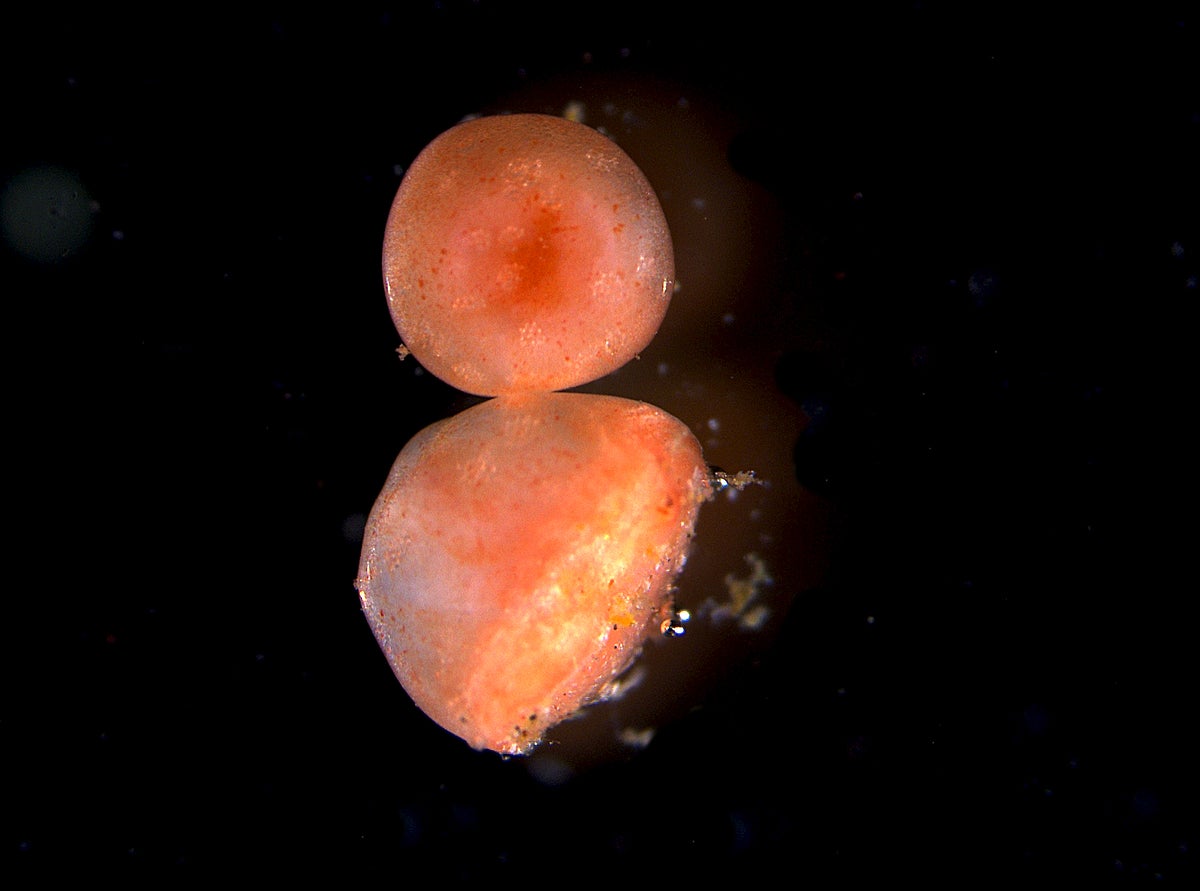
Healed and surviving tube feet from Psolus fabricii several weeks after excision.
Emaline Montgomery (Mercier Lab, MUN)
Humans have chased immortality perhaps for as long as we have known we will die. But merely persisting forever may not be all it’s cracked up to be—especially if you are reduced to just lying there, unable to eat or do much of anything at all. That grim reality may be the eternal condition of severed sea cucumber tissue, according to a new study.
When humans lose a chunk of flesh, it dies and decays. That isn’t so with Psolus fabricii, a sea cucumber that is native to the Atlantic and Arctic Oceans. Its amputated bits just keep living. These lost pieces of tissue even repair their wounds and continue to grow—although not into new organisms. After observing tissues that survived in natural seawater tanks for more than three years, researchers declared them biologically immortal in a paper published today in Science Advances. “Something like this has never been seen before,” says lead author Sara Jobson, a doctoral student at Memorial University of Newfoundland.
Sea cucumbers are masters of regeneration. But so are many lizards and salamanders, and yet, when detached, their limbs and tail deteriorate just like human tissue would. With the amputated pieces of P. fabricii, Jobson says, it’s “as if the tail dropped off and healed and wiggled around in the wild on its own.” She and her colleagues don’t entirely know what enables this feat, but they have a few clues: The severed tissues retain a strong immune system and chemical defenses to ward off microbial infection; their cells keep dividing to form new tissue; and, for fuel, they either absorb dissolved amino acids or cannibalize their own muscle.
On supporting science journalism
If you’re enjoying this article, consider supporting our award-winning journalism by subscribing. By purchasing a subscription you are helping to ensure the future of impactful stories about the discoveries and ideas shaping our world today.
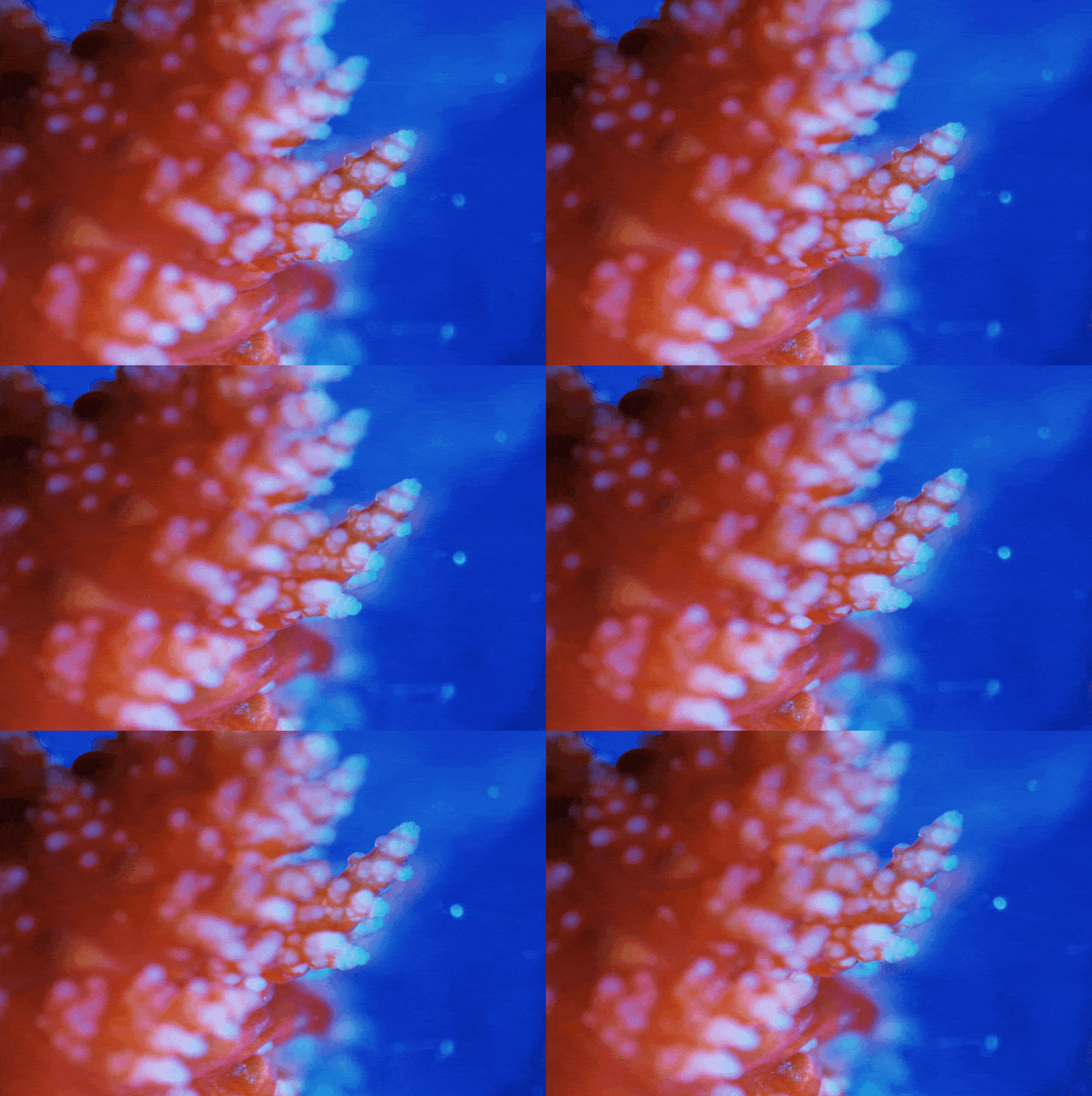
Healed and surviving tentacle from Psolus fabricii responding to tactile stimulus several months after excision.
Sara Jobson (Mercier Lab, MUN)
These are all hallmarks of living systems, but severed P. fabricii tissue sits in a biological gray zone. “We often call them, lovingly, our little lab zombies,” Jobson says. “Because we don’t know: Do they count as alive? Do they count as dead?” They don’t reproduce. They don’t have a mouth or a gut. Yet they are complex biological structures enduring, somehow, apart from their original organism—perhaps indefinitely. “We haven’t seen any signs that they’re degrading or dying,” Jobson says. Whether this is an immortality worth living is another question.
Still, Alejandro Sánchez Alvarado, a molecular biologist and president of the Stowers Institute for Medical Research in Missouri, says it’s “quite likely premature” to call this immortality. To further show that these tissues likely live forever, researchers will have to investigate whether their telomeres—DNA sequences at the end of chromosomes that shorten with age—stay the same length after many rounds of cell division. Sánchez Alvarado adds, however, that “what is remarkable here is not infinite time per se but the sustained coordination” of so many biological processes for so long in an animal’s discarded parts.
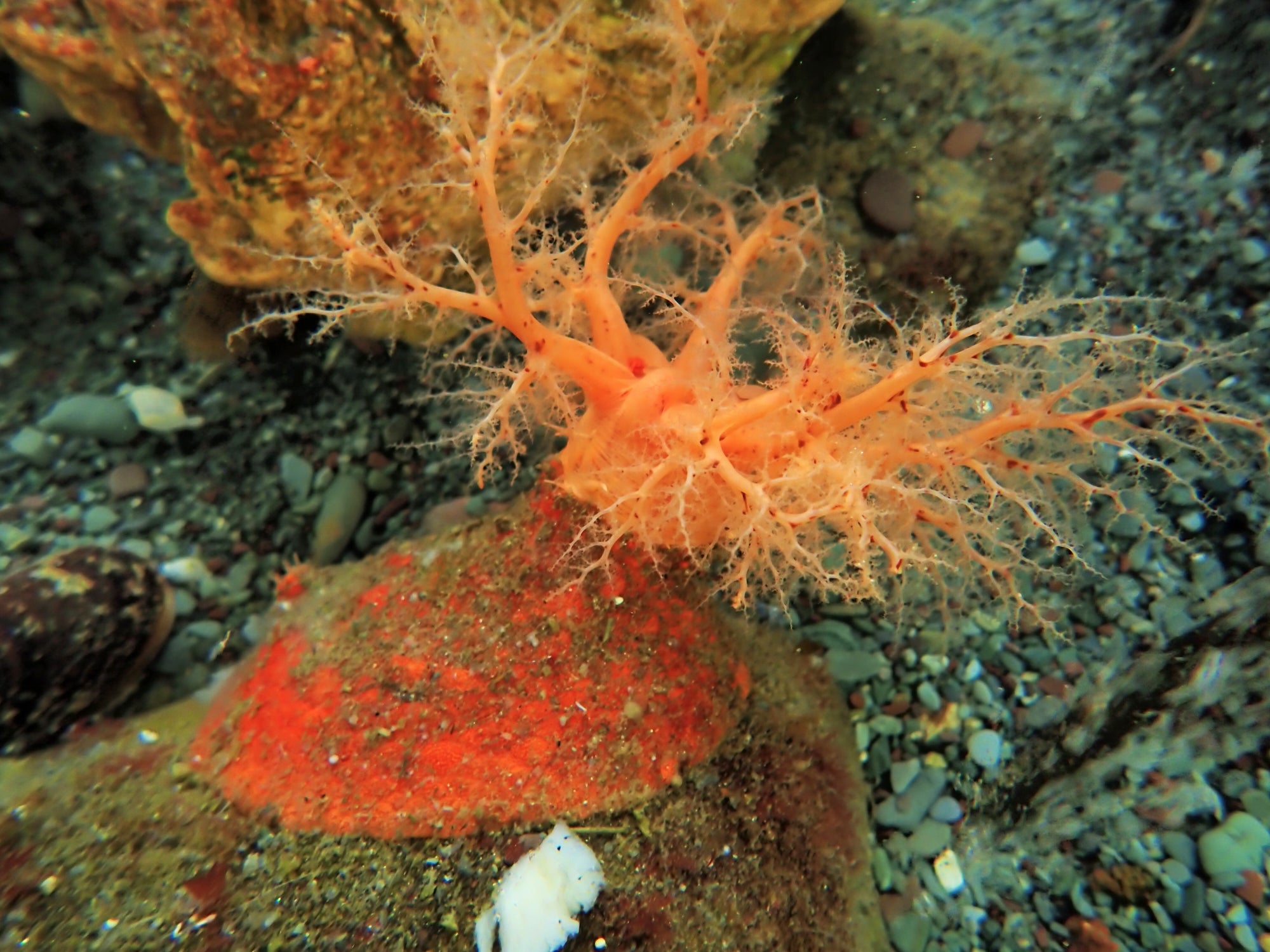
Sara Jobson (Mercier Lab, MUN)
Even if the zombie P. fabricii tissues are in fact slowly succumbing to entropy, they’ve outlasted the severed tissue of other sea cucumber species tested for this study by a long shot (the silver medalist perished before three and a half months). Their extreme longevity poses an evolutionary mystery: If reproduction is the basic imperative of life, why should the nonreproductive scraps of an organism remain viable at all, let alone for years? “It doesn’t regrow into a new sea cucumber, as far as we can tell,” Jobson says, “so the purpose of it is very unclear.” It’s possible the whole bizarre situation is just a by-product of P. fabricii’s regenerative powers.
Whatever the case, Jobson reckons that self-sufficient sea cucumber fragments—immortal or not, with or without a purpose in this world—are drifting through Earth’s oceans right now. “Maybe,” she says, “there’s a ton of zombies out there.”
It’s Time to Stand Up for Science
If you enjoyed this article, I’d like to ask for your support. Scientific American has served as an advocate for science and industry for 180 years, and right now may be the most critical moment in that two-century history.
I’ve been a Scientific American subscriber since I was 12 years old, and it helped shape the way I look at the world. SciAm always educates and delights me, and inspires a sense of awe for our vast, beautiful universe. I hope it does that for you, too.
If you subscribe to Scientific American, you help ensure that our coverage is centered on meaningful research and discovery; that we have the resources to report on the decisions that threaten labs across the U.S.; and that we support both budding and working scientists at a time when the value of science itself too often goes unrecognized.
In return, you get essential news, captivating podcasts, brilliant infographics, can’t-miss newsletters, must-watch videos, challenging games, and the science world’s best writing and reporting. You can even gift someone a subscription.
There has never been a more important time for us to stand up and show why science matters. I hope you’ll support us in that mission.