A travel hotspot loved by American tourists has been plagued by fears of a possible serial killer after three women were found dead within 11 days.
Police in the resort town of Puerto Vallarta, Mexico, are probing possible links between the killings after the latest victim’s body was discovered Thursday morning, Mexico News Daily reported.
On May 10, the first female victim was found near Rancho El Pirulí in Chimborazo. A second woman’s body was discovered five days later, at a roadside stop along the highway to Mismaloya.
The latest victim’s body was uncovered in a dirt road in the Parque Las Palmas neighborhood.
All three women are believed to have been between 30 and 35 years old and were found partially undressed in isolated areas, according to preliminary information.
Each victim had tattoos and has not yet been identified.
The similarities in the cases have prompted investigators to explore whether the killings follow a pattern and whether a single suspect may be responsible.
The most recent victim had identifiable tattoos that police believe may help with identification.

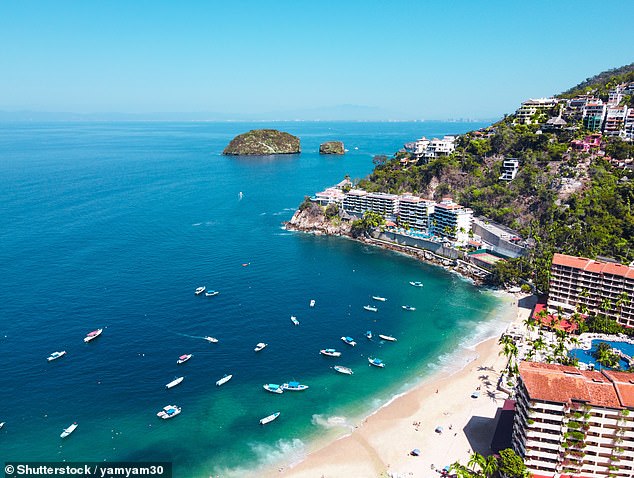
Aerial view of Mismaloya beach in Puerto Vallarta. The area of Mexico is a hotspot for American tourists

Unconfirmed reports of the recent victim’s identity emerged on social media, suggesting 22-year-old Elizabeth Martinez may be her identity

Martinez has been missing since April
The marks were located on her neck, hand, and arm, and consisted of a skull, a woman with horns, and a name. Her body also reportedly showed signs of violence, the outlet reported.
Unconfirmed reports of the recent victim’s identity emerged on social media, suggesting 22-year-old Elizabeth Martinez may be her identity.
Martinez is from the State of Mexico and was reported missing in April, and according to the State of Mexico’s Missing Persons Search Commission, her tattoos matched some of those found on the victim.
Police have not officially confirmed the latest victim’s identity, but reports suggest relatives of a missing woman may travel to Puerto Vallarta on Friday to determine if she is their family member.
Investigators have not classified the case as a serial killing, but they are reviewing evidence, surveillance footage, and police reports to determine whether the deaths are connected.
This follows violent unrest in Mexico after federal forces carried out an operation targeting Nemesio ‘El Mencho’ Oseguera Cervantes, the leader of the Jalisco New Generation Cartel (JNGC) on February 22.
That day, cars and businesses were set on fire by the retaliating cartel in 20 of Mexico’s 37 states, and shootouts between cartel members and security forces killed at least 70 people, including 25 Mexican National Guard soldiers.

Martinez is from the State of México

Tourists spend time at a beach days after a series of blockades and attacks by organized crime

Panoramic view of Puerto Vallarta on a clear winter day

A burning bus set on fire by organized crime groups in response to an operation in Jalisco

National Guards patrol the area outside of the General Prosecutor’s headquarters in Mexico City on February 22
Mario Braga, a Latin American security analyst at RANE, told the Daily Mail at the time that the Mexican government had deployed security forces that largely brought the chaos under control.
‘But of course, there is the risk that cartel members will try to continue some sort of retaliation,’ Braga said.
The security analyst added that the cartel was most likely to target ‘either government buildings or security forces, so shootouts are possible, and that, of course, represents indirect security risks to bystanders.’
The JNGC has ‘some degree of presence in at least 27 out of the country’s 32 states, and their cells operate to some extent independently, like a franchise model,’ Braga told the Daily Mail.
Braga noted that when it comes to cartel violence, ‘usually the killings are restrained to people involved in the drug dealing or the other illegal activities.’
But he also said that all it takes for a foreigner to accidentally be targeted by the cartel is to drive into the wrong neighborhood with an unrecognized car.
Cartel members may mistake the vehicle for that of a police officer or undercover agent, which could lead them to shoot first and ask questions later, or to kidnap the driver.
And getting abducted is often a brutal death sentence. The JNGC is particularly violent, Braga said, and their ‘modus operandi’ is to ‘resort to, perhaps, beheadings,’ or to leave ‘parts of bodies dismembered across the road.’
Looking past the next few weeks, the World Cup will begin in Mexico on June 11, where it will be hosted in three stadiums across the country: one in Mexico City, one in Monterrey and one in Guadalajara.

Mario Braga, a Latin America security expert at RANE, shared advice for Americans planning to go to Mexico in the coming weeks and months

On February 22, cars and businesses were set on fire in 20 of Mexico’s 37 states. Two of those vehicles are pictured billowing smoke in Puerto Vallarta

This stadium in Guadalajara will host games for the World Cup. The city is a stronghold for the JNGC, but the cartel is unlikely to undermine the event, as it would harm business interests
Mexico City, the country’s capital, is expected to be very safe, but Guadalajara is the capital of the state of Jalisco and a stronghold for the JNGC.
That may cause anxiety for Americans planning to attend games there, but Braga assured, ‘it’s not likely that [the cartel] would proactively seek to undermine the event itself, because that would hurt their business… from a revenue perspective.’
Still, the security analyst suggested precautions for tourists who plan to attend the World Cup or visit Mexico in the near future despite the risks.
‘I think the best advice is, of course, to monitor how the situation evolves,’ Braga told the Daily Mail. ‘It can quickly change and there can be triggers that lead to an escalation of violence.’
Braga recommended tourists from the US and Canada stay up to date with travel warnings issued by their respective governments before heading to Mexico.
He also said that while in Mexico, tourists should ask for safety recommendations from local staff at the hotel they are staying at or the host of their short-term rentals.
‘What do the locals recommend?’ Braga asked. ‘Maybe that specific area, don’t go out after 10pm or after dark. Or if you are renting a car, I think that it’s critical to understand which parts of the city you are safe driving in and which parts you are not.’
Braga also said that when commuting from stadiums or airports, it is also a good idea to ask locals for the safest route and to travel in groups, as traveling alone increases the risk of being abducted.
‘If you are in a different country, it’s important to understand the kind of local dynamics that may help mitigate these security risks,’ Braga said.