



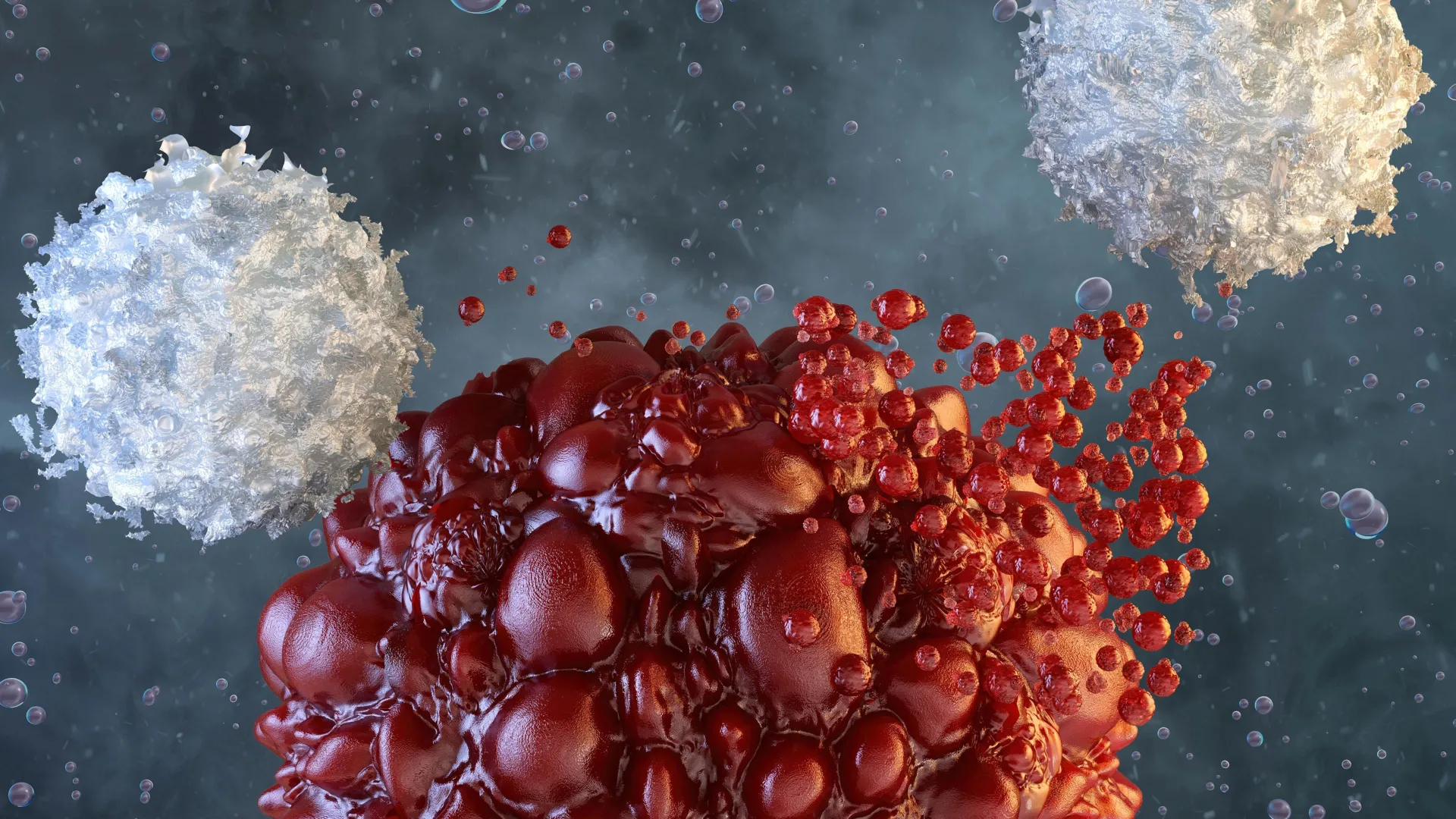
Scientists have developed a new way to strengthen the cancer-fighting abilities of natural killer (NK) cells, a type of immune cell that serves as one of the body’s first defenses against disease. The strategy could help these cells overcome the protective barriers many tumors use to avoid being destroyed.
Researchers at McGill University’s Rosalind & Morris Goodman Cancer Institute, working with the Research Institute of the McGill University Health Centre, discovered that blocking two specific proteins dramatically improves the ability of NK cells to attack cancer.
In preclinical studies, the enhanced immune cells successfully killed human cancer cells from several aggressive cancers, including leukemia, glioblastoma, kidney cancer, and triple-negative breast cancer. The treatment approach also significantly slowed tumor growth in animal models.
“This approach is particularly promising for patients who currently have very few options, when standard treatments have failed,” said senior author Michel L. Tremblay, Distinguished James McGill Professor in McGill’s Department of Biochemistry and researcher at the Rosalind & Morris Goodman Cancer Institute.
New NK Cell Therapy Avoids Permanent Genetic Changes
Many modern cancer immunotherapies rely on genetic engineering to permanently modify immune cells. While effective in some cases, those changes can carry risks because they are difficult to reverse if unintended side effects occur.
The new method takes a different approach. Instead of permanently altering the cells, researchers used small-molecule drugs to temporarily increase NK cell activity. Because the changes are reversible, scientists believe the strategy may offer a safer and more controllable form of immunotherapy.
The team also says the technique could solve some of the practical challenges that have slowed the broader use of cell-based cancer treatments.
Faster and More Affordable Cancer Immunotherapy
The NK cells used in the study came from donated umbilical cord blood. Scientists at the Cellular Therapy Laboratory, led by Pierre Laneuville and Linda Peltier at the Research Institute of McGill University Health Centre, isolated, cultured, and stored the cells so they could potentially be used to treat multiple patients.
This differs from many existing immunotherapies, which often require doctors to collect and customize each patient’s own immune cells before treatment. That process can take weeks and is expensive and complex.
“These NK cells can be ready to use immediately,” researchers explained, making the therapy potentially faster and easier to deliver.
“This approach will make immunotherapy at McGill University Health Centre faster, safer and more affordable,” added Chu-Han Feng, a research scientist at the Rosalind & Morris Goodman Cancer Institute. “It avoids the complex process of customizing cells and uses readily available drugs to reversibly enhance NK cells’ anti-tumor activities.”
Future Clinical Trials for Aggressive Leukemia
The research team hopes to eventually test the therapy in human clinical trials. One of the first targets could be acute myeloid leukemia, an aggressive blood cancer with limited treatment options for many patients.
The proposed trials are currently awaiting funding and regulatory approval.
Study Details
The study, “PTPN1/PTPN2 inhibition improves NK cancer therapy by enhancing IL-2 and mitigating TGF𝛃1 response” by Chu-Han Feng et al. and Michel L. Tremblay, was published in EMBO Reports in April 2026.
Funding for the research was provided by the Canadian Institutes of Health Research Foundation, the McGill University Health Centre Foundation, the Jeanne and Jean-Louis Levesque Foundation, the Richard and Edith Strauss Foundation, the Cedars Cancer Foundation, and Genome Canada/Genome Quebec through a GAPP grant.
The researchers also thanked the mothers who volunteered to donate the cord blood used in the study.