


Projectors are traditionally niche products compared to TVs, and I understand why some people still stay away from them. That said, I’ve tested countless projectors, including portable modelslike the Yaber T1 and more powerful alternatives like the Dangbei DBOX02 Pro, and think they’ve come a long way and are now viable alternatives to TVs if you get the right model.
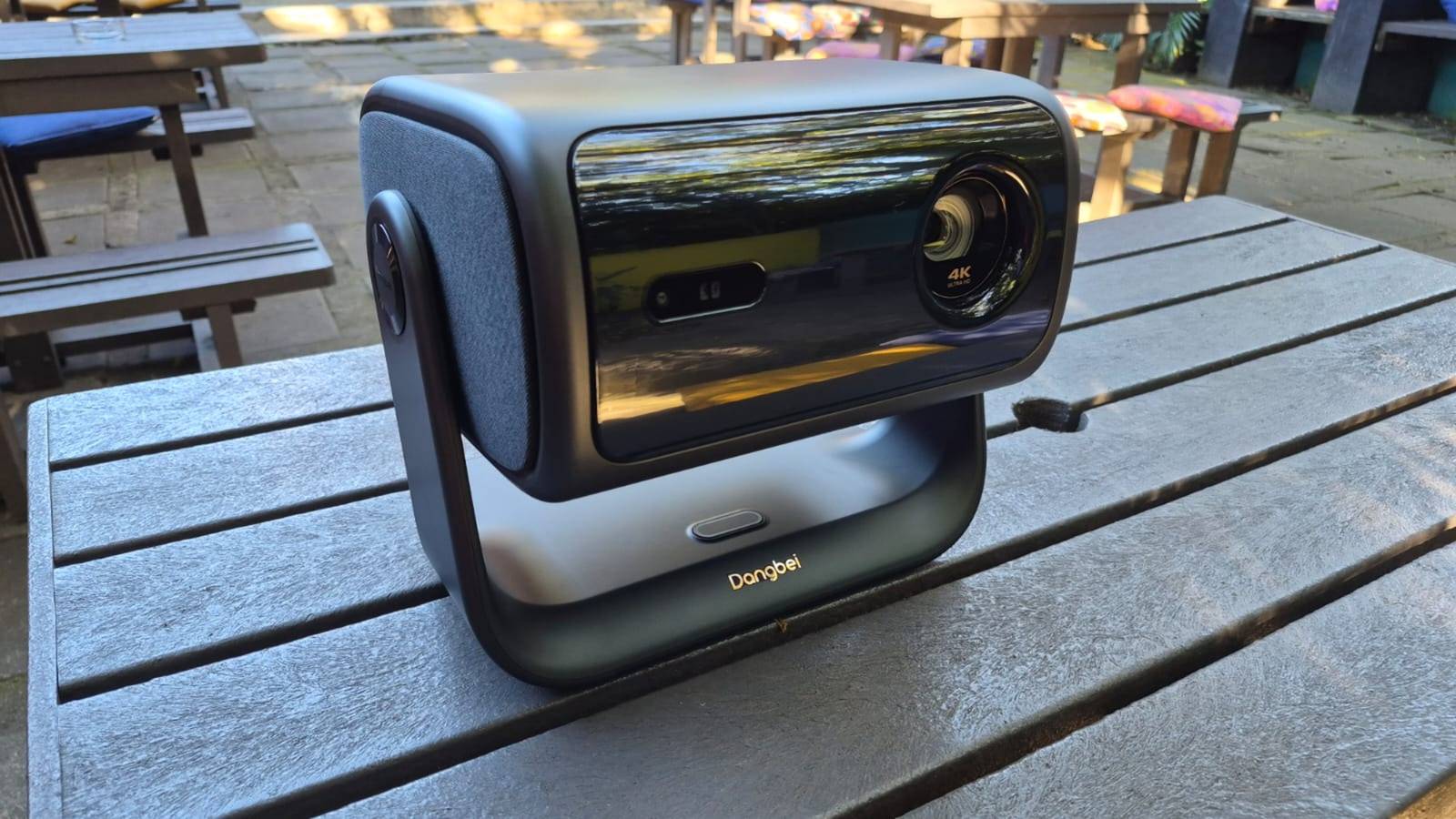
So what makes a good projector? I recently tried Dangbei’s MP1 Max and thought it offered a perfect blend of performance and practicality as a TV replacement. Testing it got me thinking about which essential features I’d look for if I were making a purchasing decision. I think you can’t go wrong with a projector that has these features.
Adjustable stand with automatic setup

Wall and ceiling mounting have their uses and are the best options for keeping a projector in a fixed, out-of-the-way position. I test many projectors and prefer models with built-in stands, which offer better flexibility and are easier to set up. They are easier to move between rooms or take on the patio and work instantly without requiring additional accessories.
Adjustable stands only work if the hardware and software are up to the task. This means the projector must have features like auto keystone correction, autofocus, and obstacle avoidance, which automatically adjust the picture at the touch of a button. On the MP1 Max, I can change the height and horizontal angle of the projector while I’m watching something, and it will automatically adjust itself to the new angle.
High Brightness
Day-time viewing capability

The biggest drawback of projectors in the past was their low brightness, which made daytime viewing impossible. Thankfully, this issue has been solved by modern laser projectors, which are bright enough to view in most lighting conditions while retaining their image quality.
Laser projectors are more expensive than LED models due to their complex nature, but they offer several benefits. They are brighter than LED projectors and offer higher contrast and better color accuracy. The overall lifespan is similar between the two, at around 20,000 hours.
Laser projectors are more expensive than LED models due to their complex nature, but they offer several benefits.
So, how bright is bright enough? In my experience, anything over 2,500 lumens should be enough, as long as you don’t have direct sunlight shining into your room. Quality projectors, like the MP1 Max, offer 3,100 lumens of brightness. It works in most conditions and includes several brightness presets and manual adjustability to match the room’s ambient lighting.
4K resolution
As good as a smart TV

For me, 1080p is adequate when I’m using a portable projector for outdoor movies, but 4K resolution is a must for a home cinematic experience. This is especially true for larger displays over 100 inches, as the image quality is crisper and sharper. There’s no point compromising, and it’s worth spending extra on 4K resolution if you want to enjoy content at its best on your home projector.
It’s worth spending extra on 4K resolution if you want to enjoy content at its best on your home projector.
The refresh rate is another critical feature for gamers like myself. I often plug my gaming laptop and consoles into my projector for a big-screen experience and expect it to offer at least a 120Hz refresh rate. The MP1 Max offers a standard 60Hz refresh rate at 4K resolution, which is fine for offline gaming, and I can switch it to 240Hz at 1080p for fast-paced competitive titles. Many buyers don’t need a fast refresh rate. It’s more of a nice-to-have feature that’s only worth paying for if you’ll appreciate it.
Wide connectivity options
Attach soundbars and other devices

Having as many connection options as possible provides the freedom to attach multiple input devices and audio upgrades. Some projectors have miserly connectivity options, which leads to a frustrating user experience because I need to manually swap the HDMI cables between sources. Quality projectors usually have at least two HDMI ports, including one with eARC, to connect consoles, laptops, and other input devices. A 3.5mm audio port should also be standard for connecting speakers to boost the sound.
Most projectors I’ve tested include a USB-A port for playing media from external drives and memory sticks, but I feel they should move with the times and add a USB-C port that can serve as an input from PCs and laptops. Thankfully, the latest projectors offer fast Wi-Fi speeds for smooth streaming and Bluetooth mirroring from my phone.
A user-friendly OS
It defines your experience
Many of the older projectors I tested had sluggish operating systems that were complicated to get the hang of. I’m glad that newer models from smaller brands have standardized to the more mainstream Google TV and Roku OS, which are smoother and make life easier. Bigger brands like LG and Samsung stick to their proprietary software, like WebOS and Tizen, which are polished and provide a familiar TV-like experience.
These operating systems are more user-friendly and offer smoother navigation. They also have the most popular streaming services baked in and include shortcuts to them on the remote control for added convenience. Software can make or break your projector experience, and I always choose Google TV or another operating system I’m comfortable with when selecting a projector.

- Brand
-
Dangbei
- Native Resolution
-
4K
- Projection Technology
-
LED and laser hybrid
- Audio
-
2 x 12W speakers
- Mounting Type
-
Integrated stand
- Ports
-
2 x HDMI, 1 x USB-A, 1 x 3.5mm