


If you’ve read any of my other AV material at Pocket-lint, you might be a little surprised to see the headline up top. I’ve got a couple of Apple TVs in my home, and I often wax about the device being the gold standard for add-on media streamers. I stand by that — even an older model is liable to be faster than most of the competition, and it offers a clean interface that’s mostly ad-free.
An updated model is expected later this year, presumably centered around a Gemini-enhanced version of Apple Intelligence. But whether it’s in 2026, 2027, or even 2028, I think we’re due for a more fundamental rethink of the product’s design. Hopefully, it won’t take too much persuasion to get you onboard.
What’s wrong with the Apple TV 4K?
Time out of joint

In many respects, nothing. Like I said, it has a slick interface, and performance that’s pretty much unrivaled unless you switch to a mini PC. Even a 2017 model can keep up with the latest apps, including some games, whereas anything that old from Amazon, Roku, or Google might struggle to run the latest version of Netflix, never mind an action platformer. On top of this, the 2022 edition supports just about any standard you might care about, from HDR10+ through to Matter and (on higher-end models) Thread and gigabit Ethernet. You can even pair any AirPlay speaker for wireless sound, although a pair of HomePods is preferable.
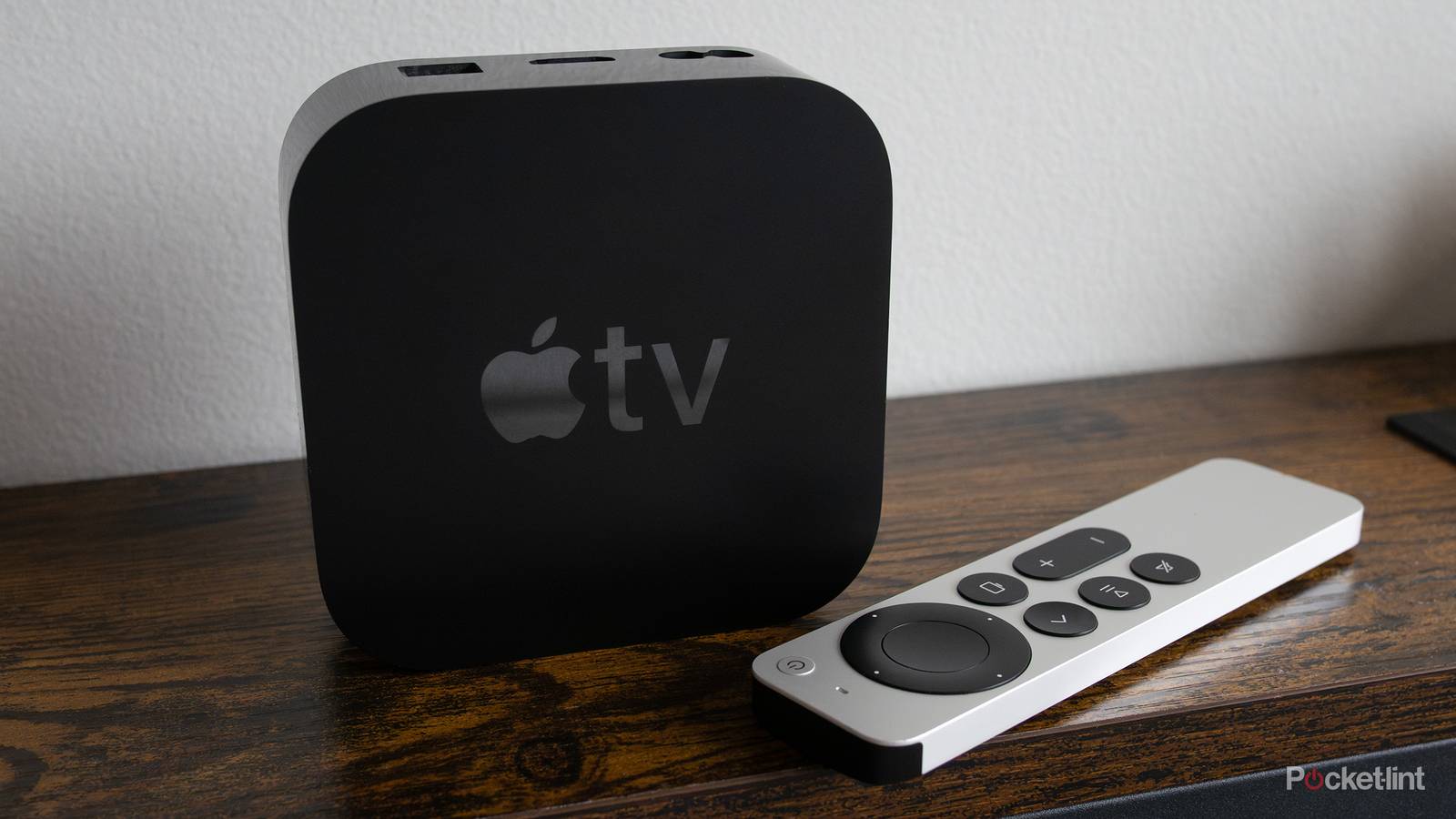
The issue is that if you know the history of the product, you can practically feel its outdated philosophies when using it. The original Apple TV was a giant set-top, designed to function as a kind of iTunes-based media server. The second-gen model shrank things down to the current form factor, but that and subsequent generations have continued to work on the premise that streaming means adding another stationary box to your entertainment center.

Quiz
Apple TV
Trivia Challenge
Think you know your Apple TV history inside out — put your knowledge to the ultimate test!
HistoryHardwareSoftwareFeaturesStreaming
In what year did Apple first introduce the original Apple TV?
Correct! The original Apple TV was unveiled by Steve Jobs in January 2007 and began shipping in March of that year. It was initially codenamed ‘iTV’ before Apple settled on its final name.
Not quite. The first Apple TV was announced in January 2007 and started shipping in March 2007. Steve Jobs introduced it at Macworld, describing it as a way to bring your iTunes library to your television.
What was the storage capacity of the original first-generation Apple TV at launch?
Correct! The original Apple TV launched with either a 40GB or 160GB hard drive, as it was designed to store synced media locally from your iTunes library. This was before streaming became the dominant model.
Not quite. The first Apple TV came with either a 40GB or 160GB internal hard drive. Because it was designed to sync content from iTunes rather than purely stream it, local storage was a key part of the original design.
What major redesign did Apple TV receive in 2010 that dramatically changed its form factor?
Correct! The second-generation Apple TV launched in 2010 was a dramatic departure — it shrunk to a tiny black puck and completely removed the internal hard drive, shifting fully to streaming. It also dropped the price to just $99.
Not quite. The 2010 Apple TV (2nd generation) was reimagined as a tiny black puck-shaped device that removed local storage entirely, relying on streaming instead. Steve Jobs famously called the original a ‘hobby’ before this pivotal redesign.
What is the name of the operating system that runs on Apple TV HD and Apple TV 4K?
Correct! tvOS is Apple’s dedicated operating system for the Apple TV platform, first introduced alongside the fourth-generation Apple TV in 2015. It’s based on iOS but optimised for the living room experience.
Not quite. Apple TV runs tvOS, a purpose-built operating system Apple introduced with the fourth-generation Apple TV in 2015. While it shares a foundation with iOS, tvOS is specifically tailored for big-screen, remote-controlled navigation.
Which fourth-generation Apple TV feature allowed users to install third-party apps for the first time?
Correct! The fourth-generation Apple TV in 2015 introduced the App Store to the platform, finally allowing developers to build and distribute apps directly to the TV. This was a landmark moment that transformed Apple TV from a streaming box into a proper platform.
Not quite. The App Store was the defining new feature of the fourth-generation Apple TV launched in 2015. For the first time, users could download games, streaming apps, and utilities directly onto their Apple TV, opening it up as a true app platform.
Which chip powers the Apple TV 4K (3rd generation) released in 2022?
Correct! The third-generation Apple TV 4K, released in November 2022, is powered by the A15 Bionic chip, the same processor found in the iPhone 13 series. This gave it a significant performance boost and enabled smooth 4K HDR playback.
Not quite. The 2022 Apple TV 4K (3rd generation) uses the A15 Bionic chip. Apple often reuses chips from its iPhone lineup in Apple TV, and the A15 offered a meaningful performance improvement over the A12 found in the previous model.
Apple TV+ launched as a streaming service in November 2019. What was notable about its launch pricing in many markets?
Correct! Apple TV+ launched on 1 November 2019 at just $4.99 per month, making it one of the most affordable streaming services at launch. Crucially, Apple also offered a free one-year subscription to anyone who purchased a new Apple device.
Not quite. Apple TV+ launched at $4.99 per month and sweetened the deal by offering a free year of the service to anyone buying a new Apple device. The aggressive pricing was seen as Apple’s strategy to rapidly build a subscriber base for its fledgling original content library.
What is the name of Apple’s feature that allows iPhone users to use their phone as a camera source through Apple TV?
Correct! Continuity Camera, introduced with tvOS 17, allows users to use their iPhone as a webcam for FaceTime calls on their Apple TV. It takes advantage of the iPhone’s superior camera hardware for a much better video calling experience on the big screen.
Not quite. The feature is called Continuity Camera, and it was introduced with tvOS 17. By wirelessly connecting an iPhone to Apple TV, users can enjoy high-quality FaceTime video calls on their television using their iPhone’s powerful camera system.
Your Score
/ 8
Thanks for playing!
That’s hardly a sin, but the concept makes less sense in the current era. People have become accustomed to media streamers that can not only hide behind a TV, but jam into your bag if you want to take it to a hotel or guest house. To provide the amount of power an Apple processor needs, there might be no choice but to continue using a wall adapter instead of a TV’s USB port — but most Roku or Fire Stick owners end up doing that anyway for the sake of fast boot times.
There’s no obvious reason Apple couldn’t slim down the current model apart from its integrated power supply. There are only two or three ports to speak of, and if Apple can cram Matter and Thread into an iPhone 17, it shouldn’t be a challenge on something that doesn’t require a display or a lot of memory. Apple might want to come up with a dongle format that’s a little more stylish than the competition, but that’s not hard to imagine, even without an Industrial Design degree.
For some of you, the elephant in the room might be the Siri Remote. I like it overall, but I know that a lot of people detest its ergonomics, which make it all too easy to trigger Siri by accident. Swiping gestures are likewise imprecise, to the point that Apple caved several years ago and added arrow buttons. And for all of Apple’s posturing towards having a permanent place in your home theater, you can’t use the accessory as a universal remote. There aren’t even enough buttons, which might be acceptable if it weren’t for the fact that a fresh Siri Remote costs $59.
Even the Apple TV’s greatest strength seems out of sync. One of the reasons Apple turned to iPhone processors is that it had dreams of people treating the device like a game console. But the company has never seriously supported gaming in any arena, whether that meant paying for big-budget exclusives or designing a first-party controller. So gaming on the device has languished, and yet people are paying for performance they’ll probably never exploit.
That brings me to my last talking point: sticker price. The cheapest model is $129, while the version with 128GB, Thread, and Ethernet is an extra $20. Either can be worth it, but $129 is about $50 more than a Roku Ultra, and $30 more than a Google TV Streamer. That’s sometimes hard to justify when many TVs already ship with decent interfaces, and some add-ons that are $50 total will cover the bases. I realize that Apple prefers to target a “premium” (read: affluent) market — but at some point it has to adapt to customers, rather than expect them to do the reverse.
Can we expect an Apple TV overhaul sooner rather than later?
Signs point to no

There’s one major reason I’m not expecting a redesign in 2026: Apple Intelligence. It’s rumored that multiple Apple products have been delayed until now to accommodate the Gemini-based (read: fixed) version of that platform, including a refreshed Apple TV. And when the company is laser-focused on one complicated feature, other concerns tend to get sidelined to prevent delays. Indeed, Apple really can’t afford to get an Intelligence reboot wrong. Customers and investors were so disappointed by the 2024 incarnation that there’s been legal action, and worries Apple will never catch up to Google in the AI race.
That likely means waiting until 2028 or later for a complete overhaul, since the Apple TV doesn’t get annualized updates like iPhones, iPads, or Macs. The good news, such as it is, is that Apple Intelligence probably won’t be stealing the spotlight at that point. Apple might even feel obligated to sell a new form factor, since it’ll have been over a decade since the first Apple TV 4K was released. The company seems aware of how people perceive milestones, which in the past has given us products like the iPhone X.
We might get a glimpse of Apple’s plans at WWDC 2026 in June. If some Apple Intelligence or tvOS 27 announcements seem to leave conspicuous gaps for new hardware, it might be that we’ll get everything at once.
Of course, it’s also possible that the Apple TV lineup could fork into more distinct variants. Conceivably the entry-level model could become the portable one, shrunk in size and cost, while continuing to leave Thread and Ethernet by the wayside. The top-end model might be the only one to offer all the bells and whistles, such as the latest A-series chip.
We might get a glimpse of Apple’s plans at WWDC 2026 in June. If some Apple Intelligence or tvOS 27 announcements seem to leave conspicuous gaps for new hardware, it might be that we’ll get everything at once. I’m just not counting on it, based on covering Apple for nearly two decades. It’s not the worst fate — I’m sure having a useful version of Siri takes priority for most of us.

- Brand
-
Apple
- Bluetooth codecs
-
5.0
- Wi-Fi
-
6
- Ethernet
-
Gigabit (128GB model only)