


A ‘greedy and entitled’ daughter has lost a court battle with her brother over their mother’s fortune after she ‘frittered away’ her money on meals at the Ivy, leaving him with ‘almost nothing’.
Sandra Thomas, 65, has been ordered to repay £2.6 million to the late Jeanne MacDougall’s estate, after she and her husband Lloyd – known as Philip – raided her bank accounts.
The couple’s extravagant spending meant at the time of her death she had almost no money left, effectively leaving her son Gary MacDougall, 70, with ‘nil’.
Suing, Mr MacDougall failed to persuade the judge that Mrs MacDougall wasn’t in her right mind when she cut him out of her final will, made in 2011.
He denied that she made the decision out of shame, after he cheated on his wife and had an affair with a local council worker.
Under the will, the Thomases get the properties Mrs MacDougall owned at death, with Mrs Thomas also inheriting cash from her accounts.
But Mr MacDougall will receive half of the rest of the estate, made up of more than £1 million the couple took from his mother, and three properties which they ‘unduly influenced’ Mrs MacDougall to sign over to them.
A Peacehaven holiday home and two Ealing flats, valued at £1.6 million, were only given to the Thomases because of they persuaded her to do so, the judge said.
Judge Nicola Rushton KC ruled that acting out of ‘greed,’ Mrs Thomas and her husband used Mrs MacDougall’s money as a personal piggy bank in an ‘extensive and wholesale’ way, using her accounts ‘as if they were their own’.
‘Suffice it to say, the misuse of Jeanne’s bank accounts by Sandra and Philip was extensive and wholesale,’ she said in her judgment.
‘Jeanne’s accounts and her assets were simply used by Sandra and Philip as if they were their own, without any regard whatsoever for any fiduciary duties, or even familial obligations to Jeanne.’

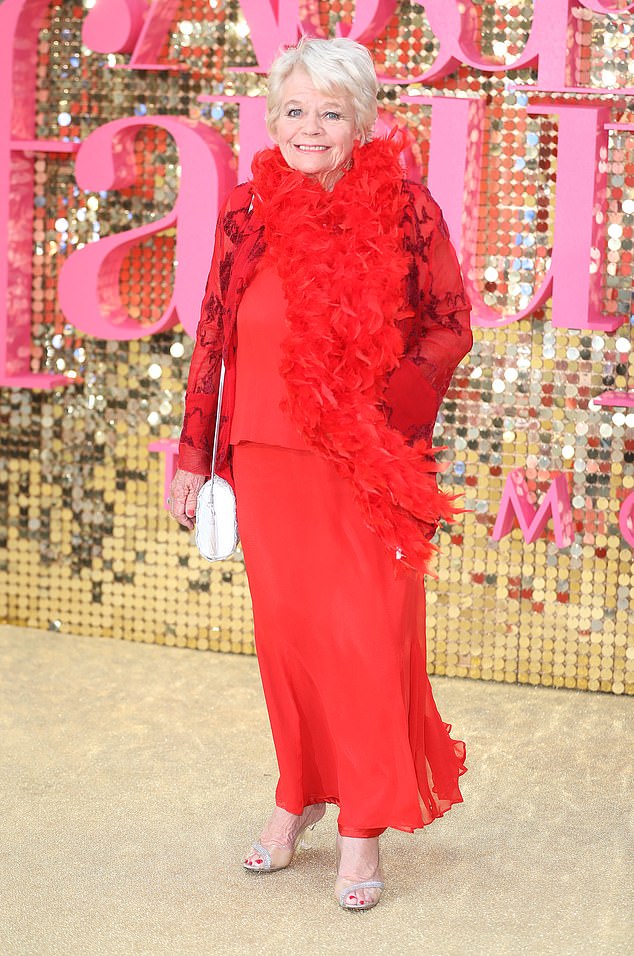
Sandra Thomas, 65, and her husband Philip raided her mother’s bank accounts and splurged on holidays, luxury meals and their daughter’s wedding at the Savoy

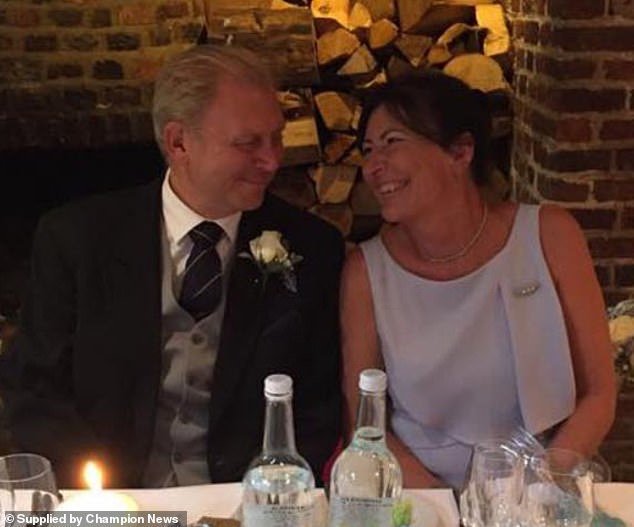
Gary MacDougall now stands to inherit around £1.3 million after the money has been repaid

The death of multi-millionaire property tycoon Jeanne MacDougall sparked a bitter war between her son and daughter over her fortune
During the trial in February, the judge heard the MacDougall family fortune came from the siblings’ property developer father Alec MacDougall’s ‘substantial real estate portfolio.’
He purchased properties in the Acton and Ealing areas of west London, renovated and rented them out, generating significant profits.
For Mr MacDougall, barrister Harry Martin claimed that it had been made clear to the two siblings by their parents that they would receive ‘broadly equal financial treatment and inheritance.’
His father even told Mr MacDougall that he would not require a significant pension pot as he would inherit property on which to live on in his retirement, said the barrister.
Following Alec’s death, Mrs MacDougall made a will in 2008 which Mr Martin said amounted to a ‘broadly equal’ split between her son and his family and daughter and son-in-law.
Mr MacDougall and his family would receive properties in Avenue Crescent and Berrymead Gardens, while Mrs Thomas got houses in Stuart Road and Avenue Gardens, and most of the cash in her bank accounts.
But another will was then made in 2011, under which all four properties went to his sister and brother-in-law, while Mrs Thomas would continue to receive the majority of her savings.
The siblings would then split what was left, but due to the costs and expenses of estate administration, that was ‘likely to be worth nil,’ Mr Martin said.
Suing, builder Mr MacDougall claimed the 2011 will was invalid as his mother had by then ‘lost almost all of her independence.’
The pensioner also lacked the necessary mental capacity due to dementia when she signed the will and did not properly understand its effect, he said.
And he also laid claim to a share of more than £1m of his mother’s money, which he said was ‘misappropriated’ from her bank accounts before she died and spent by his sister and brother-in-law on themselves and their family.
This included splurging on meals at The Ivy, holidays, new cars, shopping trips and their daughter’s wedding at the Savoy, he said.
For the couple, who are now estranged, Alexander Learmonth KC said they accept overstepping their duties under a lasting power of attorney (LPA) by spending Mrs MacDougall’s money on themselves and their family.

Sarah Thomas was described by the judge as ‘greedy’ and ‘entitled’ and will now have to repay some £2.6 million to her mother’s estate
However, he said it was essentially ‘an advance on their inheritance’ because most of her cash was destined for Mrs Thomas under both the 2008 and 2011 wills.
They had not been properly advised about what they could do and believed they could deal with her money in the way they believed she would have wanted, spending it in order to reduce inheritance tax, he said.
There were plain reasons why Mrs MacDougall had changed her will in favour of her daughter and son-in-law, who had looked after her in her old age, he added.
That included Mr MacDougall’s success as owner of the family business and his mother’s ‘irritation’ with him due to his ‘sharp words in the office’ and ‘marital infidelity.’
But giving evidence, Mr MacDougall denied ‘a very brief fling’ lay behind his mother’s decision to change her will, telling the judge she would have given him ‘both barrels’ if she was really annoyed.
Giving judgment, Judge Rushton found that Mrs MacDougall’s 2011 will was not tainted by undue influence, nor by mental frailness.
‘Jeanne was genuinely very grateful to Sandra and Philip for the home and the support they had been giving her,’ she said.
‘It is unsurprising that she wanted to express her generous nature by rewarding them.’
But she ruled that their actions had depleted the value of the estate, which should have included the properties gifted in 2008 to the couple and the money they spent.
She found that the transfers of a £400,000 holiday home in Peacehaven, East Sussex, and two flats in Ealing, west London, worth about £1.2m were the result of their ‘undue influence’ on her.
‘In my view, the likeliest explanation for the transfer of Peacehaven is simply that Philip and Sandra persuaded Jeanne to do it, probably over an extended period, and that justifications such as that Gary already had a holiday home in Cyprus, or had already ‘had enough’ from the business, were not so much Jeanne’s as the ones they used to win her over,’ she said.
‘It is also in the nature of undue influence that it works in the shadows.
‘The Peacehaven transaction in my view marked the start of a quite different pattern: transactions which favoured Philip and Sandra and their family over Gary and his family, starting in an unobtrusive way, but becoming increasingly unashamed over time.
‘This was a pattern which gathered force in a manner which in my view was more indicative of greed and a sense of entitlement on the part of Philip and Sandra than of choices and efforts by Jeanne to achieve equality between her children.’
She said the same influence had resulted in the transfers of the two Ealing flats to the couple and went on to find that they were in breach of their duties under the power of attorney by spending Mrs MacDougall’s money on themselves.
‘I understand that the total of the sums spent through them was in excess of £1 million, although I have made no attempt to total them up,’ she said.
‘Mr Martin submits that there was a pattern of properties being sold for cash, the proceeds being paid into the accounts and then used not only for ordinary living expenses but also for more extravagant expenses, including cars, holidays, the two weddings, college fees for Sandra and Philip’s children, and many cash withdrawals, among other things.
‘Although Philip denied in cross examination that there was such a pattern, I consider that such a pattern is the most obvious conclusion to be drawn from an overview of the bank statements, especially as the only other apparent source of income for Philip and Sandra was rent from their other properties.
‘The excuses made for this breach of duty do not make any difference. Ignorance of their duties is not a defence.
‘In any event, the LPA explained on its face what the duties were. They had plenty of opportunity to clarify the position and to take advice, but they did not do so. This was deliberate misconduct driven by greed, for which there is no excuse.
‘There was a clear cycle of emptying Jeanne’s bank accounts, realising an asset to generate more cash, and then repeating the process again.
‘No thought was given to how Jeanne’s care would be paid for, and at her death she had virtually no cash left.’
She said an account would have to be taken of the money spent by the couple to determine what they must pay to the estate as compensation, which would then be split with Mr MacDougall.
The exact value of the multimillion-pound estate has still to be calculated but the Thomases will still get at least double the £1.3 million Mr MacDougall is in line for under the upheld will.
The judge rejected a claim by Mr MacDougall that the Thomases had wrongly influenced their mother into spending £500,000 on improvements to their home when she moved in.