


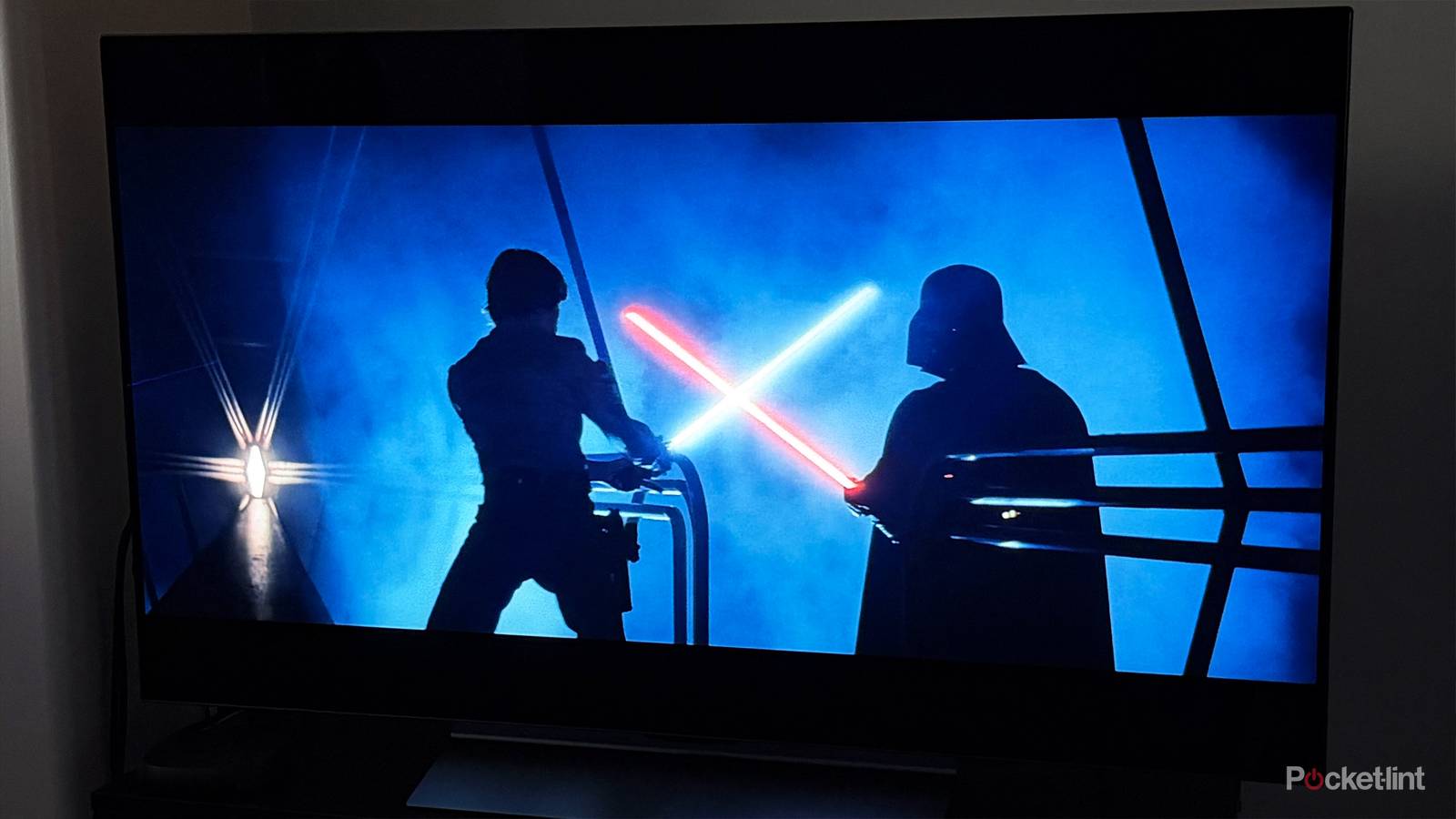
When people dip into a new home theater system equipped with Dolby Vision, the results can sometimes be disappointing. Occasionally this can just be a matter of excessive hype, since TV makers, streaming services, and Dolby itself want to persuade you that you can’t live without it. But there can also be legitimate, unbiased problems, commonly in the form of images appearing too dark. That might not be such a big deal if you’re watching The Wizard of Oz — but if you’re watching The Witch or Hereditary, some scenes could be incomprehensible.
The good news on this front is that in most situations, it’s easy to fix Vision without cranking brightness up so high that it ruins everything else. The exact solution you’ll need depends on the cause of your profound darkness. So while I’m going to start with the most likely answer, there are several other troubleshooting steps you may need to run through.
Several ways to fix dark Dolby
Changing Vision’s default mode

Vision’s greatest strength is also its core weakness. While Vision was the first consumer HDR standard, and has long remained the one with the most range, many TVs simply aren’t equipped to present it in its full glory. If there’s a mismatch in tone mapping — that is, translating Vision metadata into what your TV is actually capable of — the result can be crushed blacks with little to no detail.
The very first thing you should do is check Vision’s mode on your TV. Often it defaults to something labeled Dolby Vision Dark or Cinema. This works not just on the assumption that you have a mid-range or high-end TV, but that you’re watching in a dim or completely darkened room. In practice, of course, many people are watching in well-lit rooms, or on budget TVs that nevertheless have Vision support.
If it’s available, try switching on Dolby Vision IQ. This exploits a light sensor on your TV to automatically correct for ambient conditions. If you still don’t like the results or don’t have access to IQ, there should be a mode labeled Dolby Vision Bright. I’d argue that this should be the default for most TVs, given real-world viewing conditions, but at least there’s a fallback.
Some TVs may offer a mode called Dolby Vision Custom. This lets you tweak brightness, contrast, black levels, and other aspects the way you like them, and could ultimately produce the best results. I’d recommend trying IQ or Bright first, however, unless you don’t mind taking time out to experiment.
Disabling any energy-saving modes

As I’ve said elsewhere, I’m normally a big fan of energy-saving features. It’s why I own a smart thermostat, and why I don’t use the Sport modes on an EV or PEV. On a TV, however, energy-saving modes are death.
I’m exaggerating, but when they’re on, these modes limit the brightness of your TV, which is obviously going to have a massive impact on picture quality. Instead of shadow detail being the problem, you’ll encounter reduced highlights or mid-tones. That’s going to suck all the impact out of Dolby Vision, to the point that you might as well be watching in SDR (standard dynamic range). Heck, SDR looks better at full power.
Disable options like Energy Saving or Eco Mode in your TV’s Settings apps, possibly under sections like System or Power and Energy. Don’t worry — while your TV will consume more juice, technologies like mini-LED and OLED are efficient enough that if you only watch TV for a few hours a day, it won’t have a huge impact on your energy bill. There’s no sense paying for an HDR-ready TV if you can’t justify spending a few extra dollars per year (if that much) to see it in action.
You should also disable any generic auto-brightness options your TV might have. These are separate from Dolby Vision IQ, and usually err on the side of being too dim rather than bright. You’ll have to spend a little time playing with brightness levels to find something you like in standard conditions, but it’s really hard to go wrong if you keep brightness between 50 and 80%. Just make sure that the deepest shadows are black, and that you’re not blinding yourself when the room lights are off.
Adjusting dynamic contrast and dimming options

If it’s not equipped with OLED or MicroLED, your TV is inherently dependent on a backlighting grid for contrast, or really any kind of visible image. The more elaborate that grid is, the more nuanced the lighting can be. That’s the whole premise behind mini-LED. Whereas a QLED TV might employ a few hundred LEDs at most, mini-LED steps up to thousands or tens of thousands. RGB mini-LED goes further, incorporating separate red, green, and blue lights for improved color accuracy.
There’s a possibility that your TV isn’t making full use of its backlighting. In Settings, check for options with labels like Active Contrast or Local Dimming. These should be ramped up as high as possible, since the alternative is that portions of the grid will go too bright or too dark to accommodate all the pixels they’re responsible for. For an example, imagine a scene with window light streaming into an otherwise unlit home. If a TV’s backlighting isn’t nuanced enough, the window may have to be dimmed to preserve surrounding shadows, or those shadows may be blown out to make the window look correct.
The settings above shouldn’t be confused with ones like Contrast Enhancer or Dynamic Contrast. The latter two are going to boost contrast in a far less natural way, and should really be avoided unless you’ve tried everything else in this guide without success.
Switch to different HDR formats or processing schemes

If you’re still struggling with Vision content, try forcing your TV to use HDR10+ or vanilla HDR10 instead (if you can). You’re not likely to see a huge performance difference using HDR10+, which is dynamic just like Vision, and even HDR10 is going to look better than SDR. If you own a Samsung TV, you’ve actually never had access to Vision — the company refuses to support it, regardless of how much your TV costs. It’s one of the leading backers of HDR10+ and the upcoming HDR10+ Advanced, which is meant to challenge Vision 2.
If you’re using an add-on media streamer, there may be two remaining options, the first being changing how it handles Vision processing. Typically, a device like an Apple TV 4K will process Vision itself, then pass the data along to your TV. A media streamer should be set to match HDR modes and refresh rates automatically rather than forced to use one combination all the time. While you’re at it, try testing any other Vision- or HDR-related options.
Ultimately, though, there could be a deeper disjunction between the way a streamer handles processing and the way it’s performed by your TV’s native apps. You may prefer one path over the other, and if that’s the case, you’ll need to leave the other one in the dust.

- Brand
-
Apple
- Bluetooth codecs
-
5.0
- Wi-Fi
-
6
- Ethernet
-
Gigabit (128GB model only)