


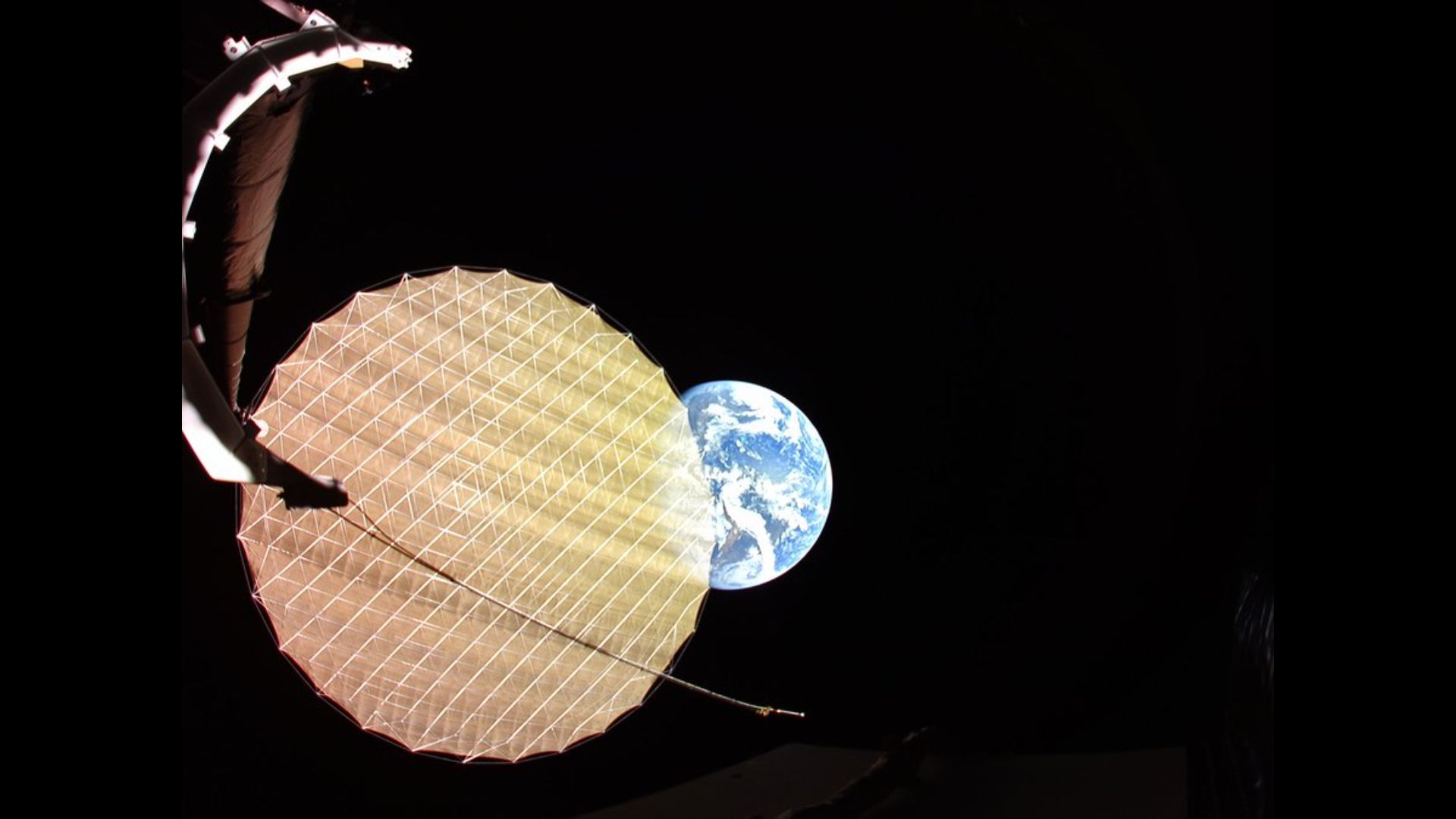
Earth watched on as a communications satellite deployed its big reflector more than 22,000 miles (35,400 kilometers) away.
What is it?
ViaSat-3 F2 launched to space on Nov. 13, 2025 atop a United Launch Alliance Atlas V rocket. In the first few months after that, the telecommunications satellite made its way to geostationary orbit, which lies exactly 22,236 miles (35,786 km) above Earth. This is much farther away than low Earth orbit where the International Space Station lives, which extends to 1,200 miles (2,000 km) above Earth.

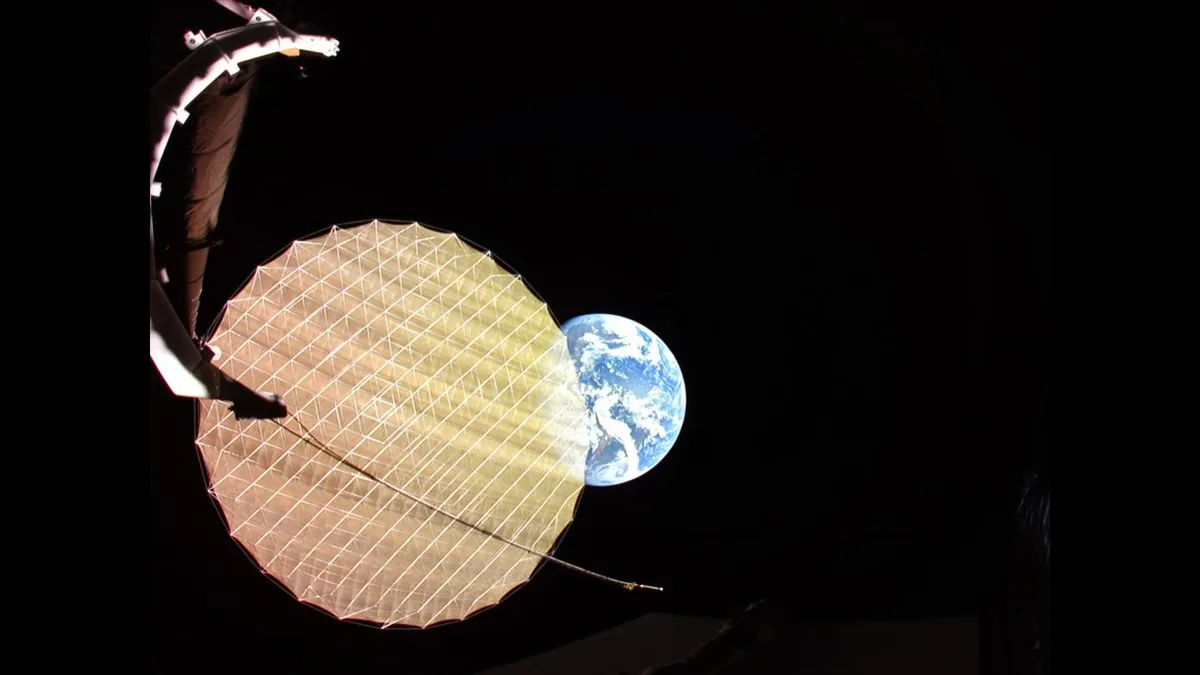
As seen in this new image, the satellite has now not only reached geosynchronous orbit, but it has fully deployed its large reflector. This step is critical to the satellite’s success, as the reflector will improve its overall broadband capacity, according to recent reports.
“Exciting progress for our ViaSat-3 program, as we focus on advancing in-orbit testing of our ultra-high capacity satellite,” the company wrotein its post.
Why is it incredible?
The ViaSat-3 F2 satellite is a 13,000-pound (5,900-kilogram) communications satellite designed to provide high-speed satellite internet across the Americas from space.
According to Viasat, each of the ViaSat-3 satellites (three of which have launched to date) is made “to be capable of rapidly shifting capacity throughout its coverage area to deliver bandwidth where and when it’s needed most.”
We might sometimes take our connectivity here on Earth for granted. From almost anywhere, we can be instantly connected to our friends and family all around the world. This image is a captivating visual of the technology behind that connection coming to life.