


The TV industry is at a crossroads. For a few years, tech was relatively static, split between QLED, OLED, and mini-LED panels, with 4K resolution seemingly on the verge of being replaced by 8K. But now major players are exiting 8K, and new panel formats are slowly leaving the realm of the super-rich to become plausibly affordable to the rest of us. Eventually, some of this tech could kick QLED and OLED out of the market entirely.
One of the contenders is something called SQD mini-LED. If you’re not familiar with the term, I’ll fill you in on the details, including how it works, who’s using it, and its advantages. I’ll also give my take on its chances of success, although SQD is very early into its lifecycle. If my suspicions are right, it could prove to be little more than a sidetrack.
What is SQD mini-LED, and does it live up to the hype?
A new spin on a familiar concept

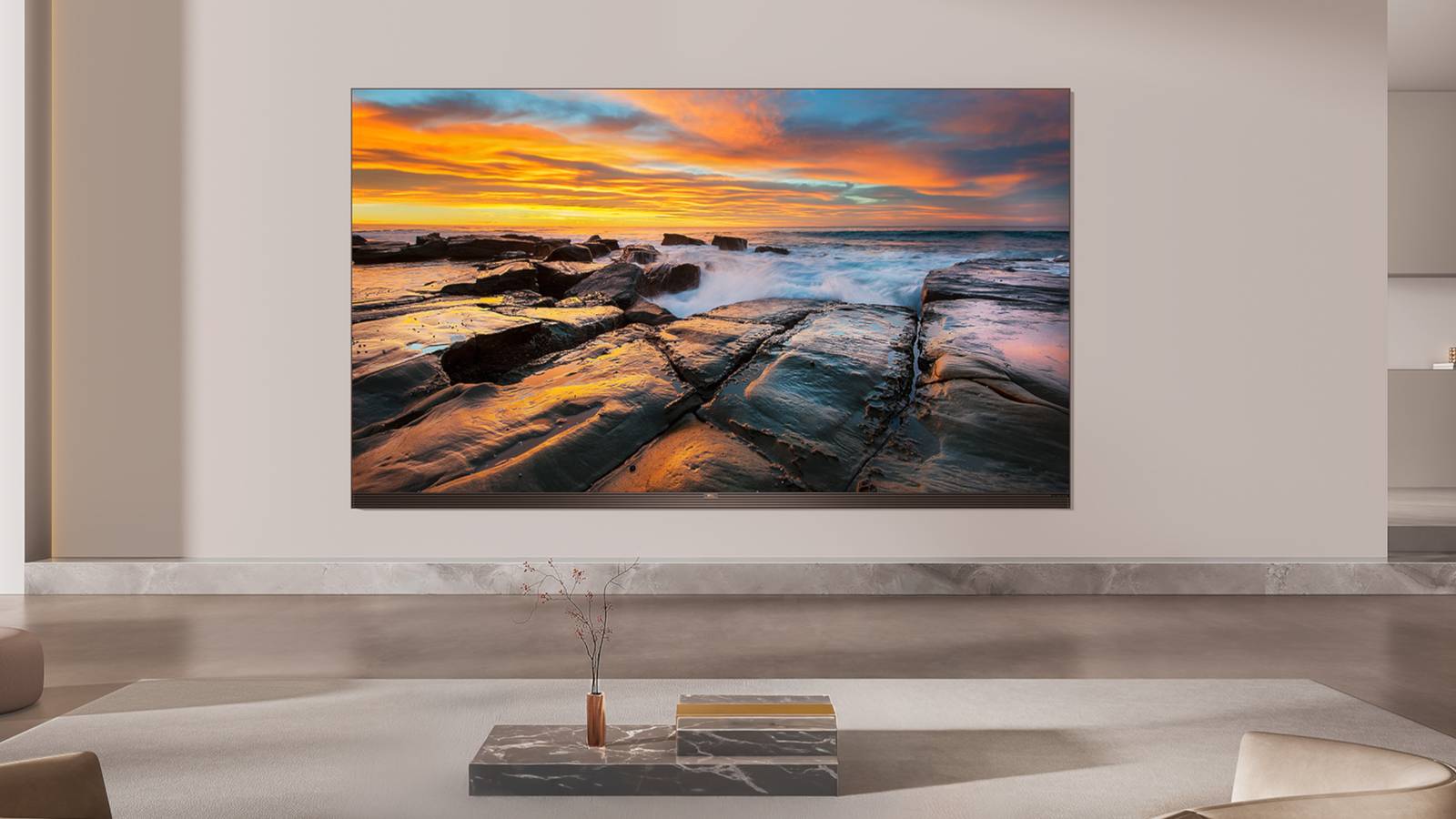
The wraps first came off SQD mini-LED at CES 2026 in Las Vegas. The tech belongs exclusively to TCL, which showcased it on a new flagship TV, the X11L. That product is now on the market in 75-, 85-, and 98-inch sizes, and it’s eye-wateringly expensive, starting at $7,000 and running up to $10,000. It’s in competition with the best OLED TVs, as well as the incoming crop of RGB mini-LED TVs, some of which are being produced by TCL itself.
RGB mini-LED is an important point of reference here. The main advancement in that tech is the use of separate red, green, and blue LED backlights, which allows it to achieve bright and very accurate colors with minimal filtering. It can allegedly achieve 100% of the BT.2020 color gamut, and as much as 8,000 to 10,000 nits of peak brightness, enough to overpower the midday sun.
TCL is claiming similar performance figures for the X11L, including up to 10,000 nits of brightness on the 98-inch model, but SQD operates much more like traditional mini-LED panels. That is, it relies on blue-colored LEDs, which are filtered into other colors through a quantum dot layer. The short explanation of QD is that different sizes of dot emit different colors.
TCL’s Super Quantum Dots supposedly deliver more accurate and vibrant colors, enough that there’s no need to use RGB backlights like RGB mini-LED.
As you might have guessed, SQD stands for Super Quantum Dot, which is the key to whole enterprise. TCL’s dots supposedly deliver more accurate and vibrant colors, enough that there’s no need to use RGB backlights. This has some obvious appeal, at least from a corporate perspective. While the X11L is far too expensive for the average person, achieving RGB-like performance without the associated complexity could control the manufacturing cost of future TVs. It’s hard to say for sure, since of course nanometer-scale quantum dots aren’t exactly easy to produce either.
As for whether the X11L lives up to the hype, testing by outlets like TechRadar and PC Mag suggests that while it’s one of the brightest and most color-accurate TVs on the market, it can’t quite achieve TCL’s promises. To get anywhere near 10,000 nits, for example, you need to use Vivid mode instead of something like Filmmaker Mode, which disables most post-processing in the name of accuracy. In the latter mode, it’s also said to achieve only 91.8% of the BT.2020 color gamut, and 97.7% of the smaller DCI-P3 gamut, though the second is more important given that it’s what HDR is functionally delivered in. That P3 figure is identical to another TCL TV, the relatively conventional QM9K — but at somewhat lower HDR brightness levels, with or without Filmmaker enabled. Notably, the X11L is eclipsed in P3 performance by high-end OLED TVs, even if it outdoes them in BT.2020.
Is SQD mini-LED the future of the TV industry?
For a short time at best

More SQD TVs are in the cards for TCL, certainly. There’s already the C8L, set to ship in 55-, 65-, 75-, 85-, and 98-inch sizes. It uses far fewer dimming zones than the X11L, and brightness tops out at 6,000 nits on the 98-inch model. That’s still ridiculously bright, just not headline-making in the world of mini-LED products.
The real question, perhaps, is if other TV makers will copy TCL, or if the company is going to bother producing SQD sets after the current generation. That’s tough to say. On the first point, other companies can’t copy TCL directly, and they won’t use the term “SQD” — but it’s not inconceivable that they might attempt similar quantum dot tech, especially if it proves to be easier to manufacture.
As for whether TCL will stick with the format, my own prediction is that it’s going to be a relatively short-lived phenomenon, kept around for another year or two at most. Why? Simply put, it’s just an evolution of the mini-LED TVs we’re used to, whereas RGB mini-LED is a more fundamental shift. There’s no getting around the power of dedicated backlights for each color, given that they reduce the need for filtering. In fact RGB mini-LED doesn’t even need quantum dots, which have been employed not just by other mini-LED panels, but by QLED and QD-OLED TVs.
This sort of thing is a recurring trend in the industry — some sort of sub-invention is briefly sold as the next big thing, only to be replaced a short time later without really revolutionizing panel technology.
As I mentioned, TCL itself is rolling out RGB mini-LEDs, joining the likes of Samsung, LG, and Hisense. If it really thought SQD was The Future, there wouldn’t be much call for producing both formats, given that they’re both targeting the high-end mini-LED space. I wonder then if the company isn’t just trying to leverage its existing manufacturing capacity until it can ramp up RGB mini-LED production.
A useful analogy here might be LG’s Micro Lens Array (MLA) technology. That was intended to improve brightness and color on its OLED TVs, and indeed it did just that. But the company ditched it in 2025 in favor of four-stack tandem OLED, only two years after the first MLA TVs reached stores. This sort of thing is a recurring trend in the industry — some sort of sub-invention is briefly sold as the next big thing, only to be replaced a short time later without really revolutionizing panel technology. Often, this marketing is just meant to persuade consumers (and journalists) that they’re looking at bleeding-edge hardware.
In the long run, both SQD mini-LED and RGB mini-LED are liable to be replaced by MicroLED, which does away with backlighting entirely by using LEDs for individual pixels, much like OLED, but without the risk of burn-in. The obstacle at the moment is that MicroLED is even more difficult to produce than RGB mini-LED, so the few models on the market are priced at five or six digits. I wouldn’t expect genuinely affordable MicroLED TVs to hit the market before 2030 — not when it’s going to be a while before a RGB mini-LED set drops closer to $1,000.