


A rare outbreak of a life-threatening disease not seen in Western Australia for half a century has sparked a health warning from authorities.
The Department of Health announced on Wednesday that dozens of residents have been diagnosed with diphtheria, a serious bacterial infection that can cause severe illness and death.
‘There have been 60 confirmed cases of diphtheria reported in regional WA since late December 2025, with the majority occurring in Aboriginal people,’ a spokesman said.
‘This includes 55 cases in the Kimberley, three in the Pilbara, and two cases in the Goldfields.
‘Cases have primarily occurred in children and young adults, with a smaller number across older age groups.’
The disease can manifest as a sore throat or as skin infections that heal poorly.
It spreads through close contact with respiratory droplets, infected skin sores, or contaminated items such as bandages and shared towels.
‘Respiratory diphtheria has not been seen in WA for more than 50 years, and diphtheria skin infections have become rare,’ WA Chief Health Officer Dr Clare Huppatz said.

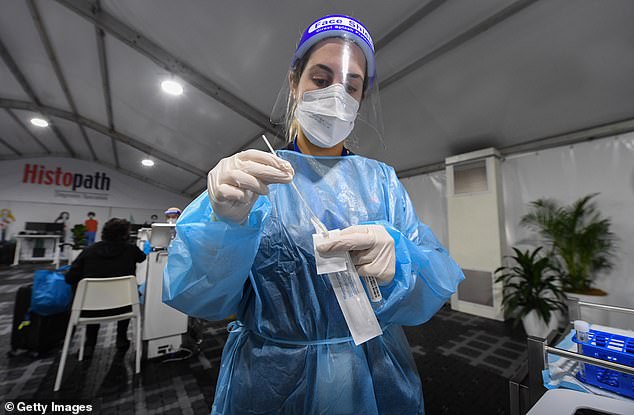
A rare outbreak of a life-threatening disease not seen in Western Australia for half a century has sparked a health warning from authorities (stock image)
‘However, cases have re-emerged in the last few years in parts of northern Australia, including the Northern Territory, which has also recently declared a diphtheria outbreak.’
In April, the Northern Territory recorded 17 cases of respiratory diphtheria. It saw 60 cases of the less serious diphtheria strain that affects the skin within a 12 month period.
Cases have also been found in Queensland (two) and South Australia (one) so far this year.
If caught, respiratory diphtheria can progress to cause a thick coating in the throat that may make breathing or swallowing difficult and can be life-threatening.
The other form of the disease, cutaneous diphtheria, usually causes infected sores or ulcers on exposed parts of the body that are slow to heal.
It rarely leads to severe illness.
Historically, diphtheria was a leading cause of childhood death globally, and more than 4,000 Australians died from diphtheria between 1926 and 1935.
Vaccination started in Australia in the 1930s and the disease has rarely been seen since the 1950s.

The Department of Health announced on Wednesday shared a warning for residents (stock image)
Dr Huppatz urged people in Western Australia to receive their booster doses of the diphtheria vaccine, which is usually administered alongside tetanus and pertussis.
‘We are seeing cases concentrated in some regional areas, which is why it is especially important that people of all ages living, working in, or travelling to these communities are up to date with their vaccinations,’ she said.
‘People who have previously been vaccinated and live in the affected regions can receive a diphtheria booster dose if it has been more than five years since their last vaccination — this is especially important for Aboriginal people and healthcare workers in these regions, who are at higher risk of exposure.
‘Anyone who is unvaccinated or unsure of their status should speak with their GP or health provider about starting a vaccination course.
‘Parents and carers should ensure children receive their routine vaccinations on time, including all recommended booster doses.’
The vaccine is routinely given to children at two months, six months and 18 months of age.
They then receive a fourth dose at four years old, and an additional booster during Year 7.