

On Aug. 12, 2026, the moon’s shadow will sweep across northern Spain, from the Atlantic to the Mediterranean, creating a rare sunset total solar eclipse. For a few fleeting minutes and seconds, the sun will be completely blocked, revealing its delicate outer atmosphere — the corona — as the landscape is bathed in an eerie twilight.
Spain offers an exciting opportunity to experience low-altitude totality near sunset. By the time totality begins, the sun will already be sinking toward the western horizon — around 10 degrees high in the northwest and dropping to just a few degrees in eastern regions.
That’s why rural locations matter. Wide-open landscapes — miradors on high plateaus, wetlands, vineyards and semi-desert terrain — offer the kind of uninterrupted sightlines needed to track the eclipsed sun as it dips toward the horizon.
These locations have all been checked using resources including Xavier Jubier’s Interactive Google Map, which has timings and built-in sightlines from Peak inder, as well as The Eclipse App and Eclipse Horizon Checker, while cloud cover is from Time and Date. However, the best advice is to check the weather, choose a location and confirm sightlines the night before the eclipse.
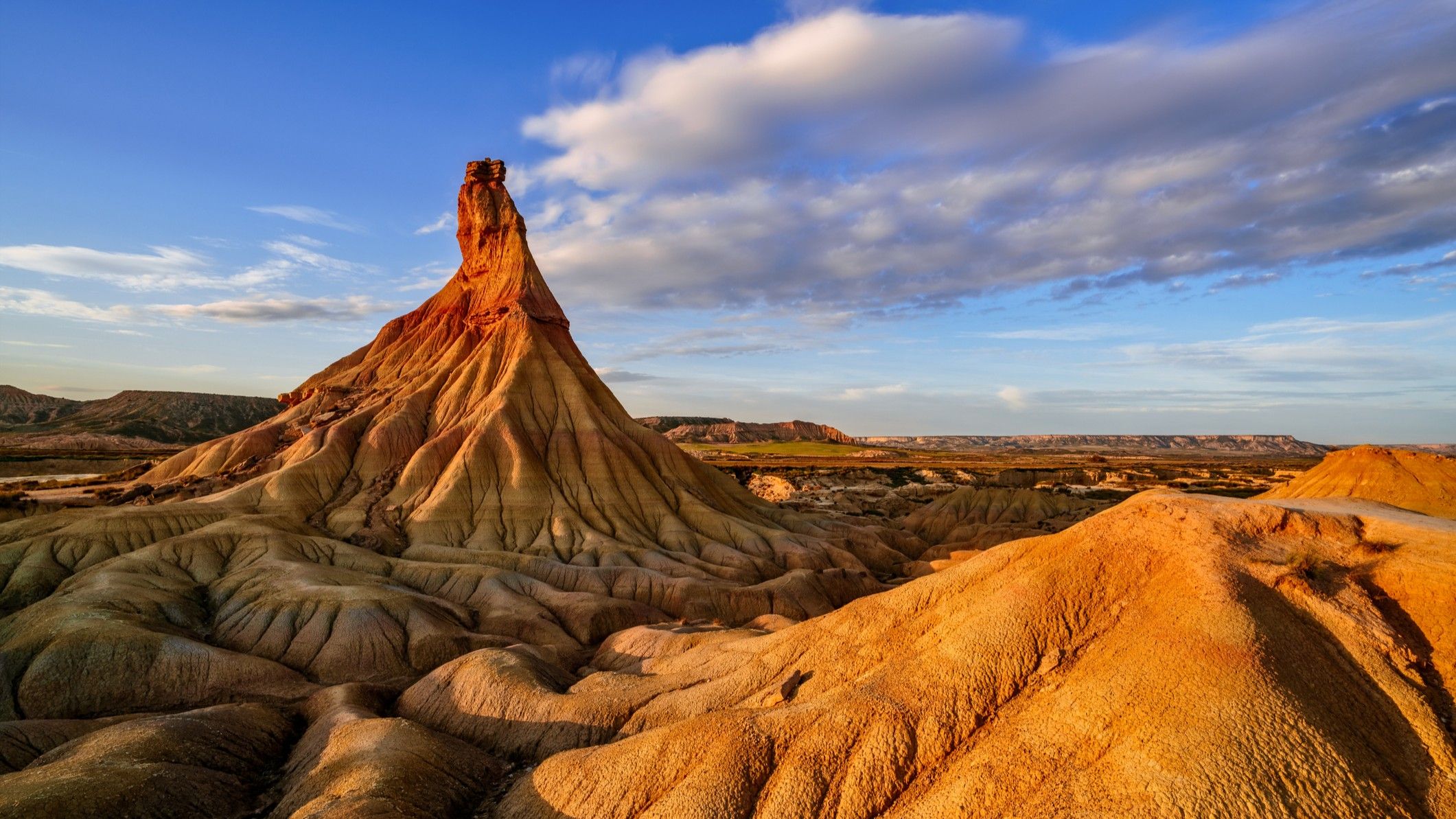
1. Castildetierra (Fairy’s Chimney), Navarre
Location: Tudela, Navarre, Spain
Time and duration of totality: 8:28 p.m. CEST; 1 minute, 4 seconds
Height of eclipsed sun above west-northwest: 6.7 degrees
Chance of clouds: 31% (since 2000)
A bizarre, eroded pillar in the shape of a chimney, Castildetierra (known as the Fairy’s Chimney), is within Bardenas Reales Natural Park, near the town of Tudela in Navarre. It’s a semi-desert landscape with clear sightlines and plenty of places to park.
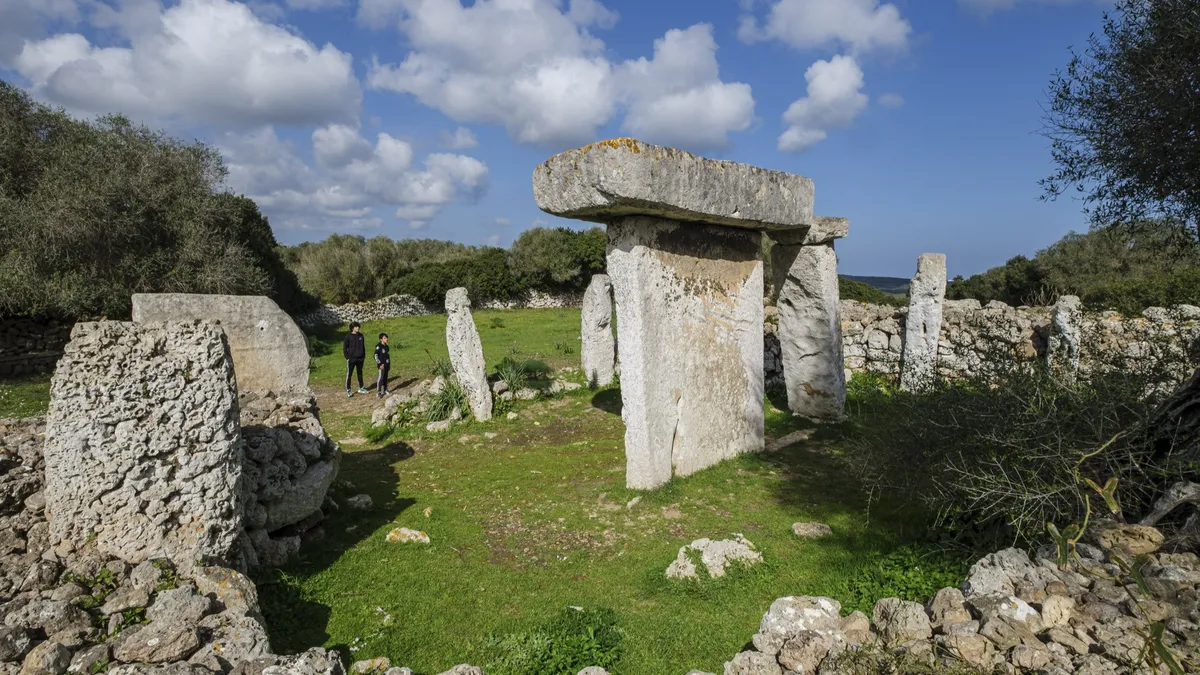
2. Talatí de Dalt, Menorca
Location: Maó, Menorca, Balearic Islands, Spain
Time and duration of totality: 8:30 p.m. CEST; 1 minute, 7 seconds
Height of eclipsed sun above west-northwest: 1.5 degrees
Chance of clouds: 36% (since 2000)
The island of Menorca — also a Starlight-certified destination — is scattered with dozens of sites from a Neolithic Talayotic culture, which built huge stone structures without mortar between about 1,000 and 123 B.C.E. There are many sites, but Talatí de Dalt stands out for both its accessibility and unusual T-shaped ceremonial monument. It’s on flat land, but this remains a risky choice because the eclipse will take place very low on the horizon, so if you’re planning to come here, check the sightlines the previous day.
3. Zamarramala, Castile and León
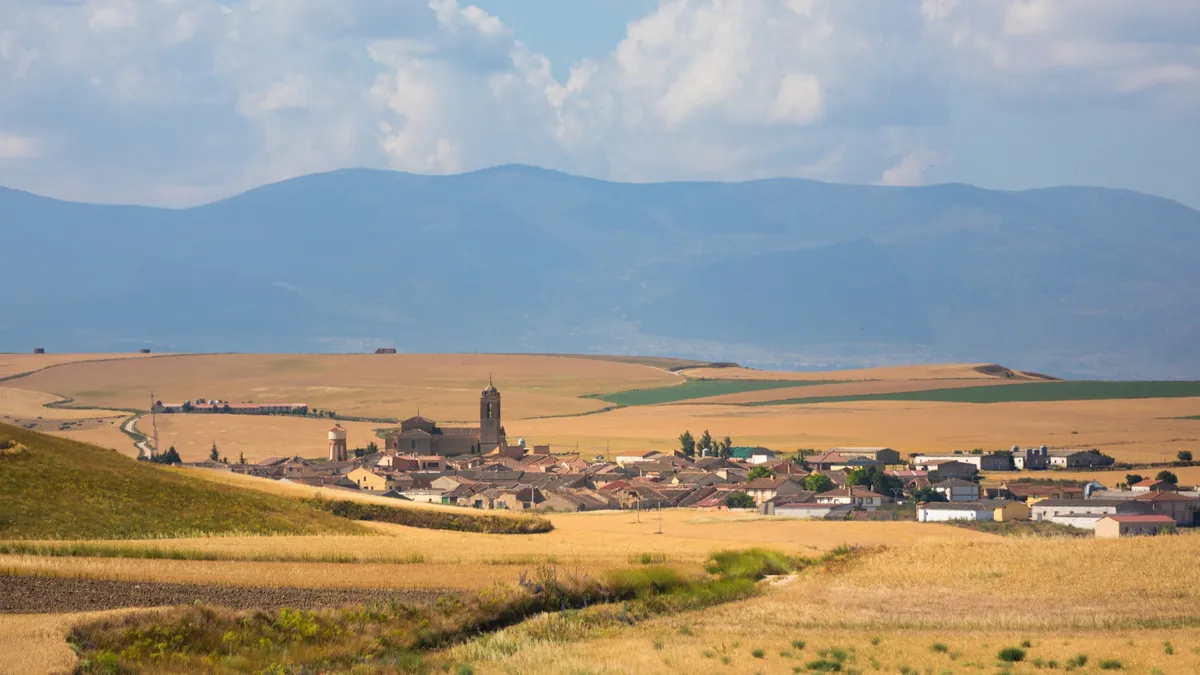
Location: Zamarramala, Segovia, Castile and León, Spain
Time and duration of totality: 8:31 p.m. CEST; 57 seconds
Height of eclipsed sun above west-northwest: 8 degrees
Chance of clouds: 19% (since 2000)
The historic city of Segovia, northwest of Madrid, will be hugely popular for the eclipse because of its aqueduct, but it has relatively difficult sightlines for such a low eclipse. Just to the north is Zamarramala, a village that stands above its surroundings on a high plateau. It will have an unobstructed 360-degree view of the eclipse above a flat landscape of Castilian fields.
4. Calatañazor, Castile and León
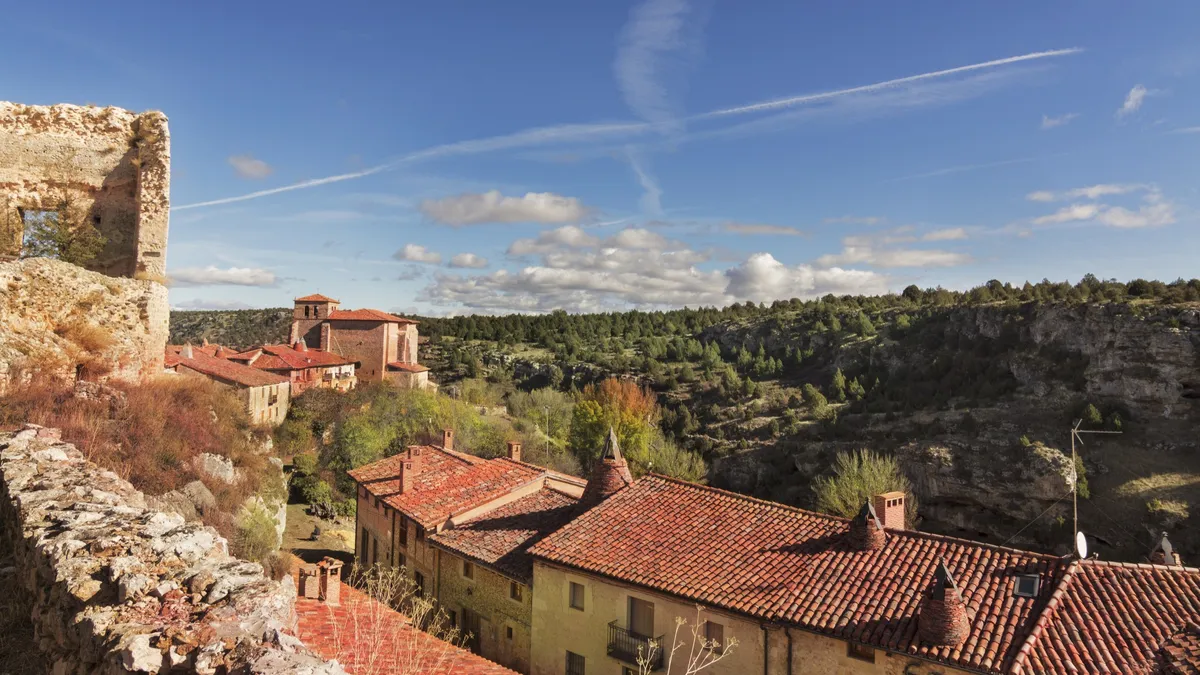
Location: Soria, Castile and León, Spain.
Time and duration of totality: 8:29 p.m. CEST; 1 minute, 43 seconds
Height of eclipsed sun above west-northwest: 7.4 degrees
Chance of clouds: 24% (since 2000)
Above the ominously named Valley of Blood, close to the centerline of the path of totality, is Calatañazor, a small village named after the tiny fortified city on top of a hill. Its well-preserved medieval look, with paved streets and traditional houses, has made it a backdrop for movies, most famously Orson Welles’ Chimes at Midnight.
5. Laguna de Gallocanta, Spain
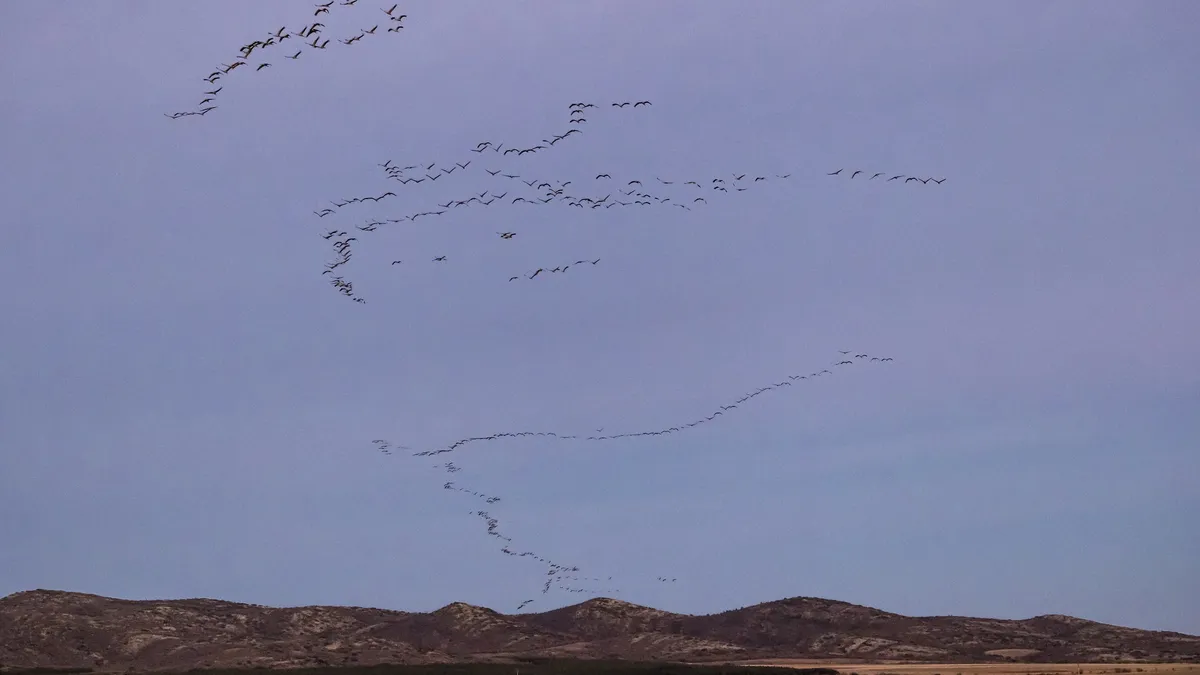
Location: between Teruel and Zaragoza, Aragon
Time and duration of totality: 8:30 p.m. CEST; 1 minute, 42 seconds
Height of eclipsed sun above west-northwest: 6 degrees
Chance of clouds: 22% (since 2000)
Almost bang on the centerline, this rain-fed salt lake on a high plateau in the south-west of Aragon is best known for cranes in winter, though in August you’re more likely to see bustards, flamingos, harriers, vultures and the golden eagle. It’s a wide, flat, undeveloped landscape framed by picturesque mountain ranges, with nearby places to stop, including Observatorio de la Reguera, Observatorio El Cañizar, and Mirador de aves de Tornos.
6. Alfaro Wetlands, La Rioja
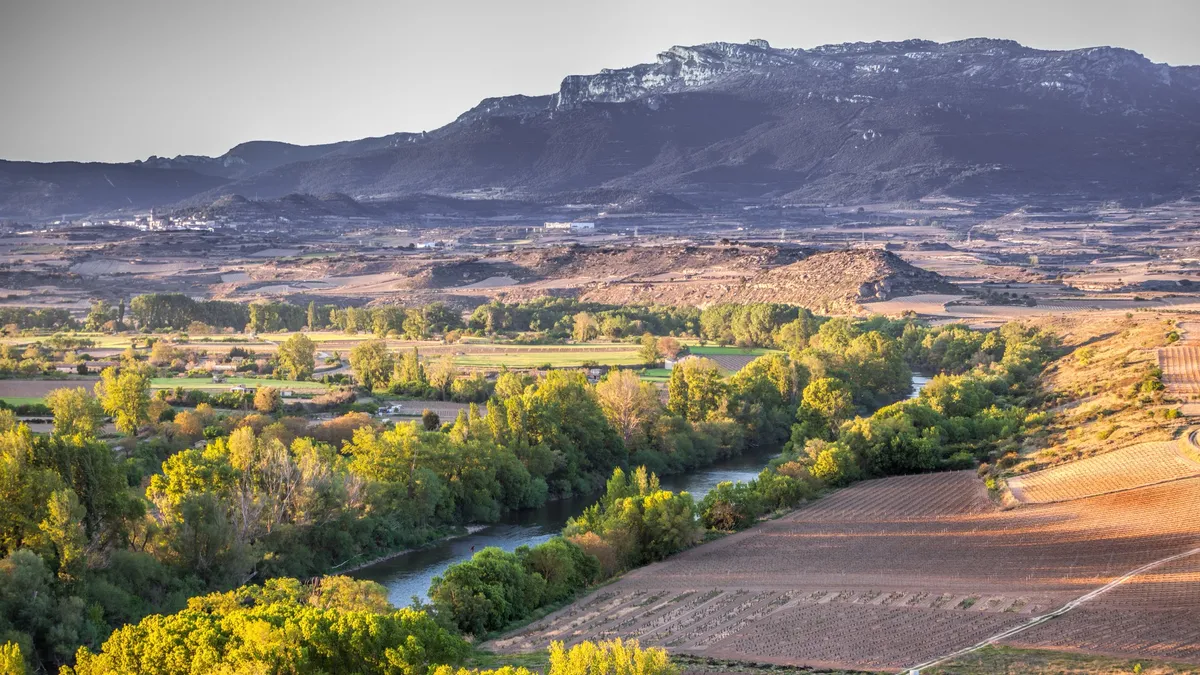
Location: Reserva Natural de los Sotos del Ebro en Alfaro, La Rioja, Spain
Time and duration of totality: 8:28 p.m. CEST; 1 minute, 16 seconds
Height of eclipsed sun above west-northwest: 6.9 degrees
Chance of clouds: 31% (since 2000)
The Alfaro wetlands nature reserve in La Rioja, near the border with Navarre, is a protected wetland area along the Ebro River. Among its meanders, islands and beaches, there are storks, herons, cormorants and kingfishers. The best eclipse-viewing spots will be open meadows and flat, grassy areas away from trees.
7. Arcos de las Salinas, Teruel
Location: Teruel, Aragon, Spain
Time and duration of totality: 8:31 p.m. CEST; 1 minute, 23 seconds
Height of eclipsed sun above west-northwest: 5.2 degrees
Chance of clouds: 19% (since 2000)
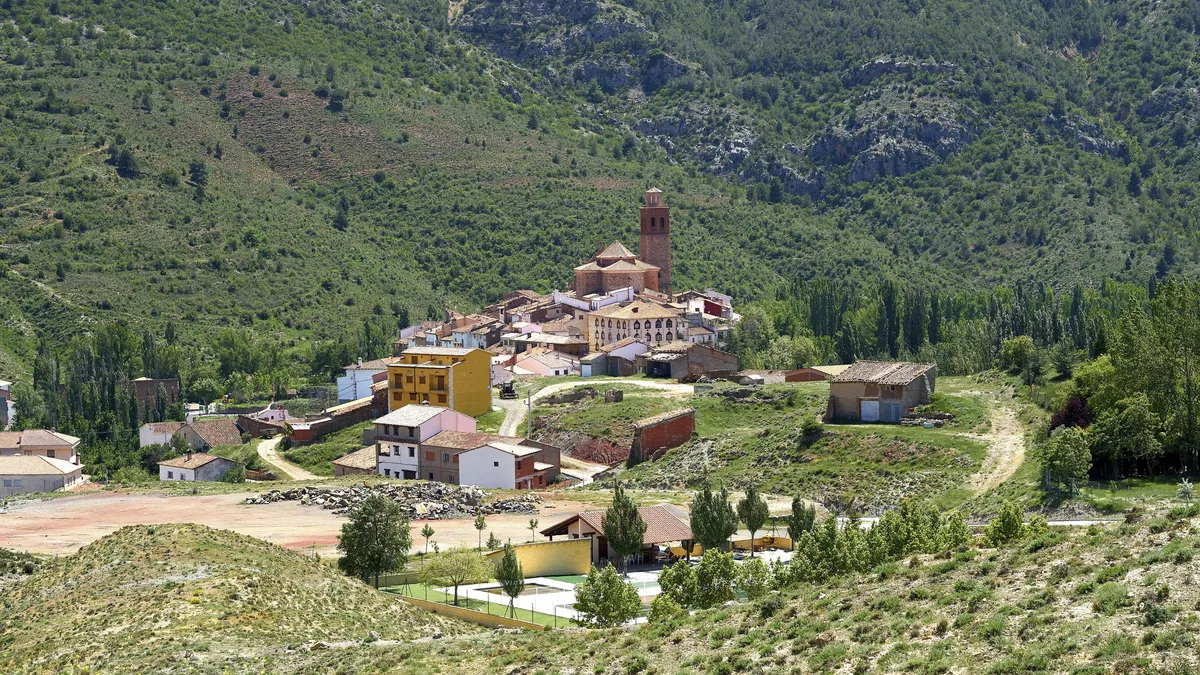
South of Teruel, in the heart of the Gúdar-Javalambre region, is the “interstellar town” of Arcos de las Salinas. It’s home to Galáctica, Europe’s largest astronomy outreach center, which will stage a special ticketed event for the eclipse. Mirador de Estrellas de Arcos de las Salinas, beside an area of telescopes, will have a view of the totally eclipsed sun just above the mountains.
8. Fortaleza califal de Gormaz, Soria
Location: Gormaz, Soria, Castile and León
Time and duration of totality: 8:29 p.m. CEST; 1 minute, 42 seconds
Height of eclipsed sun above west-northwest: 7.4 degrees
Chance of clouds: 20% (since 2000)
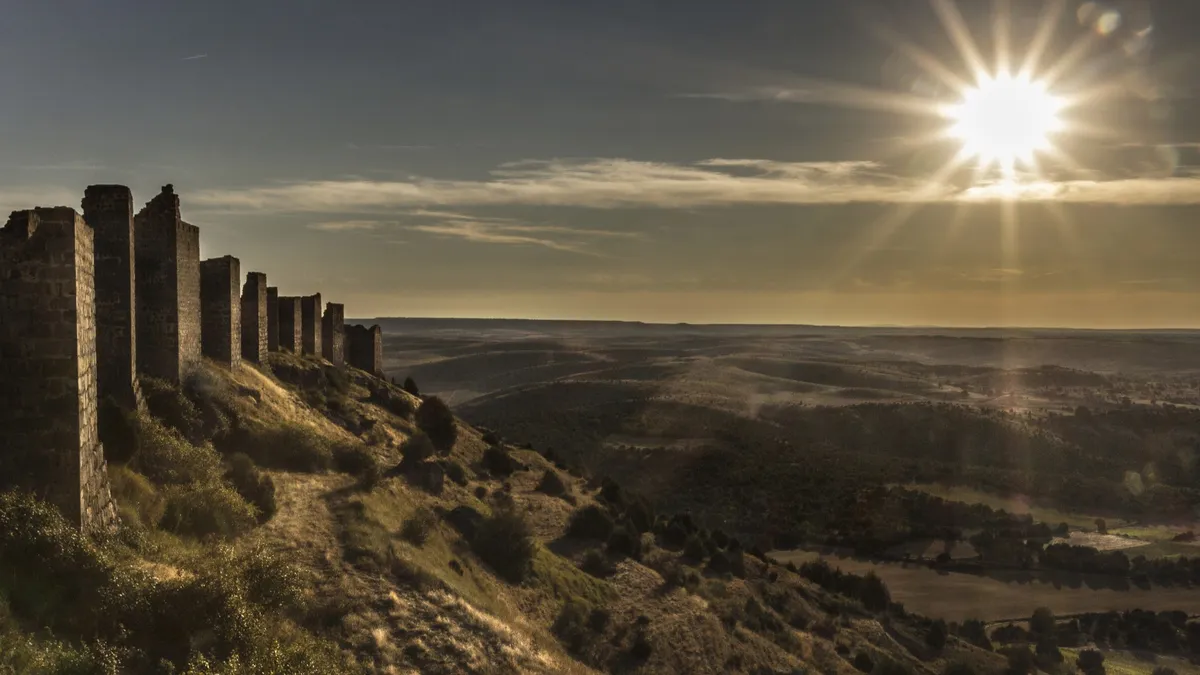
This Islamic citadel, dating to the 8th century, has well-preserved walls, watchtowers and a horseshoe arch above its main door. Almost as if it were created for the eclipse, the walls face northwest to create the perfect balcony for watching the moon‘s shadow approach across a rural landscape.
9. Lago Enol, Asturias
Location: Parque Nacional de los Picos de Europa, Cangas de Onís, Asturias, Spain
Time and duration of totality: 8:27 p.m. CEST; 1 minute, 42 seconds
Height of eclipsed sun above west-northwest: 9.7 degrees
Chance of clouds: 58% (since 2000)
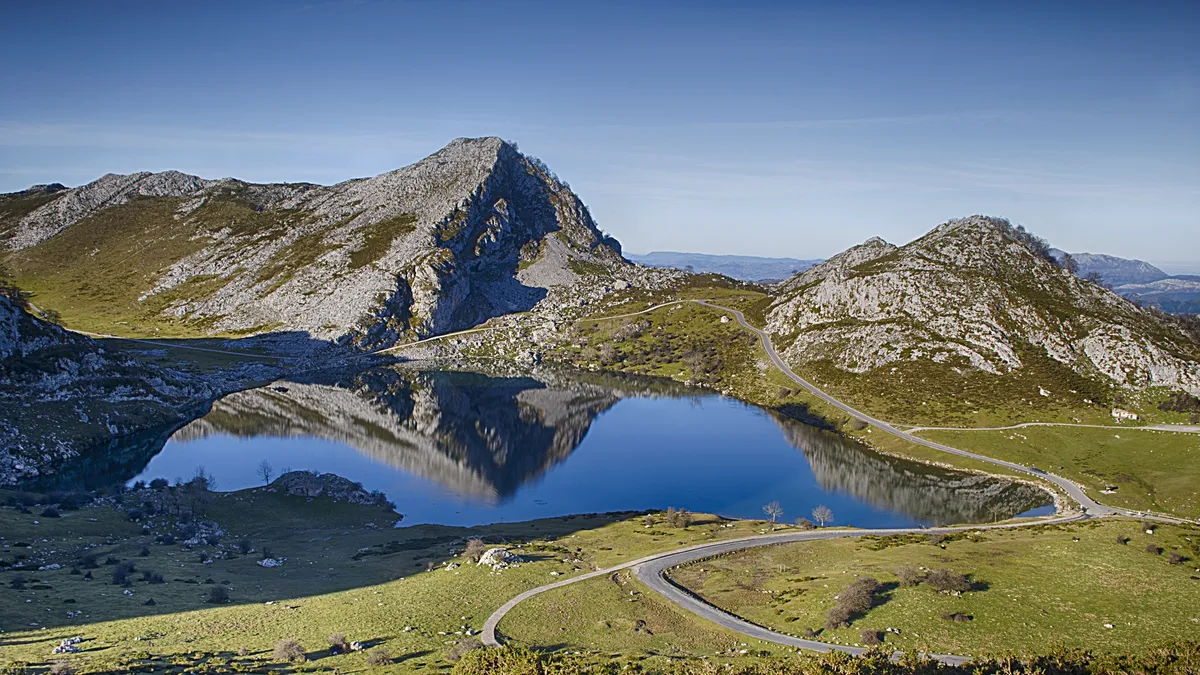
There are myriad miradors in the Parque Nacional de los Picos de Europa that offer spectacular vistas not only of the mountains but also of the Cantabrian Sea beyond. One is Lago Enol, a high mountain lake that won’t see the eclipse, but whose Mirador del Príncipe de Asturias offers an excellent vantage point if the weather is clear.
10. San Vicente de la Sonsierra, La Rioja
Location: Sonsierra, La Rioja, Spain
Time and duration of totality: 8:28 p.m. CEST; 1 minute, 22 seconds
Height of eclipsed sun above west-northwest: 7.8 degrees
Chance of clouds: 47% (since 2000)
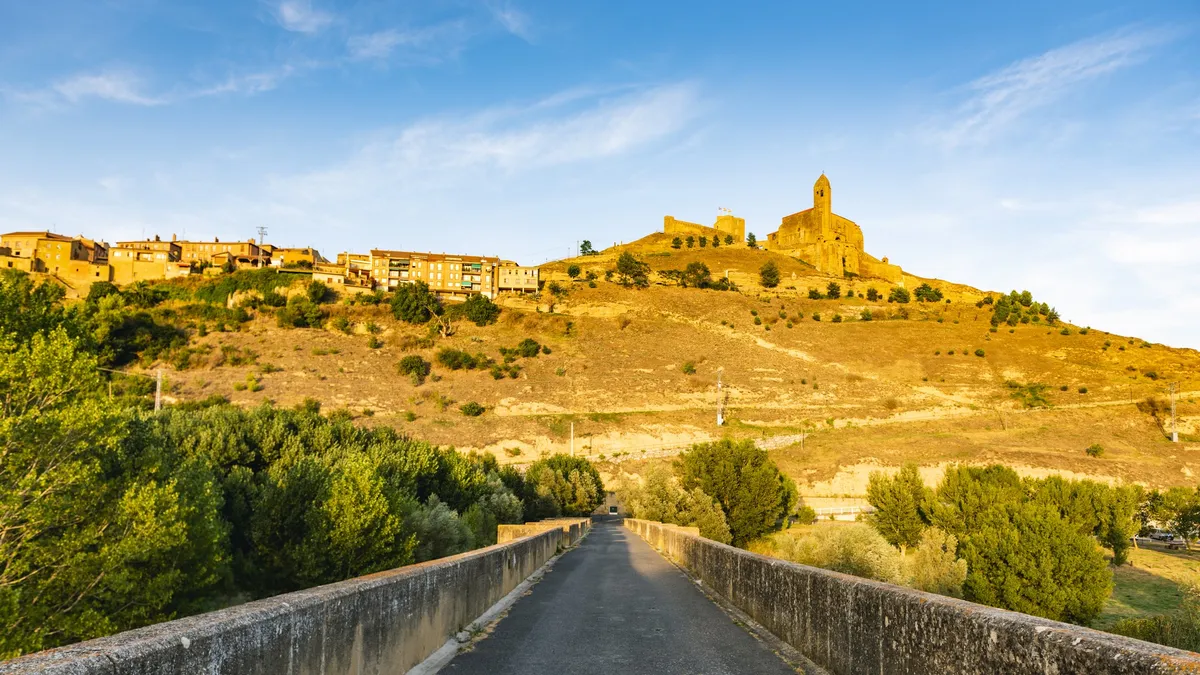
The Ebro River basin is a major destination for this eclipse, stretching from La Rioja and Navarra in the west through Zaragoza and into Aragón. On the slopes of the Sierra de Cantabria in La Rioja, San Vicente de la Sonsierra is a village at the top of a hill overlooking the Ebro River, with sweeping views toward the setting sun in August. It’s also a winemaking area along the Ruta del Vino.