

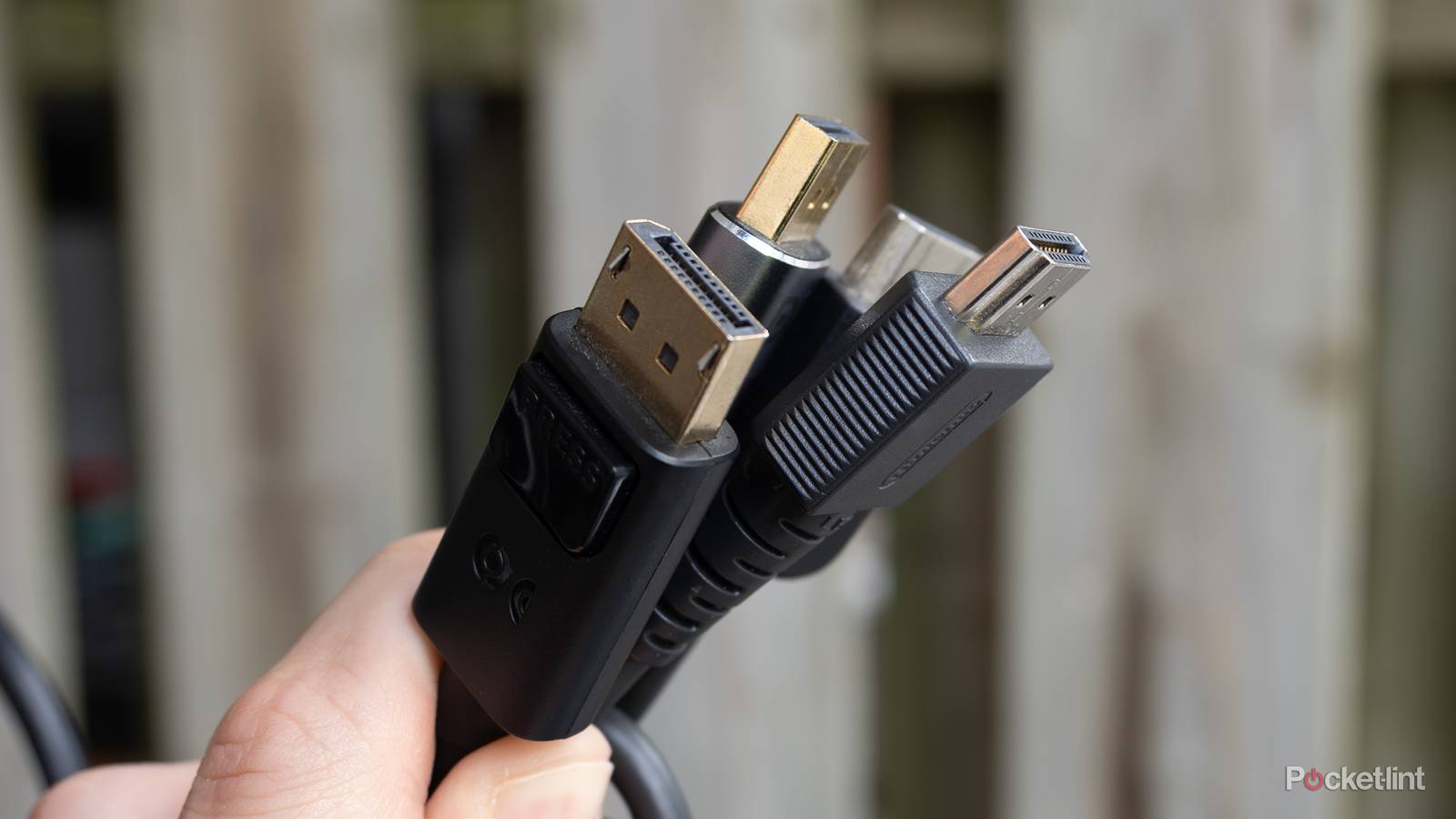
If there’s one truism in the world of tech, it’s that no two things are created equal. This couldn’t be closer to the truth when it comes to HDMI cables, of which quality varies considerably from cord to cord. Two nearly identical-looking HDMI cables may feature totally different data capabilities, audiovisual strengths and weaknesses, and even internal build qualities.
Sure, a digital connection is a digital connection, but choosing the wrong HDMI cable for your home theater setup could nonetheless result in a loss in image quality, a lack of available features, or even reliability issues if shoddy cords are at all involved. The solution, aside from using the official HDMI Cable Certification application from the HDMI Licensing Administrator to verify authenticity, is to opt for HDMI 2.1 or 2.2 cables whenever possible.
HDMI 2.1 vs HDMI 2.2
Generational improvements inbound

HDMI 2.1 was released in late 2017, serving as a major upgrade over the existing 2.0 version of the audiovisual cable standard. Chief among the upgrades brought by 2.1 are an increased theoretical bandwidth of 48Gbps (up from 2.0’s 18Gbps), allowing for much more data to flow through compatible hardware. The result is a maximum output of 8K (4320p) at 60Hz or 4K (2160p) at 120Hz.
Other technological benefits of HDMI 2.1 over 2.0 include support for dynamic high dynamic range (HDR), the Enhanced Audio Return Channel (eARC), Variable Refresh Rate (VRR), Quick Media Switching (QMS), Quick Frame Transport (QFT), Auto Low Latency Mode (ALLM), and VESA DSC 1.2a.

The HDMI 2.2 specification was released in mid 2025, serving as yet another substantial technological leap over its immediate predecessor. HDMI 2.2 is capable of a whopping 96Gbps of theoretical data throughput, which is far more bandwidth than is necessary for most consumer-facing applications.
Marketed as Ultra96 cables, full-featured HDMI 2.2 cables can drive displays at up to 16K (8,640p) at 60Hz, 8K at 240Hz, or 4K at 480Hz. HDMI 2.2 also includes a new Latency Indication Protocol (LIP) for improved synchronization over existing 2.1-based setups.
HDMI 2.1 and 2.2 are the way to go
The best HDMI versions for the best possible audiovisual setup

If you want not only the best-possible picture quality from your home theater, but also to future-proof your setup for years to come, you’ll want to invest in an officially certified HDMI 2.1 or 2.2 cable. This will ensure that your AV cord never becomes a bottleneck, and that your TV and the various devices connected to it can communicate with maximum fidelity.
Of course, it’s worth noting that an HDMI 2.2 or 2.1 cable alone won’t upgrade your setup — you’ll also need a TV and AV equipment that feature compatible ports to go alongside your cables in question. Luckily, the latest specifications are backwards compatible with older versions of the standard, meaning that all your existing hardware will function as normal even when plugged in using future-proofed cables.
For casual use, even HDMI 2.0 is enough to drive a 4K UHD display at up to 60Hz, but you won’t be getting silky-smooth refresh rates unless you drop down to 2K (1440p) or FHD (1080p) resolutions. HDMI 2.0 provides enough bandwidth for basic 4K UHD Blu-ray player usage, though you’ll benefit from HDMI 2.1 and 2.2 if you’re into console or especially PC gaming.