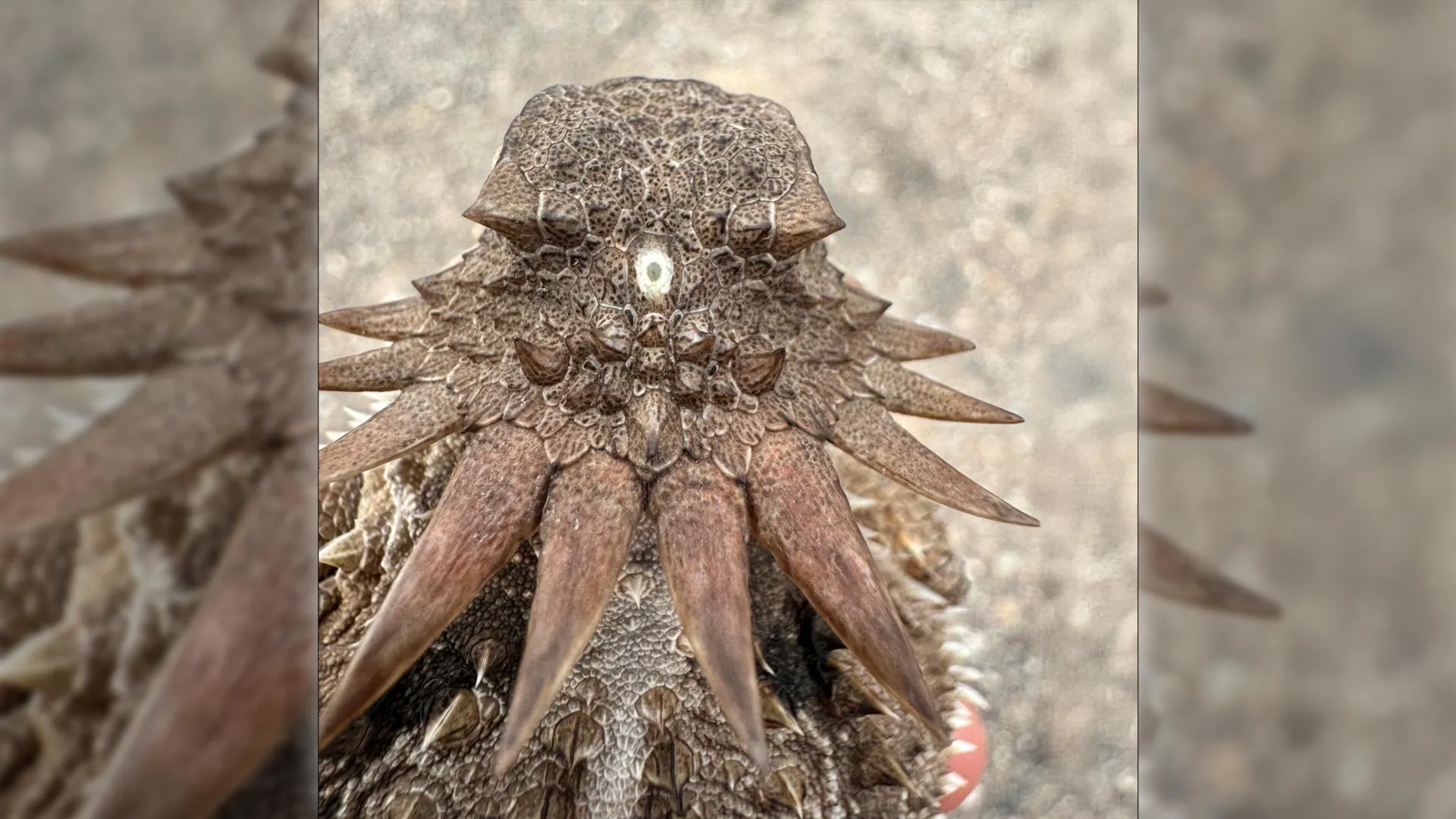
Humans share a surprisingly strange ancestor with all other vertebrates. New research suggests that far back in evolutionary history, one of our earliest relatives had a single eye, much like a tiny cyclops, positioned on top of its head.
Scientists from Lund University and the University of Sussex report that all vertebrates can be traced back to this ancient, one-eyed organism. According to their findings, the remains of that original “median eye” still exist today, but in a very different form. It has become the pineal gland, a small structure deep in the brain.
“The results are a surprise. They turn our understanding of the evolution of the eye and the brain upside down,” says Dan-E Nilsson, professor emeritus in sensory biology at Lund University.
A Worm-Like Creature From 600 Million Years Ago
This distant ancestor lived nearly 600 million years ago. It was a small, worm-like animal that spent most of its time in one place, feeding by filtering plankton from seawater. Earlier in its evolutionary history, it likely had two eyes, similar to many other animals.
“We don’t know whether the paired eyes in our branch of the evolutionary tree were just light-sensitive cells or simple image-forming eyes. We only know that the organism later lost them,” says Dan-E Nilsson.
As the creature adapted to a more stationary lifestyle, having two eyes was no longer necessary. Over time, those paired eyes disappeared.
How a Single “Median Eye” Took Over
Even after losing its paired eyes, the organism retained a cluster of light-sensitive cells in the center of its head. These cells gradually formed a simple, single eye that could detect light and darkness and help the animal sense orientation.
Millions of years later, this ancestor became more active again and returned to a swimming lifestyle. That shift created new pressure to develop better vision. Researchers believe that parts of the original median eye eventually gave rise to new, paired eyes capable of forming images.
Why Vertebrate Eyes Are So Different
This unusual evolutionary path helps explain why vertebrate eyes are built differently from those of other animals like insects and squid.
“Now we finally understand why the eyes of vertebrates differ so radically from the eyes of all other animal groups, such as insects and squid. The film of our eyes — the retina — developed from the brain, whereas the eyes of insects and squid originate in the skin on the sides of the head,” says Dan-E Nilsson.
In vertebrates, the retina is essentially an extension of the brain. In contrast, many other animals develop eyes from surface tissues on the body.
A Detour That Shaped Modern Vision
Researchers describe this history as an unusual evolutionary detour. Instead of evolving directly from earlier eye structures, vertebrate vision appears to have been rebuilt from this single median eye after the loss of earlier paired eyes.
This conclusion comes from detailed comparisons of light-sensitive cells across different animal groups, as well as their structure and location within the body.
“For the first time, we now also understand the origin of the neural circuits that analyze the image in our retina,” adds Dan-E Nilsson.
The Pineal Gland: A Living Remnant of an Ancient Eye
One of the most intriguing discoveries is that a piece of this ancient eye still exists in humans today. It has evolved into the pineal gland, a light-sensitive organ in the brain.
The pineal gland produces melatonin, a hormone that helps control the body’s circadian rhythm, including sleep patterns.
“It’s mind-boggling that our pineal gland’s ability to regulate our sleep according to light stems from the cyclopean median eye of a distant ancestor 600 million years ago,” concludes Dan-E Nilsson.