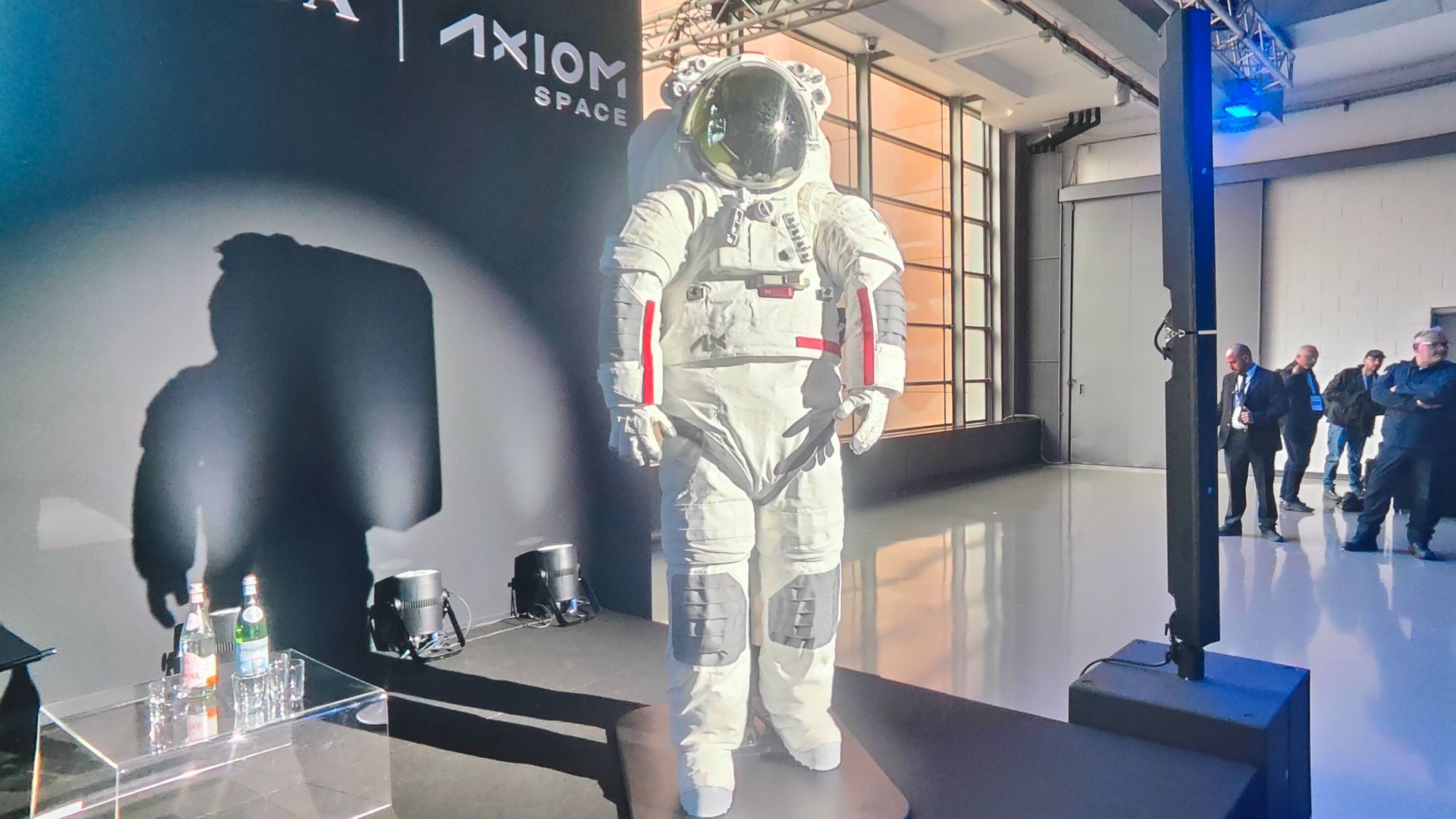
NASA says it has a new approach to spacesuit development that should smooth out delays in getting ready for astronaut moon landings as soon as 2028.
NASA came under criticism in a new Office of the Inspector General (OIG) report released Monday (April 20), which said the agency’s approach to next-generation spacesuits led to delays in the program. (The spacesuits used on the International Space Station are not an option for Artemis astronauts; not only are they decades old, they were also not designed for moonwalks.)
According to the report, those delays could push readiness for a crewed moon landing back to 2031 — three years past the Trump administration’s current deadline.
NASA originally faced delays in creating moon spacesuits on its own, which the OIG previously said was one reason the agency could not hit the previous moon-landing target of 2024. (Another reason: The Artemis crewed lunar lander wasn’t ready — and still isn’t, in fact.)
So, in 2022, the agency contracted two companies, Axiom Space and Collins Aerospace, to develop moon and microgravity spacesuits. Collins dropped out after two years, leaving Axiom as the sole remaining next-gen suit provider. Axiom had delays of its own in developing a suit with features that can be swapped out to focus on moon or microgravity environments.
All this means that recent agency timelines of 2025 for a moon suit and 2026 for a microgravity suit were ultimately “unachievable,” according to the OIG. The new report adds that it’s possible the spacesuit won’t be ready for these environments until 2031 — but NASA’s chief says the agency has a new approach to speed things up considerably.
Staying on target?
Jared Isaacman, who was appointed NASA administrator in December, said that the moon suits should be ready in two years, for a lunar landing that could happen as soon as on Artemis 4.
“I am confident that when NASA is ready to land on the moon in 2028, our astronauts will be wearing Axiom suits,” Isaacman posted on X on Monday, after the OIG report came out.
He added that the agency plans to review “how we can provide relief where appropriate to burdensome requirements, [and] where we can expand capabilities over time” to get the spacesuits ready sooner.
In response to a Space.com query sent Monday afternoon, Axiom said it’s confident that it can make the 2028 moon-landing target. “We are working toward in-space, spacesuit evaluation demonstrations in 2027, actively engaged with NASA,” CEO Jonathan Cirtain said in an emailed statement sent on Tuesday morning (April 21).
The critical design review of the Axiom spacesuit is expected later this year, Curtain added. “Our focus remains on delivering a safe, capable spacesuit that enables American astronauts to return to, and explore, the lunar surface in 2028,” he said.
What NASA plans to do differently
The OIG criticized NASA for the contract type it used to task spacesuit development. The contract vehicle, which used a fixed-price and service-based approach, was chosen to save the agency money if the spacesuits cost more than expected. But the OIG said that, as a developmental program, the spacesuits already were subject to risk for schedule, cost and technical complication.
The report also criticizes NASA for certain actions, such as “renting” services for spacewalking before the market was ready, implementing milestone payments and other “risky” contract vehicles, and requiring vendors to submit “overly burdensome” moon and microgravity spacesuit bids at the same time.
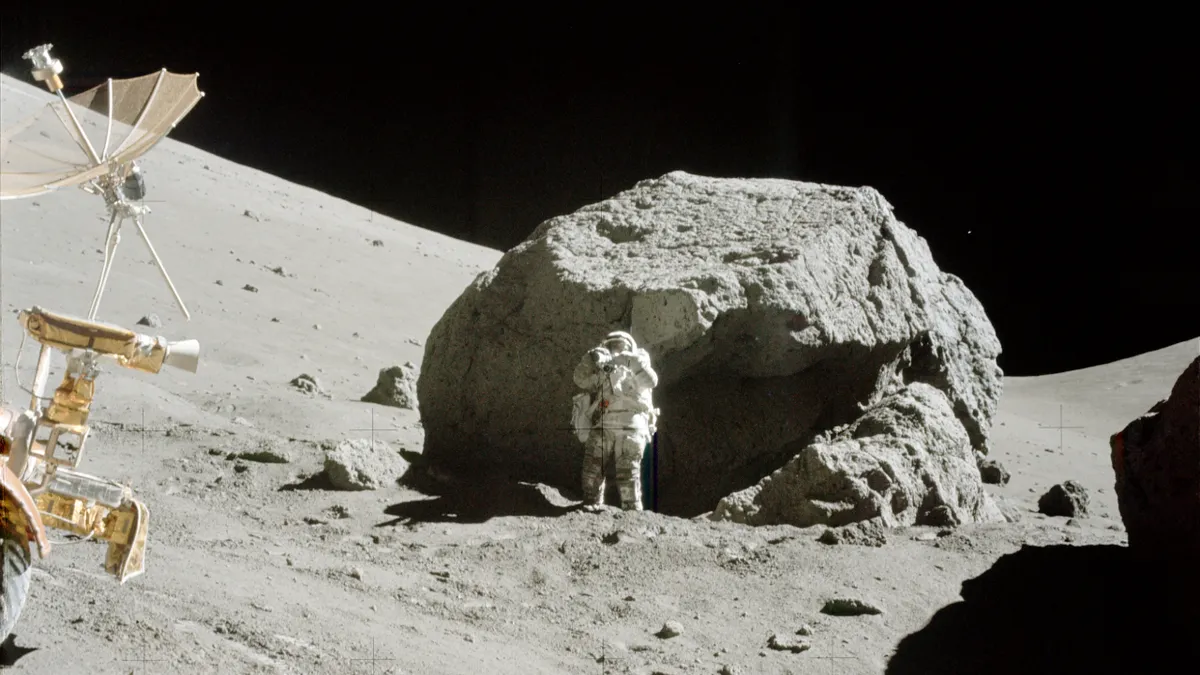
Cirtain, taking a different tack, said that the report “accurately reflects the technical and schedule challenges inherent to developing the first, new U.S. lunar spacesuit in over 50 years.” (The last astronauts on the moon, the Apollo 17 crew in December 1972, used spacesuits developed in the 1960s.) But Cirtain said the OIG has also shown the progress Axiom has made since the 2022 contract award.
To move forward, Axiom took design lessons from NASA’s internally developed xEMU spacesuit prototype, “vertically integrated” needed components like valves and batteries, and partnered with several companies (such as Nokia, Prada, Oakley and KBR), Cirtain said. Axiom also raised $350 million in February to support space station and spacesuit development, although Cirtain didn’t mention that in his emailed response to Space.com.
Isaacman, echoing language from NASA’s response to the OIG, said the agency is taking note of “lessons learned” from the spacesuit development process, and that NASA will be “mindful of the contracting approach” in the future. He said NASA realizes that a service model for programs such as the spacesuits may not be suitable if “NASA may be the only customer for the foreseeable future.”
Isaacman added that the “capital burden” on companies in such a young market would be considerable, meaning that NASA needs to be “thoughtful in our approach to sustainably enable it.” But the agency already has a plan, outlined in Appendix B of the new OIG report, to speed up spacesuit development.
Spacesuits will be tested in 2027
Prior to Isaacman’s appointment, NASA expected the demos of the spacesuits would take place on the moon in 2028 and in orbit in 2030, but now the agency says a test is expected in Earth orbit in 2027. This key trial will take place either on the ISS or on the Artemis 3 mission, which Isaacman’s administration changed in March from a moon landing to allow for testing of a human landing system closer to home.
Looking forward, the agency said future contracts should have better oversight under a new NASA workforce directive, outlined in a memo obtained by NASA Watch. The directive aims to “rebuild core competencies in the civil servant workforce, including more in-house and side-by-side development work,” the agency stated in the OIG report.
The new workforce approach not only aims for Artemis launches every 10 months or so, rather than every few years, but will also enhance “NASA’s ability to manage and oversee firm-fixed-price contracts, and assure mission needs,” NASA stated in Appendix B of the OIG report. That ‘s because the agency will be able to “better evaluate contractor performance, engage and validate technical solutions, as well as maintain consistent insight into system requirements.”
Isaacman has also said in media reports that a new initiative, NASA Force, will allow the agency to build up that workforce. The program proposes to appoint industry experts to the agency for limited one- or two-year terms. By coincidence, the first applications for the program opened up last week.
These new folks could fill a number of important roles, for NASA reportedly lost thousands of employees in 2025 as part of a larger set of government cutbacks. There could be more cutbacks coming, too: The White House proposed slashing NASA’s overall 2027 budget by 23% and the agency’s science funding by 47%. (The White House requested similar cuts in NASA’s 2026 budget, but Congress rejected them.)
Isaacman has maintained that the agency can achieve its major goals despite such cuts. He’ll discuss the proposed NASA 2027 budget on Wednesday (April 22), during a hearing held by the House Science, Space, and Technology Committee. The event begins at 10 a.m. EDT (1400 GMT) and will be simulcast here at Space.com, if the stream is made available.