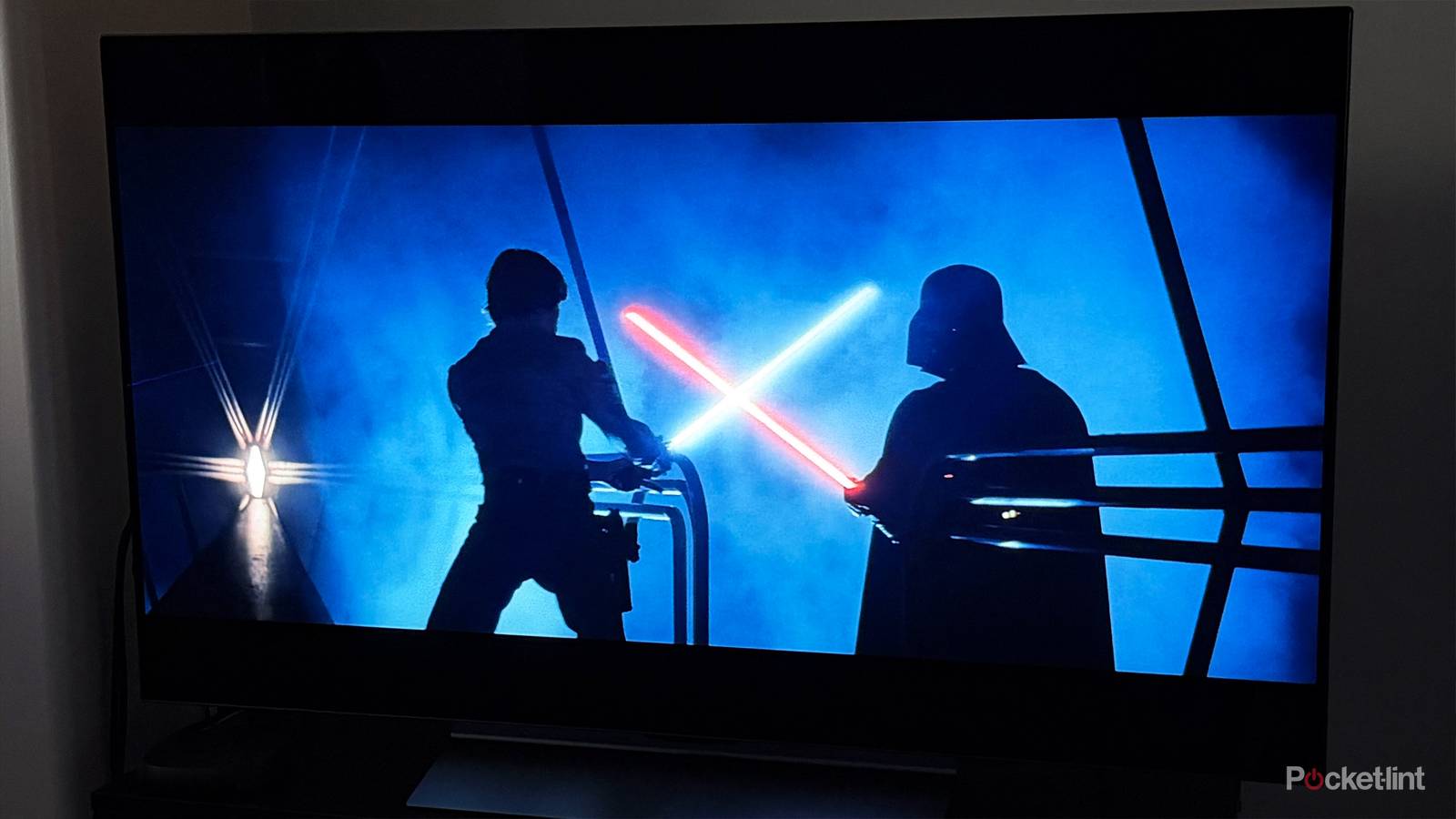
When I was in the market for a new TV last Black Friday, the first TV that caught my eye was the LG C5, and it didn’t take me long to decide it was the one for me. It has an OLED screen with beautiful colors, a 120Hz refresh rate, Dolby Vision and Dolby Atmos support, and four HDMI 2.1 ports. It had virtually everything I’d ever wanted from a TV, and considering I got it for $500 off, I was quite a happy camper.
But when I set up the TV for the first time and started using it, something felt off. While the colors looked great, they weren’t perfect, and the TV didn’t seem as bright as I thought it should be when streaming shows or playing games on my Switch 2 and PS5.
So I took matters into my own hands and dove into the settings menu on my LG TV, and lo and behold, I was able to easily solve all these problems by tweaking a few settings. And if you’re in the same boat with your LG TV, you can instantly improve its picture quality too by changing these four settings.
Disable Motion Smoothing
Make movies and shows look as they should

The first setting I tracked down and turned off on my LG TV was Motion Smoothing. If you’re not familiar with it, Motion Smoothing tries to make movement look smoother during movies and shows by inserting extra “fake” frames between the real ones, essentially boosting the frame rate.
Some people like it for sports, but for movies and TV shows, it can make everything feel off. Character movement and action scenes start to look oddly slick and unnatural. The first movie I watched was Raiders of the Lost Ark on my new TV, and I noticed it right away during the opening boulder scene, as it made it look unnaturally sped up. Movies and shows are often shot at 24 FPS for a reason, and Motion Smoothing’s attempt to artificially increase that ends up hurting more than it helps. That’s why so many people call it the “soap opera effect,” including Tom Cruise.
Fortunately, Motion Smoothing can be easily turned off, and on LG TVs, it’s called TruMotion. Here’s how to do it step-by-step:
1. Press the Settings button on your remote (the gear icon).
2. Select Settings in the side menu, which will appear on the left side of your screen.
2. Navigate to Picture > Advanced Settings > Clarity.
3. Scroll down and select TruMotion.
4. Turn it off.
Change your TV’s picture mode
It’s set to Power Save by default

I know this may sound obvious, but changing the picture mode on your TV can have a major effect on its picture quality, as switching between modes adjusts your TV’s brightness, contrast, and color.
By default, LG TVs are set to Auto Power Save, which lowers the brightness and the vividness of the colors on your screen. Even just switching to the Standard mode will make the brightness and colors pop more, which I noticed immediately when I changed this while playing The Legend of Zelda: Tears of the Kingdom on my Switch 2. Here’s how to do this yourself:
1. Open the Settings menu on your LG TV.
2. Navigate to Picture.
3. Select Picture Mode.
4. By default, Auto Power Save is selected. Switch to another mode, such as Standard, Vivid, or Cinema, until you find one you like.
Personally, I just stick to the Standard picture mode as I think it’s the best mix of brightness, color, and contrast, especially for HDR content and when I’m streaming in Dolby Vision.
Turn off Energy Saving Step
Make your TV brighter in an instant

Even if you’ve switched your LG TV out of Power Save mode, there’s still one energy-saving feature buried in the settings menu that can quietly affect your picture quality: Energy Saving Step.
This setting stays on regardless of which picture mode you’re using, and it automatically adjusts your TV’s brightness based on the room’s lighting using built-in sensors. When I first came across it, I figured it would be useful, but I never really noticed my TV getting meaningfully brighter or dimmer in different lighting conditions. I ended up turning it off entirely, and my TV’s brightness improved instantly.
If you’ve got an older LG TV, you might not see this option at all, but on newer models it’s usually enabled by default. Here’s how you can turn off Energy Saving Step:
1. Open the Settings menu on your LG TV.
2. Navigate to General.
3. Scroll down to Energy Saving.
4. Choose Energy Saving Step.
5. Select Off instead of Auto.
Turn on HDMI Deep Color
Unlock the true color potential of your TV

Lastly, there’s HDMI Deep Color, one of the most important picture settings if you’re using external devices with your LG TV, like a Roku, Fire TV Stick, PS5, Switch 2, or a PC.
HDMI Deep Color lets devices send more color information to your TV by enabling higher color bit depths, typically 10-bit or 12-bit, depending on your TV’s support. In practice, that means much more accurate and vibrant colors, especially when you’re watching HDR (High Dynamic Range) content.
For context, HDR’s 10-bit and 12-bit color depths can display over a billion colors (according to Dolby), while SDR’s 8-bit color is limited to about 16.7 million. That’s a massive difference, and one that’s definitely worth enabling if you want your TV’s color to truly pop.
LG describes HDMI Deep Color as a feature that “enhances the images of the input device to deeper and richer picture quality.”
Typically, when you plug in a new device, you’ll get a pop-up saying HDMI Deep Color has been enabled, but if you don’t see that, you can turn it on manually. Here’s how:
1. Open the Settings menu on your LG TV.
2. Navigate to General > External Devices > HDMI Settings.
3. Select HDMI Deep Color.
4. Choose 4K.

- Display Size
-
42, 48, 55, 65, 77, or 83 inches
- Operating System
-
webOS
- Display Type
-
OLED