


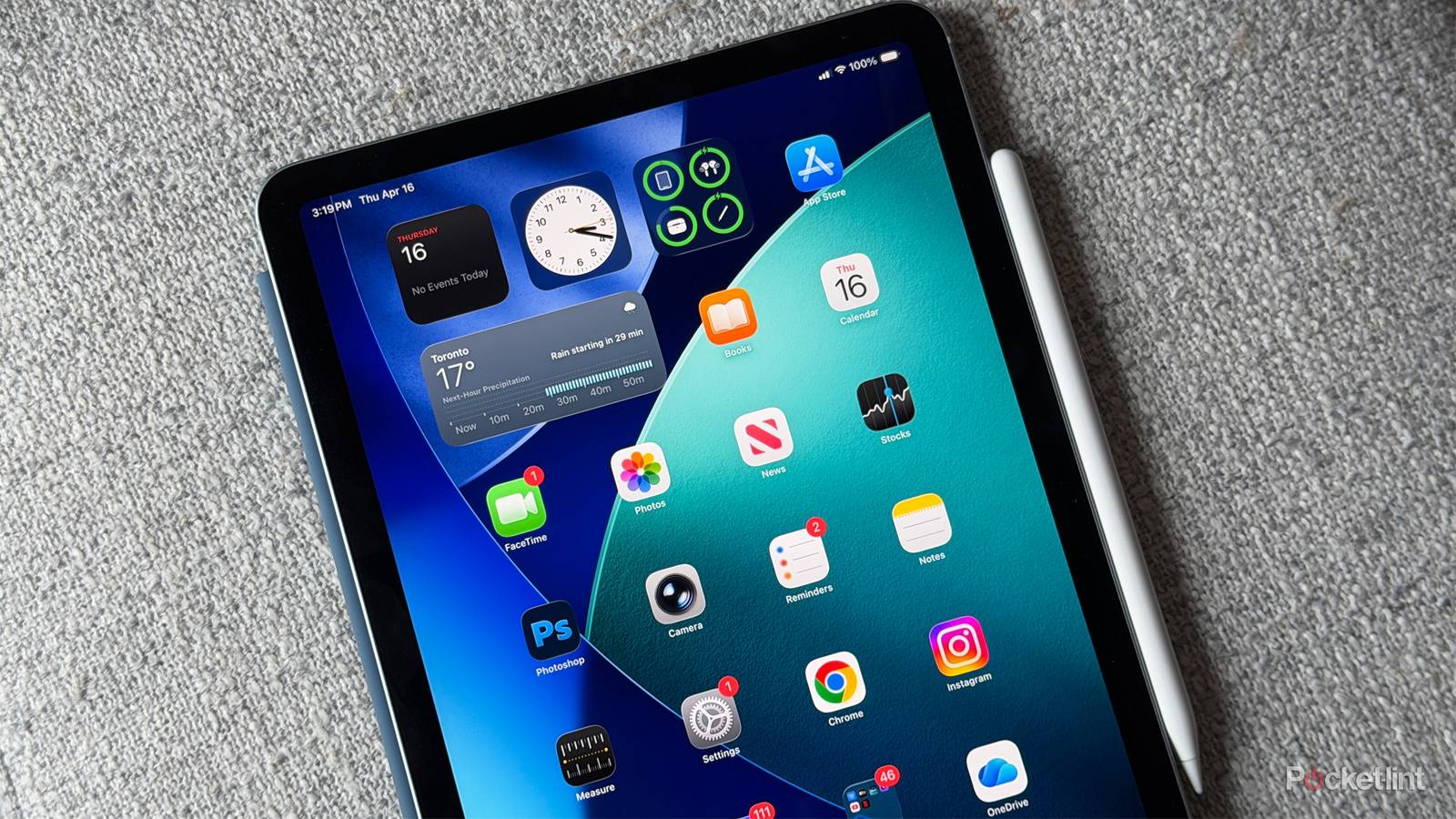
In many respects, I love iPads. The first one I ever bought was the much-maligned third-gen model, but I liked it enough to invest in the first- and second-gen iPad Airs. My daily driver at the moment is the 2020 11-inch iPad Pro, which is keeping up with iPadOS 26 surprisingly well despite being the last-ever Pro to feature an A-series processor.
It’s starting to show its age, however, and I realized that for the first time in over a decade, I’m seriously considering ditching iPads entirely. Apple isn’t making a great use case for people like me, or maybe even the public at large, and it may actually have undermined its argument further by introducing the MacBook Neo. Complaints about Apple’s aimlessness are no longer academic — it could manifest in real sales numbers.

- Brand
-
Apple
- Storage
-
128GB, 256GB, 512GB, 1TB
- CPU
-
M4
- Operating System
-
iPadOS 26
- Ports
-
USB-C
- Display type
-
Liquid retina display
Seeing the forest for the trees
What Apple is getting wrong (at the moment)

On a hardware level, iPads are undeniably impressive within the boundaries Apple sets for itself. Any model you pick up will have a bright and colorful screen, often beating many laptops out there. iPadOS’s touch interface is so intuitive that toddlers can pick it up. Performance-wise, Apple is knocking it out of the park — the M-series chips in the Air and Pro are so powerful that 4K video editing and light 3D gaming are almost trivial. Heck, even the A16 processor in the entry-level iPad is more than the average person needs.
The first problem is that there just aren’t that many apps that take advantage of the Air or Pro, at least not when compared to what’s available for Macs and Windows PCs. If you need to get something productive done, it’s all too easy to run into a situation where there are only one or two apps — if any — that are legitimately worth using. And don’t get me started on gaming. While there are some absolute classics available on the iPad, such as Balatro and Stardew Valley, Apple seems to have given up on attracting developers with blockbuster 3D games that aren’t live service titles, full of microtransactions, like Genshin Impact.
At the root of this iPadOS. Being based on iOS for the iPhone, it’s heavily sandboxed, meaning that apps often can’t talk to each other without special frameworks, much less modify the OS. That limits the scope of apps, even after years of Apple gradually addressing deficiencies. Windows and macOS are much more liberal with what they allow — which does pose security risks, but also means that if you’re a power user, an iPad isn’t for you.
Often, when you do find an iPad app you want, it can feel like a lesser experience next to its desktop alternatives. I might use the iPad versions of Adobe Photoshop and Lightroom in a pinch — if I returned to pro photography, however, I would still insist on a desktop computer to get serious processing done. Similar things can be said about the Microsoft 365 suite, or even Apple’s own Final Cut Pro.
The net result of everything is a product that struggles to justify its existence. It does excel at some tasks, like illustration and notetaking. But it sits in a strange middleground, neither as portable as an iPhone nor as flexible as a Mac.
Some of this stems from the limitations of the form factor. Although iPads have supported mice, keyboards, and trackpads for years at this point, developers can’t assume that users will have any of them, since Apple doesn’t bundle a Magic Keyboard or even an Apple Pencil. Everything is designed to work with your giant fingers, which limits how many controls can fit onscreen. Choosing an 11-inch iPad instead of a 13-inch one makes things worse, especially if you want to attempt multitasking.
Speaking of which, Apple is still struggling to get multitasking where it needs to be. iPadOS 26 was a huge step forward in some areas, for instance allowing more windows with better control over positioning and sizing — but it’s still awkward next to a Mac or PC. There are conspicuous flaws too, like sizing buttons overlapping with other controls, and apps failing to scale properly. Some users were so upset when Apple removed Slide Over windows that it was persuaded to cobble together an impromptu replacement.
The net result of everything is a product that struggles to justify its existence. It does excel at some tasks, like illustration and notetaking — but it sits in a strange middleground, neither as portable as an iPhone nor as flexible as a Mac. It’s only worth buying as an entertainment device, or if your workflow happens to align with available apps and the vagaries of iPadOS.
The MacBook Neo dilemma
Apple stumbles into what people really want

On one level, the Neo shouldn’t be a big deal. Spec-wise, it’s stuck with an A18 Pro chip — the same one in my iPhone 16 Pro — as well as 8GB of RAM and USB 3.0. Even an older MacBook Air can blow it out of the water.
The real hype surrounds its $599 price point. That’s only $50 more than the base iPad Air, and yet you get such luxuries as a keyboard, a trackpad, and the most important one of all, macOS. That means access to all the apps you might want, with no arbitrary restrictions on what they can do. You’ll run into performance limits, certainly, but reviewers have demonstrated that the Neo can handle 4K video editing without much trouble.
It’s such a good deal that it’s selling out. As of mid-April 2026, if you order one from Apple’s US online store, you won’t get yours until sometime in May. DigiTimes claims that the product has been so wildly successful that Apple is now aiming to ship 10 million units this year, up from 5 to 6 million.
It simply doesn’t make sense to choose an iPad Air or Pro if your use case involves any kind of serious productivity without a stylus.
I’m tempted to join the crowd if my budget allows. It simply doesn’t make sense to choose an iPad Air or Pro if your use case involves any kind of serious productivity without a stylus. In fact, that’s been my greatest complaint about my current iPad — even if I upgraded to a 13-inch model with a Magic Keyboard, I’d still be missing some apps, and interface quirks would slow me down. Conversely, all I’d have to do with a Neo is re-acclimate to using Macs every day instead of occasionally.
The ultimate question, then, is whether Apple will recognize the Neo’s success for what it is: a signpost. Many shoppers just want a cheap computer that can handle all the essentials — and yet until recently, Apple has been unwilling to either unleash iPadOS or make a cheaper laptop. It’s even repeatedly said that it refuses to fuse the Mac and iPad. Now, its hand may have been forced. It’s either going to have to make a better case for its more expensive iPads, or risk cannibalizing their sales. I suppose we’ll get a glimpse of which way things are headed when Apple announces its second-quarter sales numbers on April 30.