

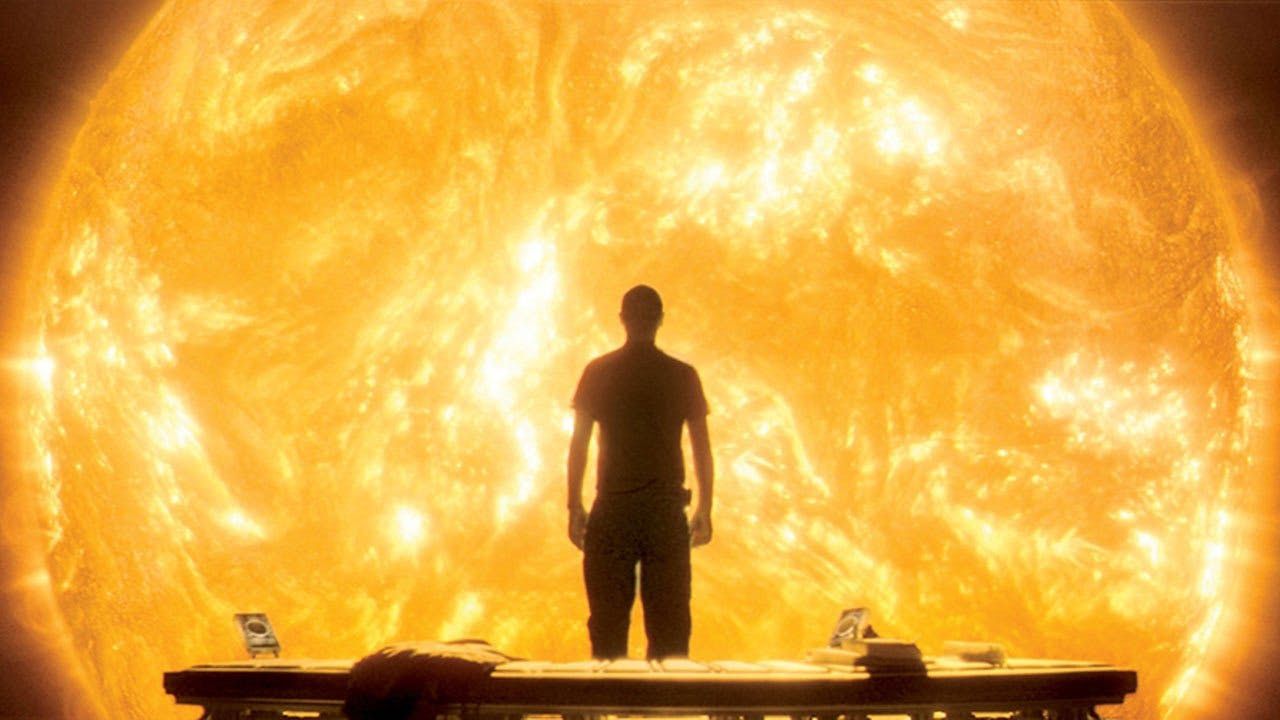
The way Ryan Gosling and Sandra Hüller went on about it in “Project Hail Mary”, you’d think they were the only people who’d ever had to fix a malfunctioning Sun. But head back 19 years, and Danny Boyle’s “Sunshine” was tackling a very similar threat to life on Earth. But although the two films have imminent solar catastrophes at their core, their approaches to saving the world from extreme global cooling are radically different.
While “Project Hail Mary” is uplifting, funny, and home to one of the most endearing (if unlikely) screen bromances of recent years, “Sunshine” is an unashamedly dour affair. It borrows extensively from the “Alien” playbook, as an octet of mismatched astronauts bicker their way through a mission that takes an unplanned detour into psychological horror territory. They also forgot to put aside much room in the cargo bay for jokes — the closest thing to a gag is arguably the sunset in the Fox Searchlight ident morphing into the doomed Sun.
Article continues below
He’s also on the record as saying he doesn’t like “Star Wars” and never made any secret of the fact he’s more of an “Alien” guy. Indeed, after “Trainspotting” had turned him into one of the hottest directors on the planet in the late-’90s, he was approached to direct the fourth “Alien” movie — he ultimately turned down the project that became “Resurrection”, fearing the prospect of studio suits breathing down his neck.
While Boyle never came face-to-face with an actual Xenomorph, “Sunshine” has the hallmarks of a director scratching an “Alien”-shaped itch. Scripted by “28 Days Later” collaborator Alex Garland, it cherry picks numerous elements of Ridley Scott’s genre-redefining classic, from scenes of a stressed-out crew debating around a dinner table, to a fateful decision to answer a distress call. (Spoiler: it doesn’t end well.)
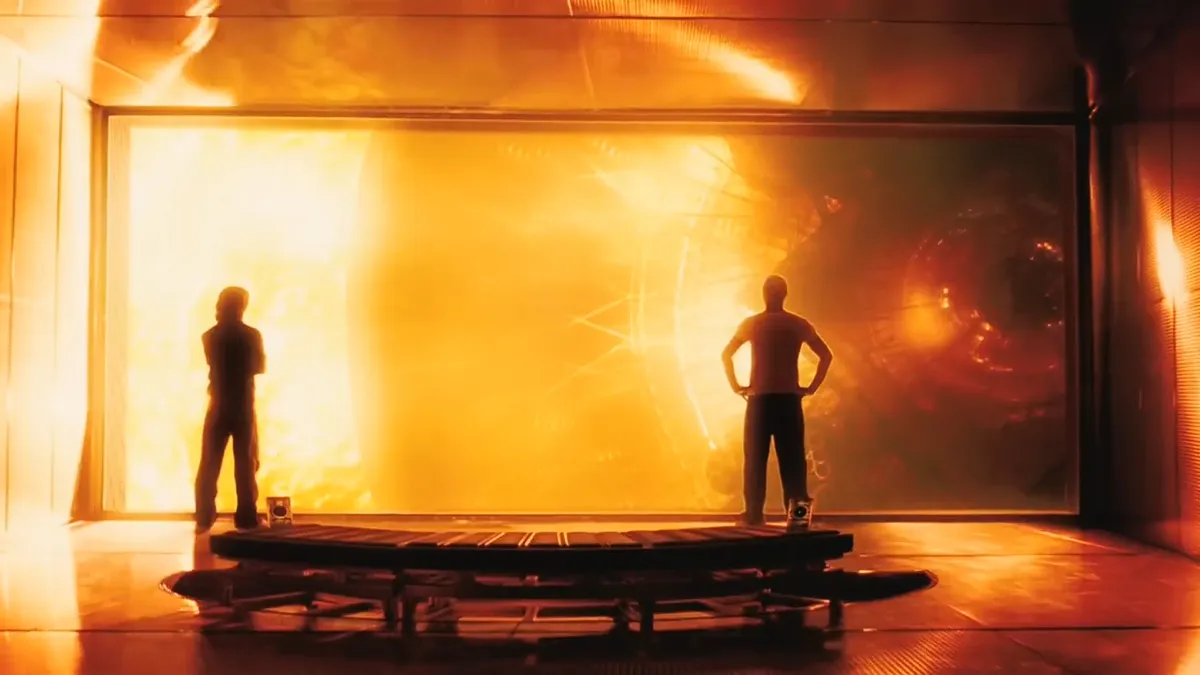
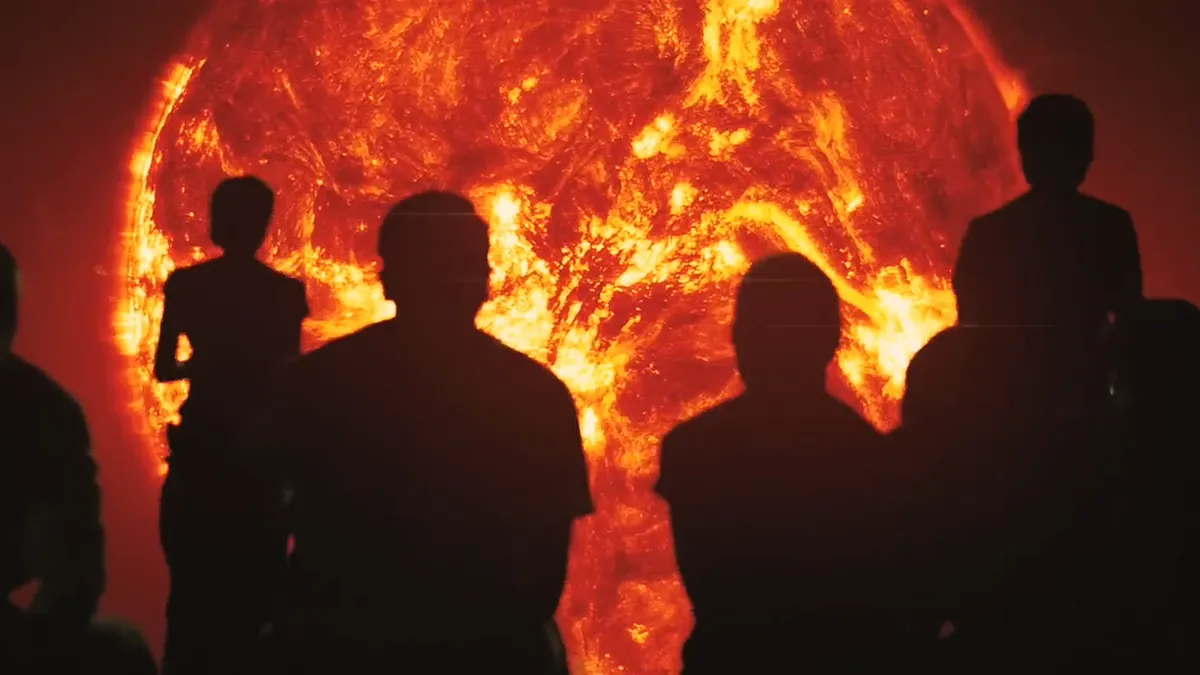
In place of facehuggers and acid-blooded monsters, “Sunshine”‘s Big Bad is Earth’s nearest star. With the Sun’s fusion reactions slowing down, the Icarus II is launched to deliver a bomb with a mass equivalent to Manhattan Island, in the hope of reigniting the star before the Earth turns into a giant ice cube.
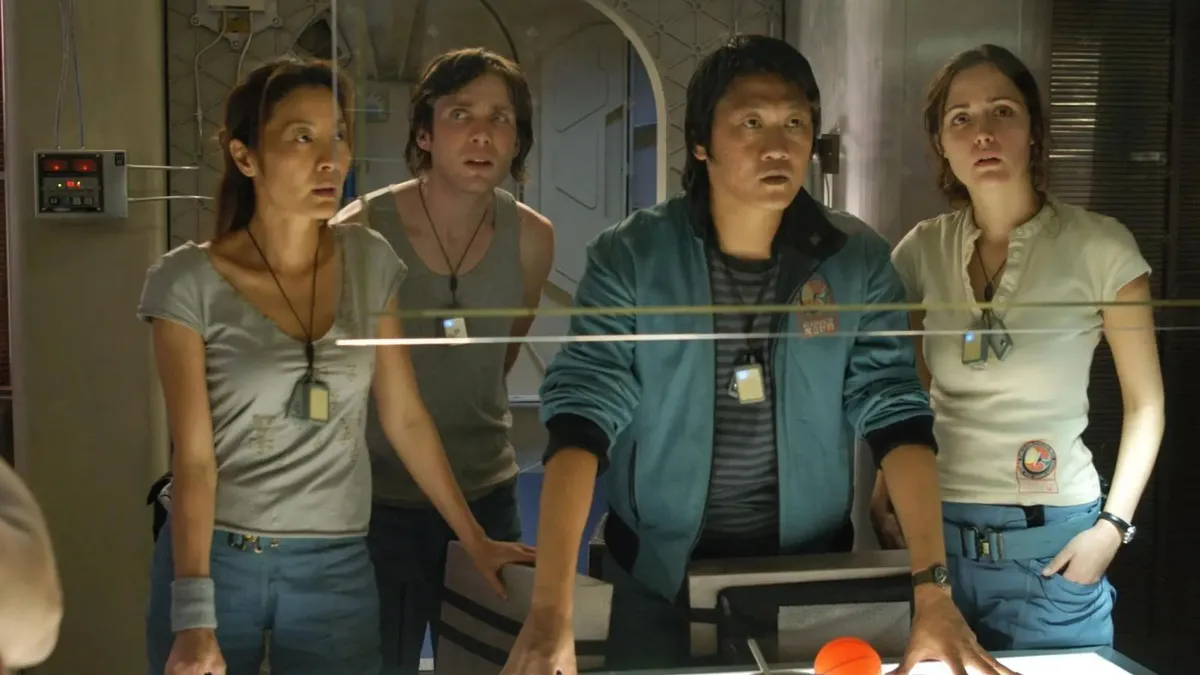
The premise may sound as outlandish as a Roland Emmerich disaster movie, yet the filmmakers did at least try to ground the story in real — more or less — science. A pre-TV stardom Professor Brian Cox (like Boyle, a Mancunian) was drafted in to give the physics a once-over, suggesting a possible explanation for the Sun developing its own dimmer switch.
“Our backstory for the Sun dying is that a large blob of supersymmetric particles called a Q ball has drifted into the solar core, and is slowly eating it away,” Cox told the Telegraph ahead of “Sunshine”‘s April 2007 release. “Our Sun is not dense enough to stop a Q ball: it would fly straight through. But the general idea is that there is a lot of stuff in the universe that is not the familiar matter that we are made of, and there are theories in which this stuff is not entirely benign.”
Cox’s pop star looks (in a previous life, he was the keyboard player for UK chart-toppers D:Ream) were also used as a justification for casting Murphy as the good-looking physicist who designed the crucial pyrotechnics. The unexpected success of “28 Days Later” had given Boyle and Garland some creative freedom with their paymasters at Fox Searchlight.
“We used the money that we’d made with ’28 Days Later’, and the credit that gets you with the studio, to actually make a bigger, more ambitious film,” Boyle said in a Guardian Q&A in 2007. “We got the maximum that we could get out of them that still left us with control of the film, and we could cast who we wanted in it.”
Said cast is one hell of an ensemble, packed with future A-listers and Oscar-winners. But when the movie went into production in the summer of 2005, most of them were relative unknowns. Cillian Murphy was familiar from “28 Days Later”, Hiroyuki Sanada had been a standout in “The Last Samurai”, and Michelle Yeoh had played a memorable Bond sidekick in “Tomorrow Never Dies”, but even Captain America himself, Chris Evans, was still waiting for his breakout role as the “Fantastic Four“‘s Human Torch to ignite his career. Rose Byrne, Cliff Curtis, and Benedict Wong have also gone on to become Hollywood stalwarts.
“We didn’t have to cast really big movie stars,” Boyle explained. “It’s one of those weird freeing things, like with horror films. It tends to be better if everybody is equal, so you don’t know what order they’re going to get killed, so you can kill them literally however you want.”
Before shooting got underway at Three Mills studios in East London, Boyle sent the cast up in planes so they could experience weightlessness, and — rather less glamorously — put them up in student accommodation to simulate living in close proximity for extended periods.
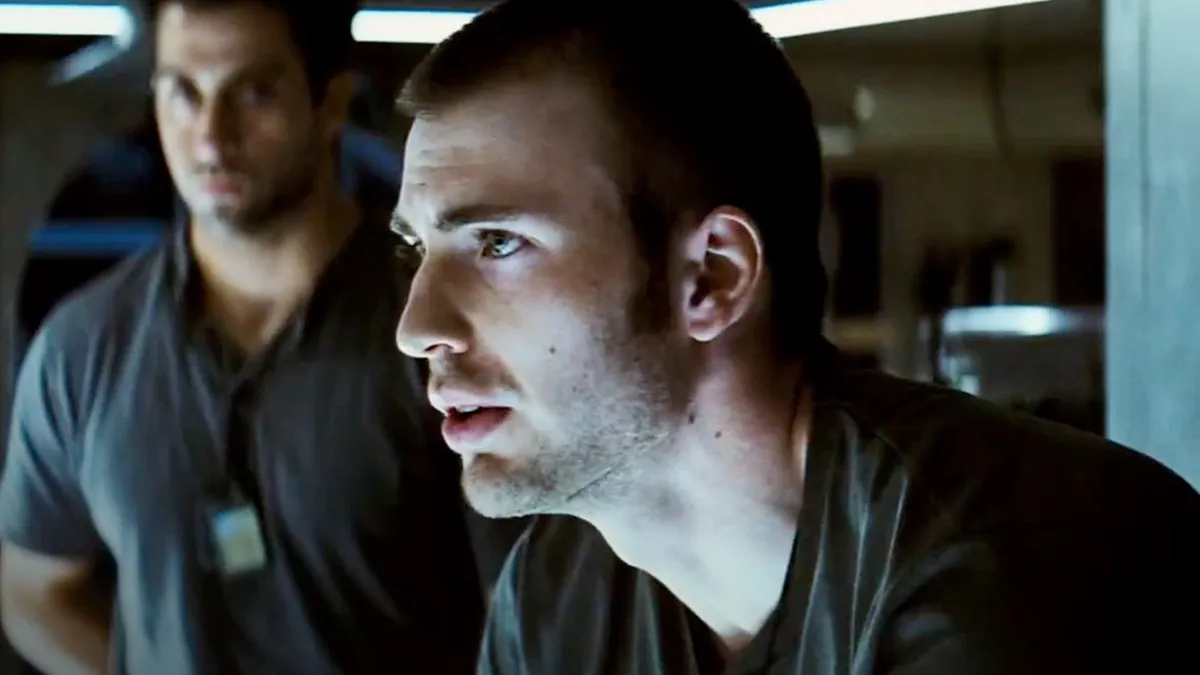
It’s not clear how the movie stars got on (did everyone do the washing up?), but in the movie, tempers are already fraying when we meet the crew 16 months into their flight. Then a distress call from the original Icarus — declared missing seven years earlier — derails all their best laid plans. The crew decides to make a detour to the stricken spacecraft to recover its explosive payload — chief physicist Robert Capa (Murphy) reasons that “two last hopes are better than one” — and kick start a disastrous chain of events in the process.
First, navigator Trey (Wong) forgets to readjust the ship’s heavy-duty heat shields after making the pivotal course correction, causing such catastrophic heat damage that their mission is quickly redesignated as a one-way trip — cue awkward conversations about which member of the crew should be jettisoned in the name of preserving oxygen.
We also learn that Icarus’s failures were not entirely technical, when its commanding officer, Captain Pinbacker (played by Mark Strong, and named after Pinback in John Carpenter’s “Dark Star”), is exposed as a murderous space psycho. When they board the ship, he’s still stalking its corridors like some space-faring Michael Myers.
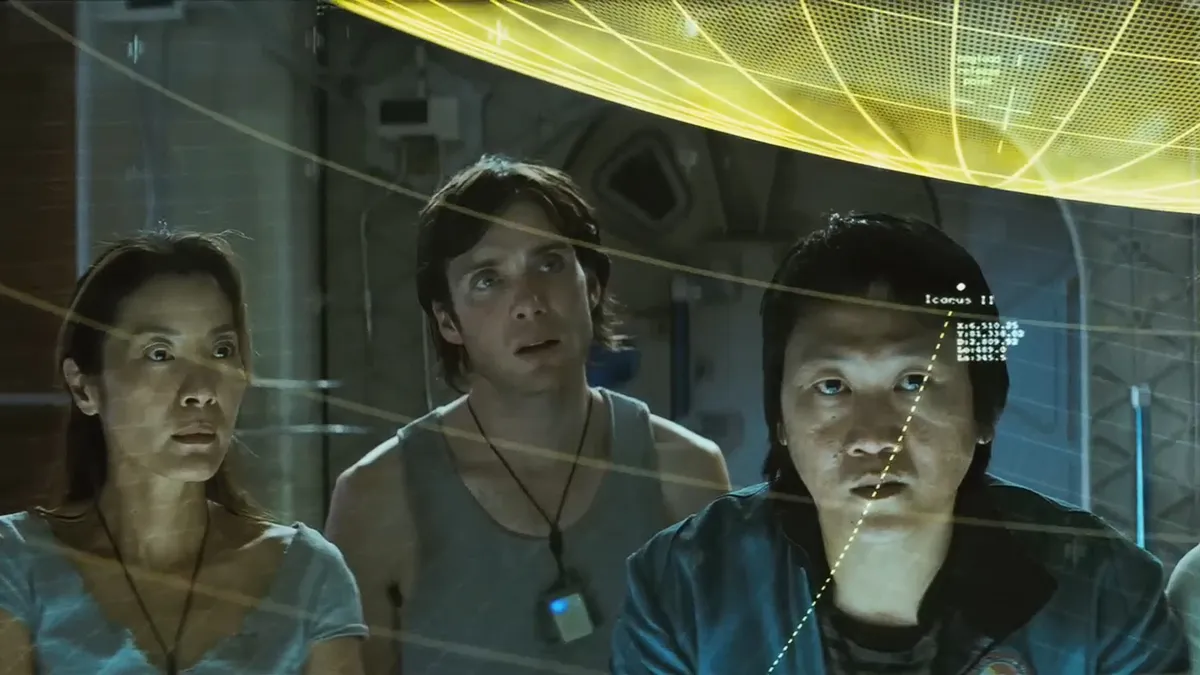
It’s arguably the film’s biggest misstep, as “Sunshine”‘s final act shifts gears to go full-on “Event Horizon” (another of our best space horror movies). Characters being exposed to a vacuum and images of a heavily burned man feel like direct lifts from Paul WS Anderson’s cult scarefest, while Pinbacker’s ramblings — “For seven years I spoke with God. He told me to take us to hell!” — could easily have been uttered by Sam Neill’s character. It’s a metaphysical twist too far in a movie that doesn’t quite have the chops to deliver on its “2001: A Space Odyssey”-like delusions of grandeur.
That said, as star Cliff Curtis mused to Empire at the time: “We have never gone any further than the Moon. One of the most unnatural things astronauts have experienced is being on the dark side of the Moon and unable to see Earth. Real astronauts had these experiences where they said they heard God’s voice. They saw something in space… We can’t possibly know the effects of travelling so close to the Sun.”
Maybe so, but you can’t help feeling that Ryland Grace and Rocky’s solution for switching the central heating back on in “Project Hail Mary” was a lot less stressful.
“Project Hail Mary” is in theaters now. “Sunshine” is available to stream on Disney+ in the UK, and to rent and buy on Apple and Amazon in the US.