Conny Waters – AncientPages.com – Archaeologists have uncovered compelling evidence of genetic connections among people buried in Neolithic chambered tombs in northern Scotland, suggesting these monumental structures were far more than mere resting places. They may have been enduring symbols of family, memory, and belonging—stone-built embodiments of prehistoric kinship that carried lineages forward across centuries.
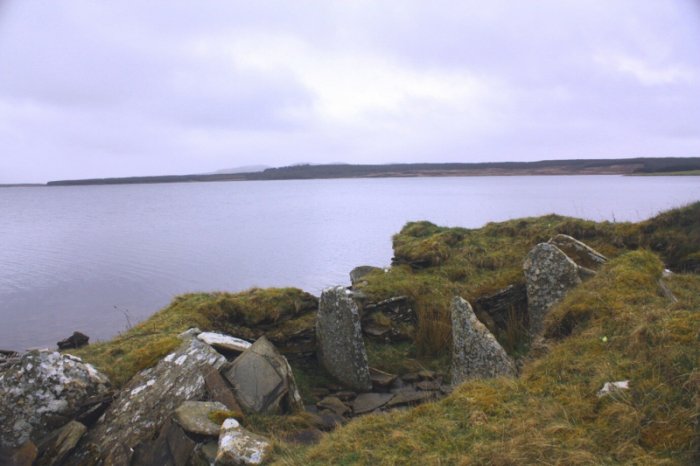
One of the tombs at Loch Calder, in the Scottish Highlands. Credit: Professor Vicki Cummings
The first Neolithic communities in north-west Europe chose to build these chambered tombs with care and intention, creating spaces where the dead could be laid to rest together. Even though many of the remains are now fragmented and incomplete, traces of biological relationships still shine through. Each discovery brings us closer to understanding how deeply these early societies valued connection, ancestry, and the bonds that tie one generation to the next.
“Kinship is a social phenomenon, a measure of social relatedness and belonging which – among many other things – reflects on the biological relatedness of individuals within a community”, says co-author of the research, Professor Chris Fowler from Newcastle University. “How often were tombs used to contain the remains of close genetic relatives? How often were individuals selected for inclusion because they were related along the male line?”
To explore how funerary architecture expressed and strengthened kinship ties in Neolithic Europe, researchers turned to one of the most powerful tools we have today: ancient DNA. They studied the remains of individuals buried in chambered tombs in Caithness and the Orkney Islands, dating from around 3800–3200 cal. BC.
What they discovered is deeply moving: many of the biologically male individuals buried in the same or neighboring tombs were close genetic relatives, linked through the paternal line. These tombs were not just places of death—they were monuments to family, memory, and belonging.
“These results are consistent with the interpretation that patrilineal descent was traced in this region,” states lead author Professor Vicki Cummings from Cardiff University. “For the people introducing the Neolithic into Britain, this social connection may have been as important as pots, cows and axes.”
By comparing their findings with the structures and layouts of the tombs, the researchers reveal something powerful: funerary practices were not just about death, but about visibly celebrating kinship across the landscape.
By clustering tombs together and placing close relatives side by side, Neolithic communities wove “webs of descent” into the very earth, turning stone and soil into monumental expressions of family and belonging.
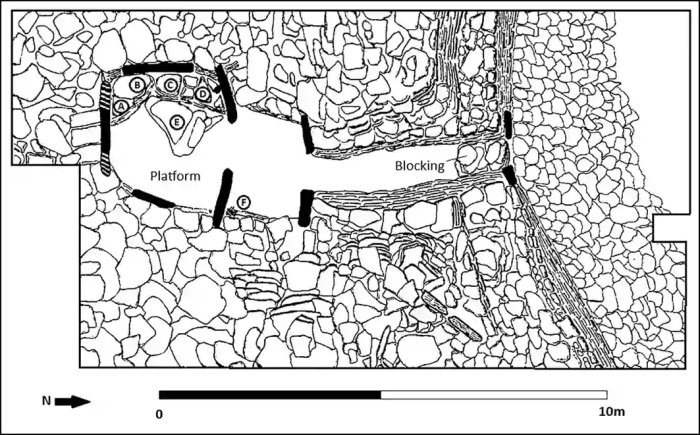
Plan of the north chamber of Tulloch of Assery A, Caithness showing the location of bone groups A–F. Credit: authors, after Corcoran 1967
Though the specific customs differed between Caithness and Orkney, both regions built shared architectural spaces for small kin groups. And in the case of two women buried in Orkney, their DNA even shows family ties stretching across the sea, linking mainland and islands in a network of connection.
In this way, the construction and use of these tombs became a powerful tool for tracing lines of descent and projecting them forward in time. Mortuary practices were not only about remembering the dead; they were a vital way for northern Scottish communities to define who they were, to affirm their shared identity, and to carry their story into the future.
See also: More Archaeology News
“It is incredible to think that, over 5000 years after these people were deposited in these tombs, we are able to reconstruct how they were related to each other through the analysis of ancient DNA”, Professor Cummings concludes. “This study shows that the people building these monuments placed a particular emphasis on the male line, and that this was shared across a wide geographic area.”
The study was published in the journal Antiquity
Written by Conny Waters – AncientPages.com Staff Writer