

The Covid-19 vaccine programme in the UK was a ‘success story’ but those harmed by the jab have been let down, an inquiry has found.
Baroness Heather Hallett, chair of the UK Covid-19 inquiry, described the speed at which the vaccines were developed and rolled out as an ‘extraordinary feat’.
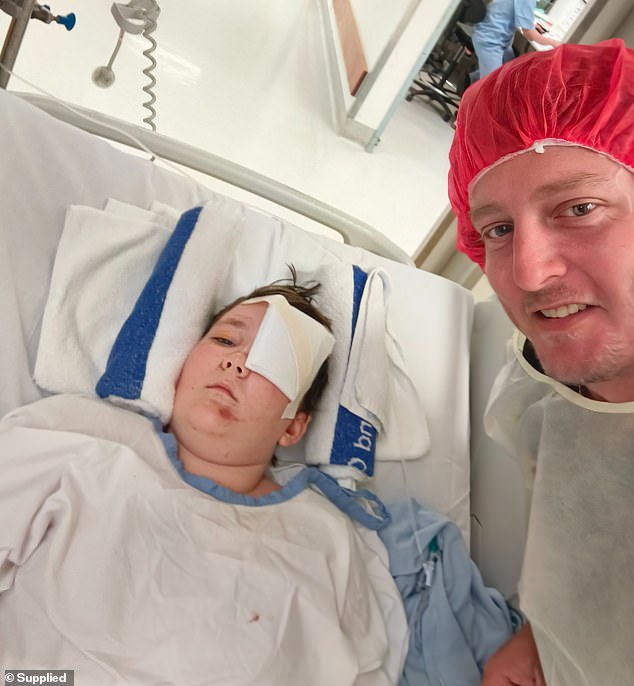
But she admitted some people have ‘tragically’ died or been harmed by the jab and the current Vaccine Damage Payment Scheme requires ‘urgent reform’ as it is ‘not sufficiently supportive’.
This includes almost doubling the maximum amount victims or bereaved families can receive from £120,000 to at least £200,000, with a ‘fairer system for determining the payment’.
The threshold for people to be 60 per cent disabled to receive payment should be scrapped because it leaves ‘those people with a significant injury that affects how they live, but does not meet the 60 per cent threshold, with nothing’, Baroness Hallett’s report concludes.
Ministers must also take action to ‘rebuild’ public trust in vaccines, which has plummeted due to the spread of false information on social media and the unprecedented speed at which the new jabs were made available, it adds.
The 274-page report marks the conclusion of the probe’s fourth module, which examined how vaccines and drugs were developed, authorised and delivered.
The Covid Inquiry, which opened in July 2022, is set to be one of the longest public inquiries in history. It has already overtaken the Bloody Sunday inquiry to be the most expensive, costing £204million by the end of last year.

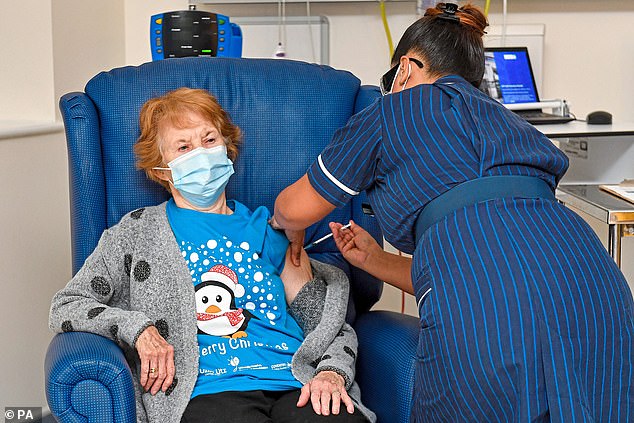
Margaret Keenan, then 90, was the first patient in the UK to receive the Pfizer/BioNtech covid-19 vaccine, at the start of the largest ever immunisation programme in the UK’s history.
Today’s report finds that decades of global research and preparation were ‘fundamental’ to the UK’s Covid-19 vaccine response.
This groundwork, which would ordinarily take between 10 to 20 years, allowed the UK to develop the Oxford/AstraZeneca vaccine and authorise two further vaccines within a year of its first identified Covid-19 case.
In 2021, approximately 132 million Covid-19 vaccinations were given across the four nations, making it the largest vaccination programme in UK history.
One study estimated almost 450,000 lives were saved in England alone.
By June 2022, about 87 per cent of the UK population aged over 12 years had been vaccinated with two doses.
The inquiry report stresses ‘it is neither proportionate nor practicable for the Inquiry to reach a view on the safety of particular vaccines or on causation in specific cases of alleged injury or death, or to attempt to quantify the precise risks of vaccination’.
But it says the UK government and regulatory bodies ‘did not compromise the UK’s rigorous safety standards’ despite the urgency of the task and the speed at which vaccines were developed.
Safety concerns were identified quickly and monitored and ‘many millions’ of lives were saved worldwide.

Retired Court of Appeal judge and crossbench life peer Baroness Heather Hallett who chaired the public inquiry into the Covid-19 pandemic.
‘It is nevertheless important to recognise and acknowledge that, in rare or very rare instances, the vaccines did have serious adverse effects,’ it continues.
‘The Inquiry heard moving evidence from representatives of the vaccine injured and bereaved Core Participants, who have often felt silenced or ignored.
‘Nothing that is said about the rarity of side effects should be taken to diminish the pain and loss of those who suffered injury, or whose loved ones died, after receiving a vaccine.’
The Vaccine Damage Payment Scheme was introduced in 1979 and was intended to pay compensation for ‘vaccine damage where vaccination is recommended by a public authority and is undertaken to protect the community.’
It is not designed to be compensatory but to make financial assistance available to those who need it.
Entitlement to payment under the scheme is dependent on being able to establish that someone has suffered severe disablement of 60 per cent or more and that ‘on a balance of probabilities’ this was caused by the vaccine.
The maximum award has gradually increased over time and the current award of £120,000 was last revised in 2007.
By January 2025, there had been 17,519 applications in respect of Covid-19 vaccines.
Lawyers told the inquiry the process of applying is ‘brutal’.
Reacting to the inquiry, Kate Scott, representing the Vaccine Injured and Bereaved UK (VIBUK) group, today said: ‘It is an uncomfortable truth, but vaccine injury and death are part of the pandemic story.
‘Today’s recommendations somewhat recognises that reality.
‘We welcome this as an important step towards fairness for those who suffered devastating consequences.’
Vaccine uptake was lower in communities with greater levels of deprivation and in some ethnic minority groups.
The Inquiry finds that these disparities were predictable and must be addressed before the next pandemic.
Baroness Hallett said: ‘Tragically, a number of people suffered harm as a result of having a vaccine.
‘This was a small minority compared to the overall scale of the vaccination programme, but of no less importance to the individuals affected and their families.
‘I heard moving evidence of representatives from the vaccine injured and bereaved core participant groups, who have often felt silenced, ignored or treated as vaccine deniers.
‘It is vital in the context of a whole-population vaccination programme, in which the state is asking people to be vaccinated in part to protect others, that people are adequately supported when side effects do occur.
‘A sufficiently supportive government scheme must be in place to help such people and their loved ones.
‘I have found that the current scheme for those who have been injured as a result of having a vaccine – the vaccine damage payment scheme – is not sufficiently supportive and requires reform.’
The report also highlights the vital role of drugs.
The drug dexamethasone was being used to save the lives of hospitalised Covid-19 patients by June 2020, within hours of trial results confirming its effectiveness.
By March 2021, it is estimated to have saved 22,000 lives in the UK and one million across the globe.
The report makes five recommendations ‘to ensure the UK is better placed to develop and deliver vaccines and therapeutics in any future pandemic’, including reform of the Vaccine Damage Payment Scheme.
Others include establishing a pharmaceutical expert advisory panel to oversee the UK’s preparedness to develop, procure and manufacture vaccines and therapeutics; and producing targeted vaccination strategies and communications to increase vaccine uptake and reduce inequalities.
Baroness Hallett also calls for improving monitoring and evaluation of vaccine uptake to identify which measures are most effecting; and giving regulatory bodies better access to patients’ medical records so they can better monitor the safety of new vaccines and drugs.
She said: ‘We cannot know when, but there will be another pandemic.
‘My recommendations, taken as a whole, should mean that the UK is better prepared for that pandemic.
‘I urge governments across the UK to work individually and collectively to implement these recommendations, in full and in a timely manner.’