



Alaska’s waters support one of the world’s most important salmon fisheries, sustained by complex marine food webs. Scientists are eager to understand how these systems are changing as the climate shifts. The challenge is that reliable samples from decades ago are hard to find.
“We have to really open our minds and get creative about what can act as an ecological data source,” said Natalie Mastick, currently a postdoctoral researcher at the Peabody Museum of Natural History at Yale University.
Scientists Turn to an Unusual Source: Decades-Old Salmon
While working on her doctorate at the University of Washington in Seattle, Mastick took an unconventional approach. Instead of relying on modern samples, she examined old cans of salmon.
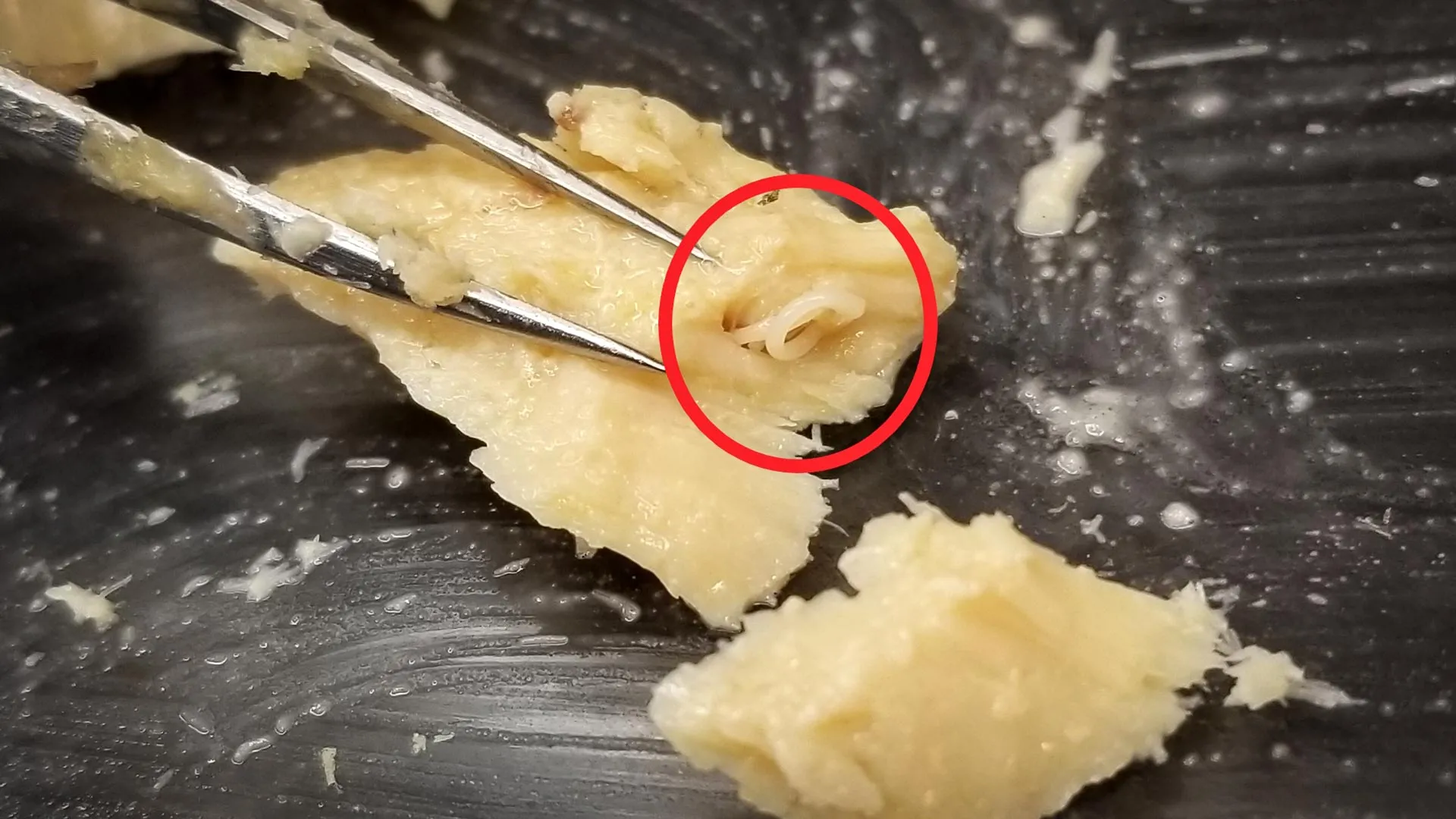
These cans contained fillets from four species collected over a 42-year span in the Gulf of Alaska and Bristol Bay. Mastick and her team opened 178 cans and carefully dissected the preserved fish, counting tiny parasitic worms known as anisakids embedded in the flesh.
Although these parasites had been killed during the canning process and would not harm consumers, they hold valuable scientific information.
Why “Sushi Worms” Can Signal a Healthy Ecosystem
At first glance, finding worms in fish may seem alarming. But scientists say the opposite can be true.
“Everyone assumes that worms in your salmon is a sign that things have gone awry,” said Chelsea Wood, a UW associate professor of aquatic and fishery sciences. “But the anisakid life cycle integrates many components of the food web. I see their presence as a signal that the fish on your plate came from a healthy ecosystem.”
Because these parasites depend on multiple species to survive, their presence can reflect the overall strength of the marine ecosystem.
Rising Parasite Levels Reveal Long-Term Ocean Trends
The team’s findings, published in Ecology & Evolution, showed that anisakid levels increased in chum and pink salmon between 1979 and 2021. In coho and sockeye salmon, parasite levels remained steady.
“Anisakids have a complex life cycle that requires many types of hosts,” said Mastick, who is lead author on the paper. “Seeing their numbers rise over time, as we did with pink and chum salmon, indicates that these parasites were able to find all the right hosts and reproduce. That could indicate a stable or recovering ecosystem, with enough of the right hosts for anisakids.”
How Parasites Track the Entire Marine Food Web
Anisakids begin life as free-floating organisms in the ocean. They enter the food chain when small creatures like krill consume them. As predators eat those infected animals, the parasites move up the food web.
For example, krill may be eaten by small fish, which are then eaten by larger fish such as salmon. Eventually, the parasites reach marine mammals, where they reproduce. Their eggs are released back into the ocean, restarting the cycle.
“If a host is not present — marine mammals, for example — anisakids can’t complete their life cycle and their numbers will drop,” said Wood, who is senior author on the paper.
Are These Parasites Dangerous to People?
Humans are not part of the anisakid life cycle. Eating properly cooked fish poses little risk because the worms are already dead.
However, anisakids, also called “sushi worms” or “sushi parasites,” can cause illness if consumed alive in raw or undercooked seafood. Symptoms may resemble food poisoning or, in rare cases, a condition known as anisakiasis.
Where Did the Salmon Samples Come From?
The canned salmon used in the study came from the Seafood Products Association, a Seattle-based trade group. The organization had preserved these cans over many years for quality control but eventually no longer needed them.
Mastick and co-author Rachel Welicky, an assistant professor at Neumann University in Pennsylvania, tested different techniques to analyze the samples. The worms, about a centimeter (0.4 inches) long, often curl up inside the fish muscle. By gently pulling apart the fillets with forceps and using a dissecting microscope, the team was able to count them accurately.
Why Are Parasite Levels Increasing?
There are several possible explanations for the rise in anisakid levels in some salmon species.
One key factor may be the Marine Mammal Protection Act of 1972, which helped populations of seals, sea lions, orcas, and other marine mammals recover after years of decline.
“Anisakids can only reproduce in the intestines of a marine mammal, so this could be a sign that, over our study period — from 1979 to 2021 — anisakid levels were rising because of more opportunities to reproduce,” said Mastick.
Other contributing factors could include warming ocean temperatures or environmental improvements linked to the Clean Water Act.
Why Some Salmon Species Show No Change
The stable parasite levels observed in coho and sockeye salmon are more difficult to interpret.
There are many different anisakid species, each relying on its own combination of hosts. While the canning process preserved the outer structure of the worms, it destroyed the internal features scientists would need to identify specific species.
A New Way to Study the Ocean’s Past
Researchers believe this method could be applied to other archived seafood, such as canned sardines, offering a new way to explore historical ecosystems.
They also hope their work encourages scientists to think creatively about untapped data sources.
“This study came about because people heard about our research through the grapevine,” said Wood. “We can only get these insights into ecosystems of the past by networking and making the connections to discover untapped sources of historical data.”
Funding and Contributors
The study included UW undergraduate Aspen Katla, along with Bruce Odegaard and Virginia Ng from the Seafood Products Association. Funding was provided by the U.S. National Science Foundation, the Alfred P. Sloan Foundation, the Washington Research Foundation, and the University of Washington.