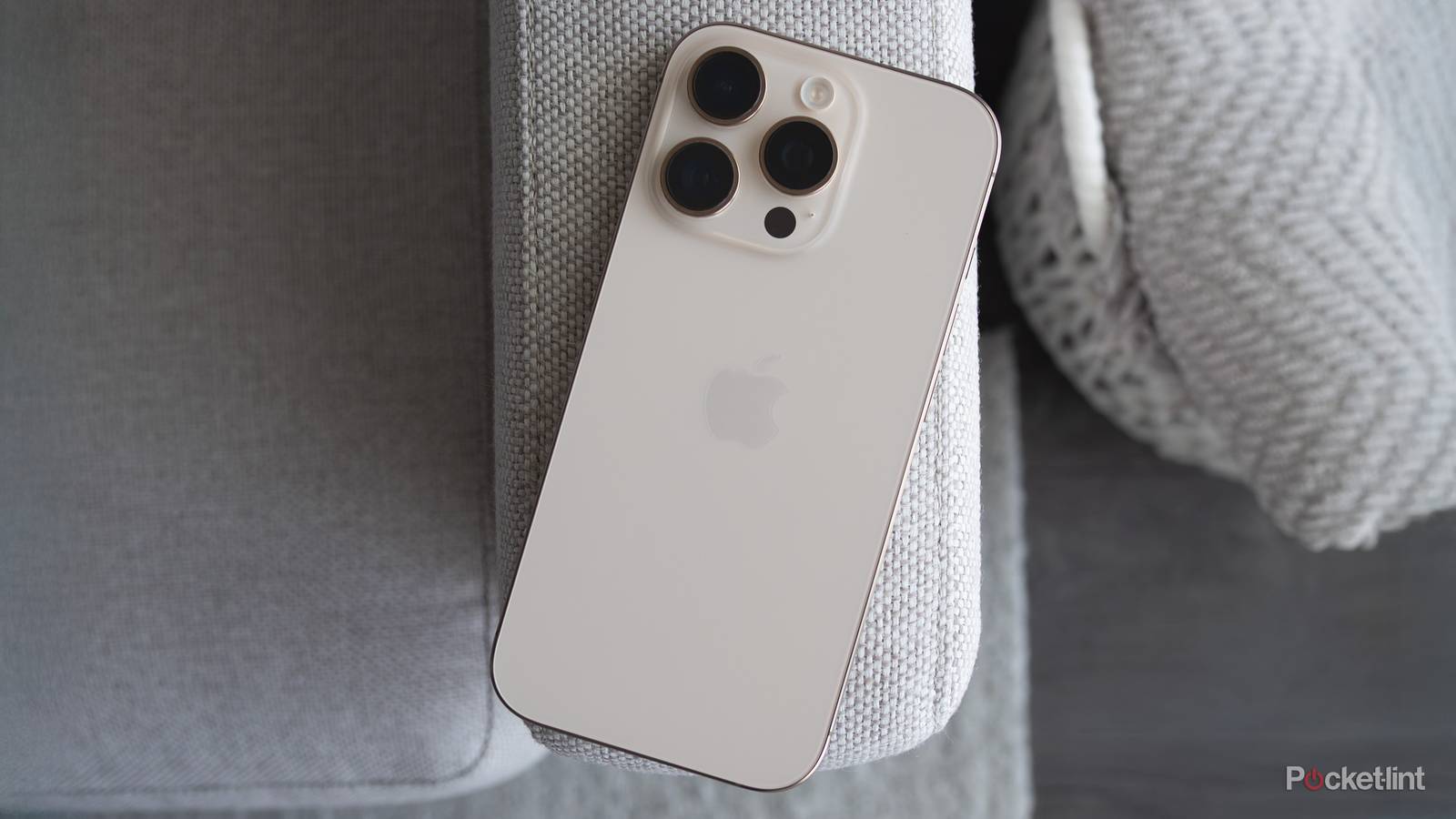
It’s no secret that tech companies try to inflate the importance of buying new products, particularly when it comes to smartphones. There’s a lot riding on you buying hardware as often as possible, so every new device has to be positioned as a “revolutionary” improvement worth dropping $800, $1,000, or $2,000 on. The average person can’t afford to buy a new phone every year, naturally — but companies like Apple, Samsung, and Motorola would still rather you trade up every two or three years instead of four or five.
The reality is that you can comfortably hold on to an iPhone for a long time. More than that, you don’t even need to a buy a new one when you upgrade. If you play your cards right, you can be just as satisfied with a used or refurbished one while saving some cash. Remember, if it’s new to you, it’s still an improvement.
The pace of iPhone evolution is slowing down
Don’t believe the hype

On paper, there are important gaps between the iPhone 16 Pro and 17 Pro. The latter has a faster A19 Pro processor, an extra 4GB of RAM, and better cameras, including a 48-megapixel telephoto and a 12-megapixel selfie shooter. It’s also rated for an extra six hours of battery life.
At this point, it’s worth insisting on an iPhone 15 Pro or later so you have access to the fixed version of Apple Intelligence. Beyond that, a device like 2021’s 13 Pro can still get the basics done without any major slowdowns.
In practice, though, these advancements don’t necessarily mean much. I own a 16 Pro, and it’s already vastly overpowered for most apps, except perhaps the most detailed 3D games. In fact its A18 Pro chip is the basis for the MacBook Neo, which can comfortably handle 4K video editing. Meanwhile, Apple’s RAM usage is well-optimized for most tasks, meaning that the greatest upgrades in the 17 Pro are better telephoto shots and a little less battery anxiety for travelers. I prefer using telephoto lenses when I can — yet even I have to admit that there are only so many scenarios in which they make sense.
At this point, it’s worth insisting on an iPhone 15 Pro or later (including non-Pro devices) so you have access to the fixed version of Apple Intelligence, expected this fall alongside iOS 27. Beyond that, however, a device like 2021’s 13 Pro can still get the basics done without any major slowdowns. Access to 5G frequently matters more than processor power.
An older phone may let you go Pro
The best tools mean nothing without the right ones

The differences between the two main iPhone tiers are continuing to shrink. It’s de facto for most iPhones to have a Dynamic Island now, and the base iPhone 17 finally has a 120Hz, always-on display. Apple has long locked that tech away as a “pro” feature — conveniently discounting the fact that cheaper Android phones have had it for years.
There are still reasons to go Pro, though. A telephoto lens unlocks new photo options, and a larger display can make for improved reading, video, and gaming. Pros also offer superior battery life, especially if you can afford to splurge on a Pro Max.
If your budget isn’t enough for a new Pro, it may be enough to cover an older one, and those extra functions may be more valuable to you than higher graphics or camera benchmarks. You do have to pay close attention to specs, mind. If your goal is longer battery life, for example, it’s worth remembering that Apple often raises capacity in newer generations, and that phones that are simply used instead of refurbished aren’t going to have their original battery health.
The savings can be put towards apps, services, and accessories
A smartwatch can be life-changing

As smartphone evolution has slowed, I’ve come to care more about the things I install or connect on a device, simply because they often improve quality of life more than a spec bump. A second Qi2 charger may prevent your phone from dying before you get home. Noise-canceling earbuds are a must-have if you fly on a regular basis. If you’re a film fan, a 6.9-inch screen hardly matters if you can’t afford to keep your subscription to Netflix or the Criterion Channel.
Perhaps the most significant accessory you can buy is a smartwatch. I’m a regular in Reddit’s Apple Watch community, and I’ve seen too many people credit the product for helping them turn their health around, or even save their lives. It does this by monitoring your heart rate, blood oxygen, and sleep, and encouraging you to be more active through its ring goals. I don’t need that encouragement, but my Ultra 2 has been invaluable for gauging my gym performance. Heck, simply being able to check notifications without pulling my phone out of my pocket is a major benefit, in my books.
One tip is to avoid defaulting to first-party products. Yes, things like AirPods, Apple Watches, and Apple’s cloud services are tightly integrated with iPhones in a way that outside companies can’t access — but you may be trapping yourself in the Apple ecosystem, and missing out on key features. Garmin watches, for example, are multiplatform, and frequently last for a week or more on a charge, whereas the Apple Watch Ultra 3 is lucky to last three or four days. You may be better off with a Fenix or Forerunner if your interests include marathon training or long wilderness treks.
It’s better for your mental, financial, and environmental health
Look at the broader impact

Apple likes to tout its environmental credentials — it even has purpose-built recycling robots — but let’s face it, all it’s doing is mitigating its impact. Any new iPhone launch still consumes plenty of resources, from mining, manufacturing, and packaging through to the boats, trucks, and planes used to bring devices to stores and warehouses. Accompanying this is pollution, which Apple can only do so much to reduce from its end.
Now obviously, buying a used iPhone is going to have some degree of environmental impact as well, but it avoids encouraging Apple to maintain or increase its production quotas. While you shouldn’t necessarily feel guilty for buying a new device, you should think twice about how much one is worth to you.
Stepping away from the push to buy the latest tech can legitimately make you a happier individual.
Speaking of which, buying new can sometimes be bad for your mental and financial state. I’m amazed at the number of 20-somethings I’ve seen with new Pros, given that they start at $1,000 and only get more expensive from there. It’s not worth going into debt for a phone unless you need it to make a living.
As for mental health, the constant push to buy the latest tech can generate a sense of FOMO or inadequacy in people, sometimes without them being conscious of it. Stepping away from that cycle can legitimately make you a happier individual. I actually do need to buy new gear for my job — but if I ever change careers, I won’t worry so much about which generation of iPhone I have.