



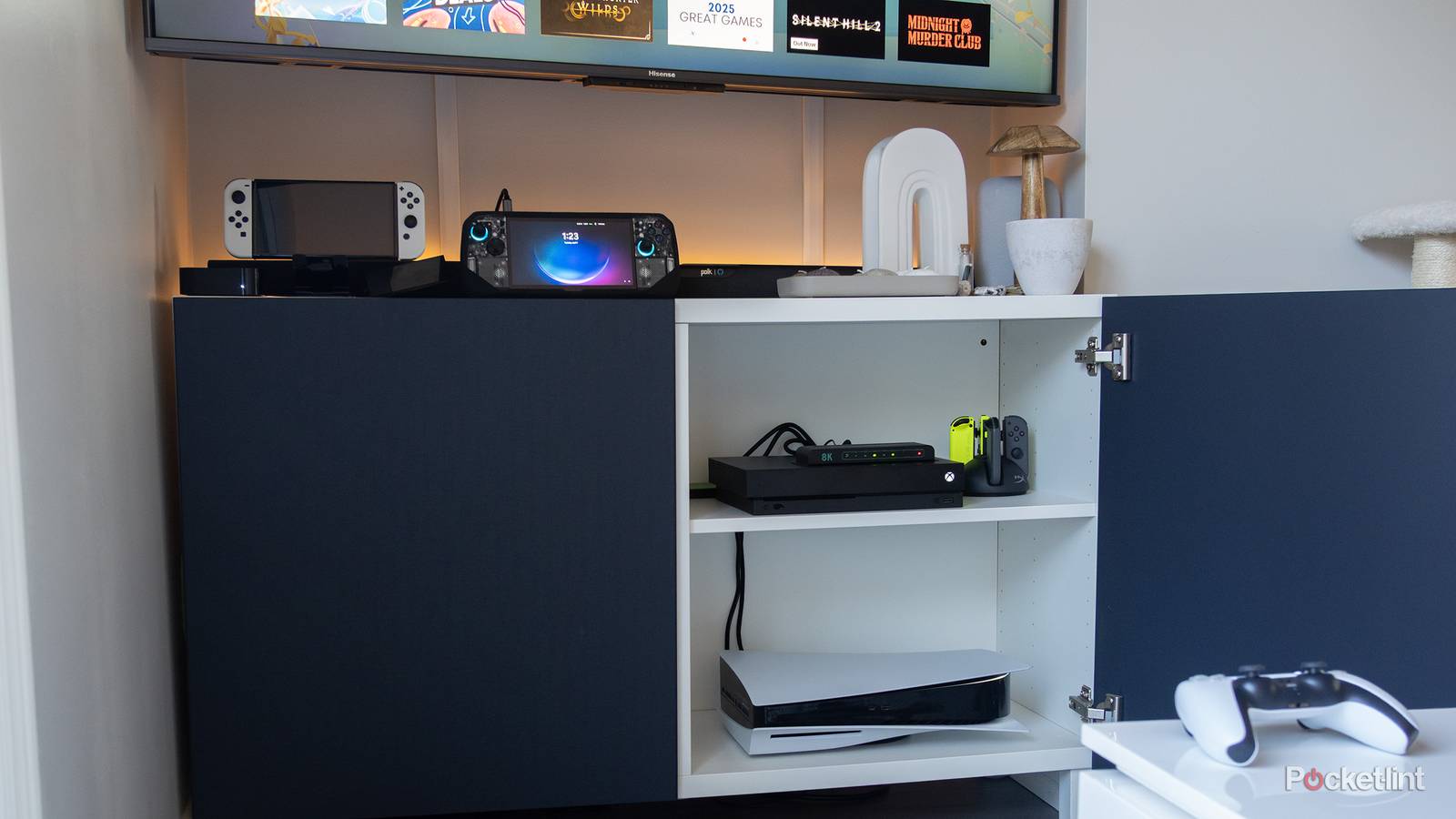
Oddly enough, even though I’ve been a homeowner since 2018, I sometimes miss apartment living a lot. Sure, a house offers more space, but an apartment is simpler to take care of, especially since a lot of the things that can go wrong are your landlord’s responsibility. And if you want to live somewhere else, you just end your lease — no worries about selling your place, putting a down payment on another, and going through the incredible hassles both of those things entail.
When it comes to home theaters though, houses are undoubtedly better. There’s more room to spread out, you can make permanent alterations, and there’s no worry about the neighbors unless you live in a semi-detached building. In this piece I’m going to cover a few important tips I’ve learned over the years, hopefully one or more of which will be helpful in your situation.
Ditch the subwoofer or muffle it
A soundbar may be your best friend

The way some people approach home theater audio, you’d think a subwoofer was a non-negotiable component. I get it — they let you feel a movie as much as watch or listen to it, which can be especially valuable with action and horror. Even the cheapest surround-sound kits you’ll find on Amazon include one.
Realistically, though, a subwoofer can be a recipe for disaster in apartments. Unless perhaps you live on the ground floor, they’re almost guaranteed to disturb the neighbors at any volume high enough to be meaningful. If you’re shopping for a new speaker system, or simply willing to replace what you’ve got, I’d strongly recommend choosing an all-in-one soundbar. Better models will have separate tweeters and woofers rather than full-range drivers, and deliver enough bass to be impressive without quickly risking a noise complaint.
If you’re hellbent on keeping a subwoofer plugged in, you may at least be able to mitigate how much it propagates bass. Raise it off the floor if you can, putting it on a stable surface. Since that might still resonate too much, it may be necessary to use some sort of mat or cushioning as well. Yes, this will make bass less impressive — but it’s better than risking eviction.
Keep everything compact, mobile, and easy to disassemble
Remember, you’re not there forever

A common mistake apartment-dwellers make is settling in as if they’ll never move out. This goes well beyond home theater issues — you’ll see people set up elaborate lighting, gardens, and even home gyms, conveniently forgetting the fact that they’ll be responsible for removing it eventually. Even if you have a reasonable expectation that you’ll be in a space for a long time, you never know when you’ll get a job offer in another city, or if your landlord is going to hike rents so high as to essentially force you out.
Anything you buy for an apartment system should be something you can realistically pack and move on your own if you have to. This may impose some limitations — you probably shouldn’t buy a TV over 65 inches, and gigantic tower speakers are out, too. An apartment definitely isn’t the best place to install a 7.1-channel system with a receiver.
In general, I prefer to keep systems as minimalist as possible. If you can get away with just a TV and a soundbar, you should probably do it.
Remember also to make things easy to disassemble. Wall-mounting your TV and speakers makes for a slick and space-efficient setup, but you’ll ultimately have to remove any mounts (or shelves) you install, then patch the holes and paint over them. Likewise, while running cables along the walls and baseboards with cable hiders might look nice, you’re going to have to rip both things off and cover up any damage they did.
In general, I prefer to keep systems as minimalist as possible. If you can get away with just a TV and a soundbar, you should probably do it. Instead of buying a full-sized gaming console like a PS5 or Xbox Series X, consider something like the Switch 2 or Steam Deck. If you’ve got a gaming laptop, you can use that as a do-it-all device by hooking it up via HDMI 2.1.
Use dialogue enhancement and night mode options
A shortcut to good relations

One of the advantages of the shift to smart tech has been the flexibility offered by software. It’s de facto for TVs, media streamers, and some smart speakers to include dialogue enhancement options, which will let you turn down the volume a little while still being able to understand what characters are saying. Just be aware that this affects other frequency ranges. Thankfully, it shouldn’t harm your overall experience that much.
Late at night, you may need to take more drastic measures to be kind to neighbors. Many devices offer “night modes,” which compress dynamic range to reduce loud sounds while keeping quiet ones intact. If that’s not enough, just about any video app you use is going to offer English-language subtitles and closed captioning. Some people put subtitles on no matter how loud their audio needs to be, worried that they’re going to miss an important bit of conversation.
Solo apartment dwellers should consider pairing headphones with their TV. You’ll want a pair compatible with your TV’s audio codecs, particularly low-latency standards such as aptX Adaptive/Low Latency, LC3, LLAC/LHDC, or FastStream. Without one of those, Bluetooth audio can fall out of sync.
Insulate your floors, walls, and speakers
The less bounce the better

Many speakers actually count on bouncing audio off your walls. That’s the focus of room calibration tools like the one found on Sonos speakers — these “ping” surrounding walls and furniture, and dialing in the EQ so reflections are just right. Many Dolby Atmos soundbars bounce sounds off your ceiling to simulate vertical channels.
Naturally, any sound reflecting directly off your walls has a higher chance of being heard by neighbors, so the more barren they are, the worse the impact. Putting up conventional decorations like photos, paintings, and vinyl collections may be enough — but you might want to consider other wall hangings too, including purpose-built acoustic panels for reflecting sound or absorbing it. These are easy to find at stores like Home Depot, if sometimes a little pricey.
Naturally, any sound reflecting directly off your walls has a higher chance of being heard by neighbors, so the more barren they are, the worse the impact.
There’s not much you can do about your ceiling, probably, but if your apartment has hardwood floors instead of carpet, it might be time to go rug shopping. You don’t need an especially thick rug. The thicker the better though, assuming that doesn’t make moving excruciating when the time comes.
You may want to take a similar approach with your speakers. On top of using mats and cushions, you can apply foam stickers to the corners, reducing direct contact. If you want to push that particular idea as far as it will go, it’s not hard to find stands in varying dimensions that will float your speakers mid-air without drilling anything.