
Financial guru Scott Pape has shared his contrarian take on Australia’s changes to Capital Gains Tax after they caused a political storm for the Albanese government.
Frustrated reader Brian wrote into Pape’s column, published Sunday, to complain about the changes made in the Federal Budget on May 12.
Brian slammed the government as ‘incompetent’ and labelled the Budget ‘another giant Labor tax grab’.
‘People in the top 10 per cent of income earners pay more than half the taxes. Half!’ he wrote.
‘Now Albo wants to be a 47 per cent silent partner in every small business in the country. Why would anyone bother?’
That claim stems from a viral meme started by RealBase founder Frank Greeff that oversimplified the rule and suggested all entrepreneurs would be taxed at the highest rate when they sold their business.
The change in the Budget removed a 50 per cent discount to Capital Gains Tax from July 2027.
Instead, capital gains would be taxed at a minimum 30 per cent, after indexation has been applied, which would likely result in more tax being paid on sold assets.

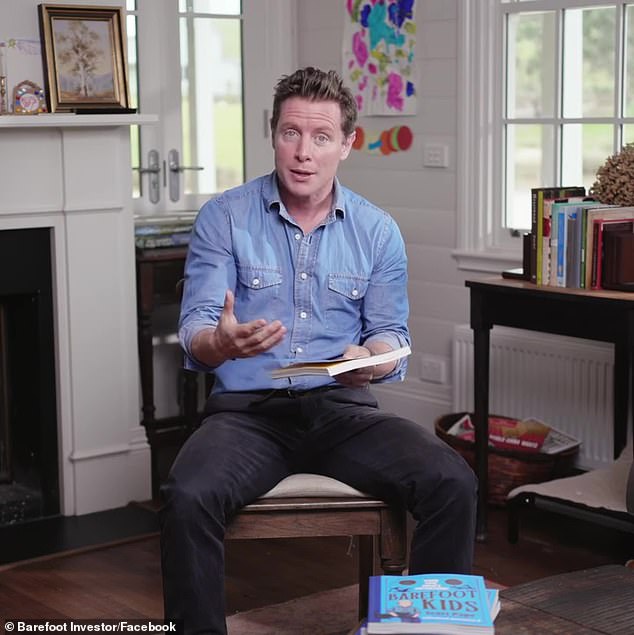
Barefoot Investor Scott Pape (above) shared his controversial take on the 2026 Federal Budget tax changes while responding to an angry reader

While Pape noted ‘this is the highest-taxing Australian government since World War Two’, he said the high-earning Australians most impacted by the new taxes would be fine (pictured is Prime Minister Anthony Albanese and Treasurer Jim Chalmers)
While he did admit ‘this is the highest-taxing Australian government since World War Two’, Pape took aim at the ‘new business partner’ joke and added that many small businesses wouldn’t be badly affected by the CGT change.
Pape acknowledge Brian had ‘a lot of very big feelings’ and was one of the many Aussie taxpayers whose ‘outrage meter seems to be stuck at eleven’.
‘Brian’s ’47 per cent silent partner’ line was funny on social media the first 700 times. Now it’s just annoying. And it’s wrong,’ he wrote.
‘The small business CGT concession regime allows the vast majority of small business owners to halve or completely eliminate the capital gains tax they pay when they sell.
‘The real risk is using the tax rate as a reason not to back yourself… Don’t let a meme talk you out of it.’
Rather than focusing on the losses in the Budget, Pape urged Brian and other Aussies to focus on the bigger picture.
‘If you spend enough time on social media – or listen to Brian – you may start to think that Australia is the highest-taxed nation on Earth. Actually, we’re in the middle of the pack, but with a standard of living in the top handful of countries on the planet,’ he wrote.
‘And what about the top 10 per cent of taxpayers that Brian is so upset for? We’ll be fine.
‘After all, we’re the wealthiest people in the country. Living in one of the wealthiest countries in the world. At the richest time in human history.
‘Life is good, Brian, especially when you log off.’
Some business leaders have warned the measures would lead to talent and funding moving offshore as the existing 50 per cent capital gains discount is axed in favour of the minimum 30 per cent tax rate.
Opposition housing spokesman Andrew Bragg went so far as to say he would increase the discount rather than remove it to get money flowing where it was needed.
‘We should be looking to cut taxes,’ he told Sky News on Sunday.
‘There are heaps of ways you could play around with (capital gains tax) to actually incentivise more investment.’
UNSW chief societal economist Richard Holden said the plans would create Australia’s first-ever ‘productivity tax’, under which productive firms paid more than their less-efficient peers.
‘Two identical businesses, delivering the exact same service, one highly productive, the other unproductive, will now face vastly different effective capital gains tax rates,’ he said in a post-budget analysis.