


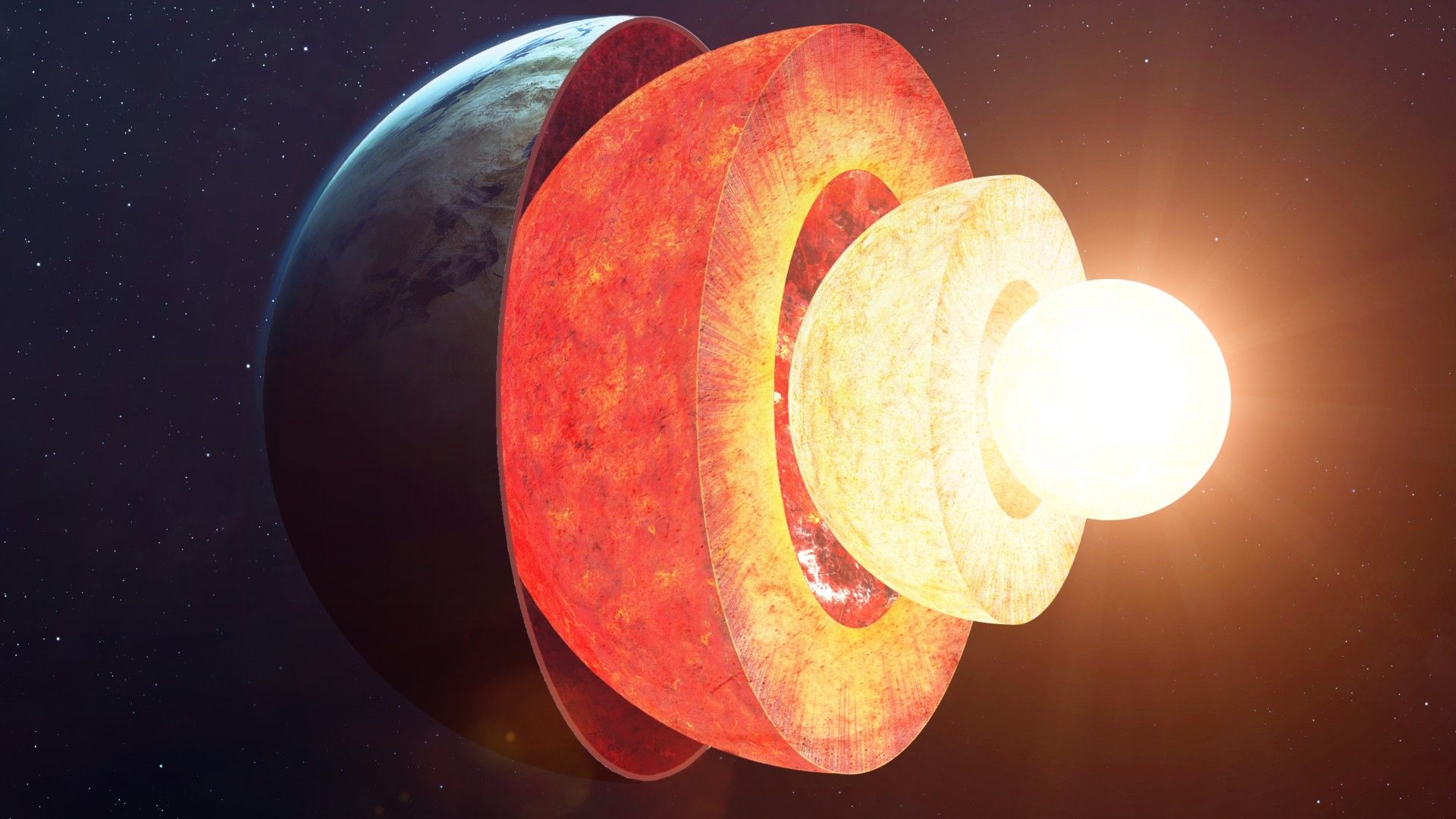
We have learned a lot about the planets in our own backyard, and for a long time we assumed the rest of the galaxy looked roughly the same. A rocky planet meant a clear-cut structure: a dense metallic core, a silicate mantle, and a thin atmosphere on top. That picture works fine for Earth.
But according to a new paper submitted to the Astrophysical Journal, it might not work for most of the rocky planets in the universe. By far the most common type of planet we have found around other stars is about a class of worlds called sub-Neptunes: planets larger than Earth but smaller than Neptune. Their close cousins, the super-Earths, are slightly smaller and likely lost most of their hydrogen long ago. The textbook story has these planets forming in essentially the same way Earth did, just with different amounts of leftover gas piled on top. Iron sinks to the middle, silicate rock floats above it, hydrogen sits on top of that.
But here is the wrinkle. At the pressures and temperatures inside a sub-Neptune, hydrogen, silicate, and iron don’t actually behave like they do near the surface of Earth. Above about 4,000 degrees Kelvin, hydrogen and molten silicate become fully miscible. They stop being oil and water. They become one fluid. The authors behind a new study submitted to the Astrophysical Journal and currently available on arXiv worked out what that means for the structure of these planets, and the answer is surprising.
If a planet accretes less than about one percent of its mass in hydrogen, it follows the familiar script and forms a discrete metallic core just like Earth. But if it picks up more hydrogen than that, the whole inside of the planet becomes a single, mixed, churning fluid of iron, silicate, and hydrogen. No core. No mantle. Just a homogeneous blend all the way down to within a few thousand kilometers of the center.
That is a significant departure from how we usually draw these worlds in cross-section. The internal structure determines how a planet cools, how it holds onto its atmosphere, and how its radius evolves over time. The authors find that this miscibility framework can reproduce a number of features we already see in the exoplanet population that the old layered-cake models struggled to explain.
One of those features is the radius gap, the curious deficit of planets right between super-Earth and sub-Neptune sizes that the James Webb Space Telescope and Kepler Space Telescope have mapped out.
Another is the way planet radii depend on orbital period. Both fall out naturally if you assume that young sub-Neptunes store a substantial fraction of their hydrogen inside this miscible interior, then slowly release it into the outer envelope as the planet cools and the miscibility region shrinks. The hydrogen literally bubbles out of the rock over hundreds of millions of years.
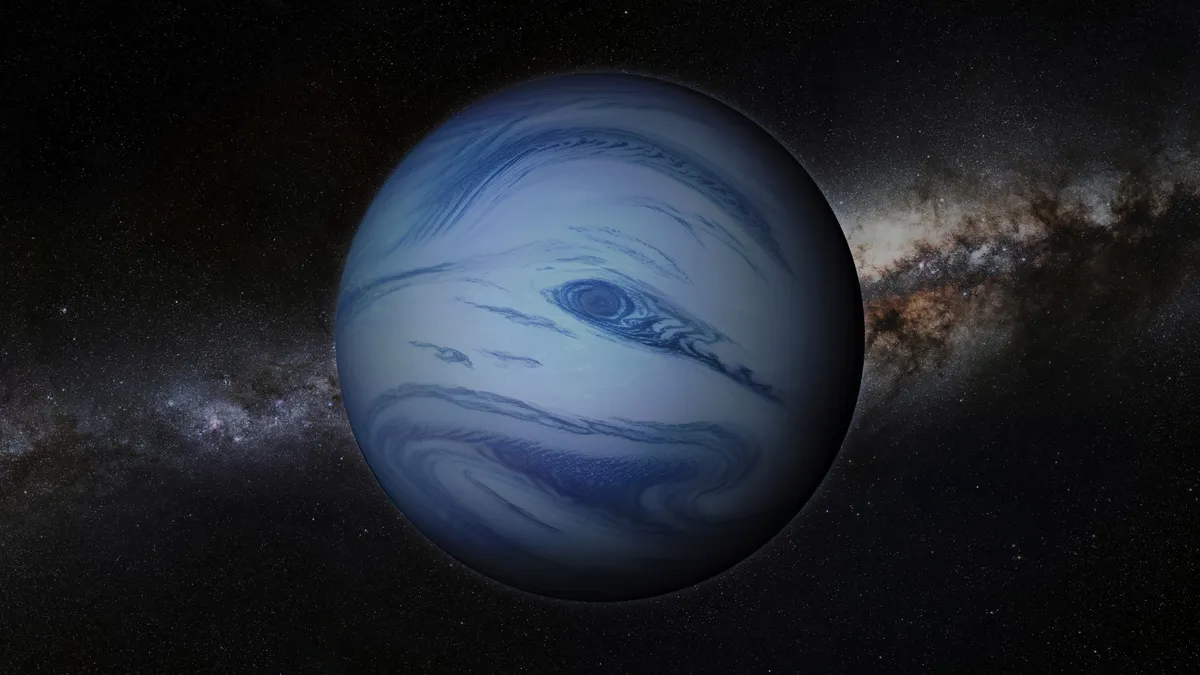
There is a testable consequence here, and that is what makes this paper more than a thought experiment. If hydrogen is gradually exsolving from the interior into the atmosphere, then young sub-Neptunes should contract more slowly than standard models predict.
They should look slightly puffier than they should be for their age. We are now starting to find sub-Neptunes around very young stars (cosmic toddlers, only tens of millions of years old) where this signature could actually be measured. JWST and the next generation of transit surveys are going to put numbers on it.
The caveats are real. The model rests on theoretical extrapolations of how hydrogen, silicate, and iron behave at conditions we can’t yet reproduce in a laboratory, although high-pressure experiments are starting to catch up. The internal heat budgets of these planets are still uncertain, and small errors in those parameters propagate into the predictions. And the inverse modeling approach the authors use (start with the observed planet population, work backward to the physics that produced it) is necessarily statistical rather than deterministic.
Still, the basic claim is bold and clean. The most common type of planet in the galaxy may not look anything like Earth on the inside. The familiar concept of a planetary core, that small dense metallic heart we take for granted, may be the exception rather than the rule out there. Earth might be the weird one.